


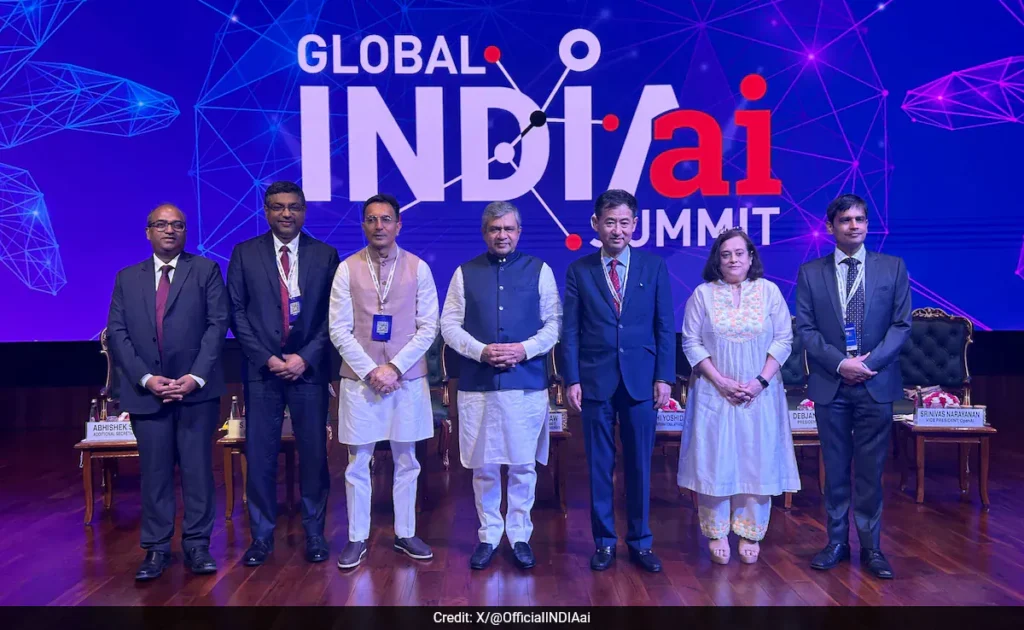
The global race for Artificial Intelligence dominance is often framed as a two-horse sprint between the United States and China. Yet, a third contender is aggressively elbowing its way to the starting line: India. With a unique blend of demographic dividends, digital infrastructure, and governmental push, India isn’t just participating in the AI revolution; it wants to lead it.
However, ambition and capability are two different things. While the country boasts the world’s largest population and a massive pool of STEM talent, it faces significant hurdles. Infrastructure gaps, a shortage of high-performance computing power, and recent controversies surrounding global AI summits have cast a shadow over its aspirations.
As the world pivots from theoretical AI models to practical applications, the question remains: Can India truly become a global AI superpower, or will structural limitations keep it in the runner-up position? This deep dive explores the chasm between India’s high-flying ambitions and the ground-level reality of its technology ecosystem.
The Pitch: Why India Believes It Can Win
To understand India’s confidence, you have to look at the numbers. They paint a picture of a nation primed for digital explosion.
The Developer Dividend
India is home to one of the largest concentrations of software developers on the planet. GitHub predicts that by 2027, India will overtake the US as the largest developer community on its platform. This isn’t just about raw numbers; it is about the cost-to-talent ratio. Indian engineers are building complex Large Language Models (LLMs) and applications at a fraction of the cost of their Silicon Valley counterparts.
This “human capital” advantage allows for rapid experimentation. While US companies might burn millions in personnel costs to prototype a new AI tool, Indian startups can iterate faster and cheaper. This agility is crucial in an industry where last week’s breakthrough is today’s outdated tech.
A Thriving Startup Ecosystem
The startup landscape in India has matured significantly over the last decade. No longer satisfied with being the world’s back-office IT support, Indian founders are building deep-tech solutions. Companies like Sarvam AI and Krutrim are attempting to build indigenous LLMs trained on Indian languages, addressing a gap that Western models like GPT-4 often miss.
The venture capital is following the talent. despite a global funding winter, generative AI startups in India raised significant capital in 2023 and 2024. Investors are betting that India’s specific challenges—linguistic diversity, massive scale, and price sensitivity—will birth AI solutions that are globally scalable, particularly for the Global South.
The Reality Check: Infrastructure and Compute
While the software story is strong, the hardware story is where the cracks begin to show. AI development, particularly training large models, requires immense computational power. This is the new oil of the digital economy, and right now, India is importing almost all of it.
The GPU Deficit
The shortage of high-performance Graphics Processing Units (GPUs), specifically those from NVIDIA, is a global bottleneck, but it hits emerging economies harder. US and Chinese tech giants have stockpiled tens of thousands of H100 chips. In contrast, even India’s largest conglomerates are struggling to secure enough compute capacity to train competitive models.
Without domestic manufacturing of advanced semiconductors, India remains dependent on global supply chains. The government’s semiconductor mission is an attempt to fix this, offering billions in incentives to attract chipmakers. However, building fabrication plants takes years. In the fast-moving timeline of AI, years are decades. Until India solves its compute scarcity, it will likely remain a consumer of AI models rather than a primary creator of foundational models.
Energy and Infrastructure
Training AI models is energy-intensive. Data centers consume massive amounts of electricity and require sophisticated cooling systems. While India has made strides in renewable energy, grid reliability and the physical infrastructure required to support hyper-scale data centers are still works in progress. The “AI sovereignty” that India seeks requires not just code, but concrete, cables, and consistent power—areas where the country still faces logistical friction.
The Summit Stumble: Diplomacy Meets Tech
India’s strategy involves positioning itself as the voice of the Global South in AI governance. This was evident during its G20 presidency and its involvement in the Global Partnership on Artificial Intelligence (GPAI). However, recent summits have exposed the diplomatic tightrope India is walking.
There is a growing tension between the Western push for “AI Safety”—focused on existential risks and regulation—and India’s push for “AI for All”—focused on democratization and economic utility. At recent global gatherings, Indian delegates have reportedly pushed back against stringent regulations that might stifle innovation in developing nations.
This stance has drawn criticism. Detractors argue that by prioritizing rapid deployment over strict safety protocols, India might be opening the door to misuse, deepfakes, and algorithmic bias. The backlash suggests that while India wants a seat at the head table of AI governance, it hasn’t yet convinced the incumbents that its regulatory philosophy is safe for the global ecosystem.
The “India Stack” Advantage
Despite the hardware hurdles and diplomatic friction, India possesses a secret weapon that no other country has: the India Stack.
This comprehensive set of open APIs (Application Programming Interfaces) allows governments, businesses, free apps, and startups to utilize a unique digital infrastructure to solve India’s hard problems towards presence-less, paperless, and cashless service delivery.
Data at Population Scale
The India Stack has digitized the identities and financial transactions of over a billion people. This has created a massive, structured dataset that is unique in the world. Western AI models are trained on the open internet, which is messy and unstructured. India has the potential to train models on structured, verified public data (with privacy safeguards).
Application Over Invention
India’s path to AI leadership might not be in inventing the next Transformer architecture, but in deploying it. The Digital Public Infrastructure (DPI) allows for the rapid rollout of AI services. Imagine an AI-powered voice bot that helps a farmer in a rural village apply for a government loan in his local dialect, verify his identity via Aadhaar, and receive funds via UPI (Unified Payments Interface) instantly.
This “application layer” dominance is where India shines. While the US fights over who builds the smartest model, India is figuring out how to use those models to lift millions out of poverty and streamline governance.
Regulating the Unknown
The regulatory environment in India is currently in flux, oscillating between a hands-off approach to encourage innovation and a desire to prevent harm.
Unlike the European Union’s rigid AI Act, which categorizes AI based on risk levels, India has signaled a “pro-innovation” approach. The Ministry of Electronics and Information Technology (MeitY) has previously stated that it does not intend to regulate AI growth to avoid stifling the sector. However, the rise of deepfakes involving politicians and celebrities has prompted a rethink.
The government is now drafting a new Digital India Act to replace the decades-old IT Act. The challenge will be crafting laws that protect citizens from algorithmic bias and misinformation without crushing the startup ecosystem with compliance costs. If India gets this balance right, it could offer a third way—an alternative to the heavy-handed EU regulation and the market-driven US approach.
Bridging the Gap: What Needs to Happen
For India to transition from a promising contender to a solidified leader, several shifts need to occur immediately.
- Sovereign Compute Capacity: The government’s plan to build a sovereign compute infrastructure must move from policy papers to procurement. Subsidizing access to GPUs for startups is essential.
- Skilling the Workforce: Having millions of coders is great, but AI requires specialized skills in machine learning, data science, and ethics. The curriculum needs a massive overhaul to move beyond basic coding to advanced AI engineering.
- Ethical Guardrails: To gain global trust, India must demonstrate that its “pro-innovation” stance doesn’t mean “anti-safety.” robust mechanisms to combat deepfakes and misinformation are non-negotiable, especially in a vibrant democracy.
The Verdict
Is India overpromising? Perhaps on the hardware front. It is unlikely that India will beat NVIDIA or TSMC at their own game anytime soon. But to judge India solely on chip manufacturing is to miss the point.
India’s potential leadership lies in the democratization of AI. By leveraging its massive developer base and the India Stack, the country is uniquely positioned to show the world how AI can be deployed at a population scale to solve real human problems—healthcare, education, and financial inclusion.
The road ahead is paved with silicon shortages and regulatory potholes. Yet, the momentum is undeniable. If India can secure the necessary compute power and navigate the complex geopolitics of AI governance, it won’t just be a participant in the AI revolution; it will define how the majority of the world experiences it.
The future of AI isn’t just about who builds the smartest brain; it’s about who gives it the most useful hands. And in that regard, India is just getting started.
Understanding the geopolitical and technical shifts in AI is critical for any business looking to scale. Whether you are an investor looking for the next unicorn or an enterprise leader planning your digital transformation, staying ahead of the curve is vital.
Subscribe to our newsletter for weekly insights into the global AI economy, regulatory updates, and deep dives into emerging markets. Don’t just watch the revolution happen—be part of it.
Related Blog post”
Namibia Country Enters the Space Era with New Satellite Ground Station
AI Summit 2026 Controversy: Mismanagement, Security Chaos & the ‘Digital India’ Paradox


