


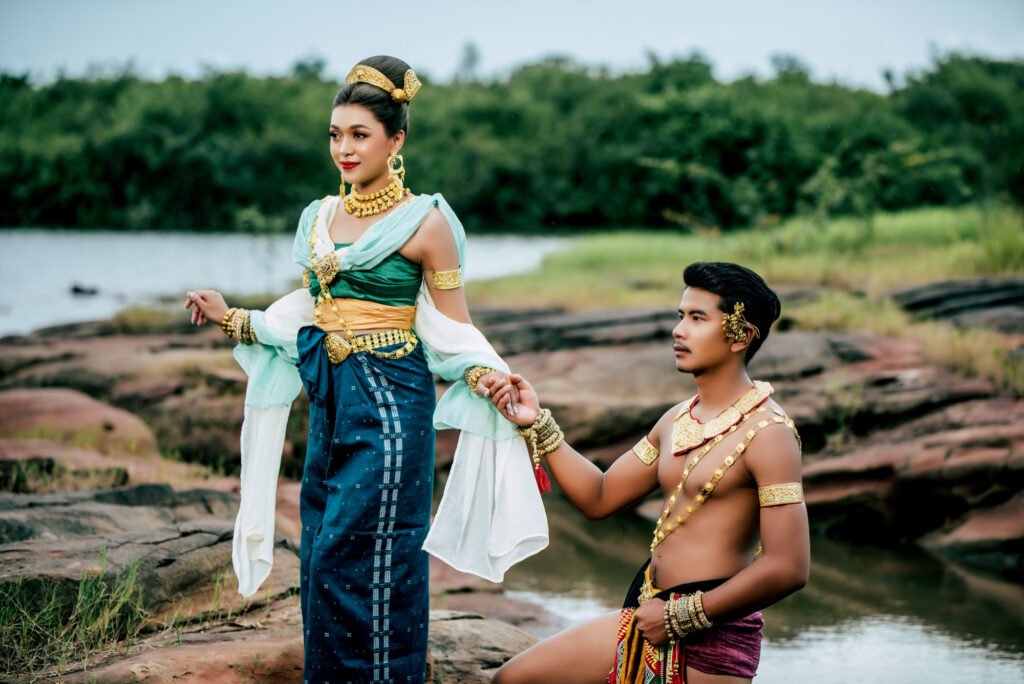
Every morning, before you say a word to anyone, you speak to the world. You choose a costume, a uniform, or a statement piece that signals who you are, how you feel, and where you belong. Fashion is often dismissed as frivolous or purely aesthetic, but history tells a different story. It is one of the most enduring forms of communication we have.
From the linen sheaths of the Nile Delta to the digital skins of the metaverse, what we wear has always been a reflection of the times. It maps our economic struggles, our political revolutions, and our shifting social values. To trace the history of fashion is to trace the history of humanity itself.
This journey through the ages reveals that style has never just been about covering the body. It has always been about uncovering the self.
The Cradle of Style: Status in Ancient Civilizations
Long before the concept of a “trend” existed, early civilizations were already using clothing to define social hierarchies. In the ancient world, you were quite literally what you wore.
Ancient Egypt: The Golden Standard
In the arid heat of Ancient Egypt, clothing was primarily practical, yet deeply symbolic. The fundamental garment was the schenti for men (a kilt-like piece) and a simple sheath dress for women, both made from lightweight linen to combat the heat. However, simplicity did not equal equality.
Status was conveyed through the quality of the fabric and the accessories that accompanied it. While a farmer might wear rough, coarse linen, a pharaoh or high priest would wear linen so finely woven it was nearly transparent. The elite adorned themselves with heavy gold jewelry, elaborate wigs, and kohl eyeliner. These weren’t just beauty standards; they were connections to the divine. To dress like a god was to assert one’s right to rule.
Greece and Rome: The Politics of Draping
Move across the Mediterranean to Ancient Greece, and the philosophy of dress shifts. The Greeks favored the chiton and the himation, garments that were not cut or sewn but draped around the body. This required skill and posture to wear correctly. A poorly draped garment suggested a lack of refinement.
The Romans took this social coding even further. They implemented what we now call sumptuary laws—legal restrictions on who could wear what. The toga, a massive semicircular cloth, was the distinct dress of the Roman male citizen. It was forbidden for non-citizens and slaves.
Color played a pivotal role here. The shade “Tyrian purple,” extracted painfully from thousands of sea snails, was reserved exclusively for the emperor and high-ranking senators. Wearing this color without permission wasn’t just a fashion faux pas; it was a crime. In Rome, fashion was the law.
The Age of Opulence: Renaissance to Revolution
As the Middle Ages gave way to the Renaissance, humanity’s relationship with clothing underwent a structural change. We stopped draping and started tailoring.
The Renaissance and the Art of Tailoring
The 14th and 15th centuries saw the birth of fashion as a cycle of changing styles. This was the era of construction. Clothes were cut, sewn, padded, and stiffened to reshape the human body.
For the wealthy, dress became a theatrical display of power. The goal was to take up space. Women wore farthingales (hoop skirts) that widened the hips, while men wore doublets with broad, padded shoulders. Fabrics became heavier and more luxurious—velvets, brocades, and silks imported from the East became the standard for European nobility.
This era also introduced the concept of the “fashion victim.” The pursuit of the ideal silhouette often came at the cost of physical comfort. Tight lacing and heavy layers were mandatory for anyone wishing to be seen as civilized.
The Industrial Revolution: Fashion for the Masses
For thousands of years, clothing was handmade, expensive, and scarce. The average person possessed only a few garments, repairing them until they disintegrated. The Industrial Revolution of the 18th and 19th centuries shattered this paradigm.
The invention of the cotton gin, the spinning jenny, and eventually the sewing machine mechanized the production of textiles. Suddenly, fabric was cheaper and faster to produce.
This period marked the democratization of style. While the upper classes still relied on bespoke tailors, the middle and working classes could now afford ready-made garments. The department store was born, turning shopping from a necessity into a leisure activity. Fashion was no longer the sole province of the aristocracy; it was becoming a public language.
The 20th Century: Rebellion and Ready-to-Wear
If the 19th century was about production, the 20th century was about personality. This was the century where fashion became fractured, fast, and fiercely individualistic.
Breaking the Mold
The early 1900s began with rigid corsetry, but World War I changed everything. Women entered the workforce, and restrictive clothing became impractical. Enter Coco Chanel. She popularized the use of jersey fabric—previously reserved for men’s underwear—to create comfortable, chic clothing for women. She helped kill the corset and introduced the idea that luxury could be comfortable.
The Rise of Ready-to-Wear
By the mid-century, the dominance of Haute Couture (custom-fitted clothing) was being challenged by Prêt-à-porter (ready-to-wear). Designers like Yves Saint Laurent recognized that the future wasn’t in dressing a few hundred heiresses, but in dressing the millions of women who wanted to look good in their daily lives. This shift allowed trends to travel globally at lightning speed.
Subcultures and Style Tribes
The second half of the 20th century proved that fashion flows up from the streets just as often as it trickles down from the runway.
- The 1950s: The teenager emerged as a consumer category. Leather jackets and denim became symbols of youthful rebellion, popularized by icons like James Dean.
- The 1960s: The “Youthquake.” Hemlines shot up with the mini skirt, and the hippie movement introduced global, eclectic influences, rejecting the stiff formality of their parents’ generation.
- The 1970s: Punk rock used fashion as a weapon. Safety pins, ripped shirts, and aggressive hairstyles were designed to shock and dismantle traditional British propriety.
Fashion had become a badge of allegiance. You could identify a person’s music taste, political leaning, and social circle just by looking at their shoes.
The Modern Era: Sustainability and Digital Identity
As we navigate the 21st century, the fashion industry faces its biggest existential crisis and its strangest evolution.
The Fast Fashion Dilemma
The democratization that began in the Industrial Revolution accelerated into “fast fashion” in the late 1990s and 2000s. Brands like Zara and H&M perfected a supply chain that could move a garment from design to sales floor in weeks.
While this allowed consumers to buy on-trend clothes for the price of a lunch, the environmental and human cost has been staggering. The modern consumer is now caught in a tug-of-war. On one side is the desire for novelty; on the other is the awareness of overflowing landfills and unethical labor practices.
This has birthed a new movement: sustainable fashion. Thrift flipping, vintage shopping, and “slow fashion” brands are gaining traction. For the modern generation, wearing a thrifted jacket isn’t just a style choice; it’s a political statement against consumerism.
The Digital Shift
Perhaps the most fascinating development is that fashion is leaving the physical world entirely. In the age of social media, an outfit often exists to be photographed, posted, and archived.
We are seeing the rise of digital fashion—clothing that creates no waste because it doesn’t exist. Gamers spend billions annually on “skins” for their avatars. High-fashion brands are releasing NFT collections. As we spend more of our lives in digital spaces, the question of “who we are” is being answered by pixels rather than textiles.
How Style Reflects Identity
Throughout this timeline, one thing remains constant: the psychology of dress. Psychologists have coined the term “enclothed cognition” to describe the influence that clothes have on the wearer’s psychological processes.
When you put on a suit, you tend to think more abstractly and feel more authoritative. When you wear athletic gear, you are more likely to make healthy choices. We don’t just dress for others; we dress to tell ourselves who we need to be that day.
In the past, identity was often assigned. If you were a peasant, you dressed like a peasant. If you were a Roman citizen, you wore the toga. Today, identity is curated. We have the unprecedented freedom to mix eras, genders, and aesthetics. A single person can dress like a minimalist corporate executive on Monday and a bohemian artist on Saturday.
Fashion has evolved from a marker of rigid social standing to a tool of fluid self-expression. It allows us to try on different versions of ourselves, to signal our values, and to find our tribe in a crowded world.
The Future of the Fabric
History shows us that fashion is never static. It is a pendulum that swings between excess and minimalism, restriction and freedom, conformity and rebellion.
As we look forward, the future of fashion seems to be a blend of high-tech innovation and a return to ancestral wisdom. We are seeing fabrics grown from mushrooms, leather made from pineapples, and a renewed appreciation for the longevity of a well-made garment.
Whether we are draped in Roman wool or digital textures, the core human desire remains the same. We want to be seen. We want to be understood. And we want to look good doing it.
Keep Your Style Evolving
Fashion history is vast, and we’ve only scratched the surface of the stories woven into our clothes. If you want to dive deeper into the trends that shaped us and get insights into the future of sustainable style, don’t miss out.
[Subscribe to our newsletter] today for weekly fashion history insights, style tips, and exclusive content delivered straight to your inbox.


