


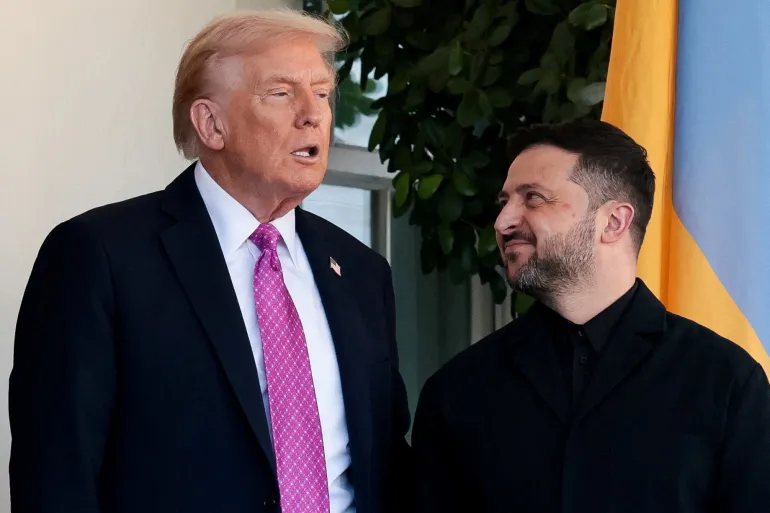
The timeline of Ukraine’s democracy has been paused by the brutal reality of war. Under martial law, the presidential and parliamentary elections originally scheduled for 2024 were suspended—a decision rooted in the constitution and the sheer impossibility of holding a free and fair vote while missiles strike cities and millions of citizens are displaced. However, as the conflict grinds on, conversations in Kyiv and Western capitals are tentatively shifting toward the horizon. The year 2026 is emerging as a critical potential milestone: a target for the next major electoral cycle.
These future elections will be unlike any in Ukraine’s history. They will not merely decide who sits in the Verkhovna Rada or the presidential office on Bankova Street. Instead, the 2026 vote serves as a referendum on the war effort, a verdict on the sacrifices made, and perhaps most importantly, a mandate for whatever peace or protracted conflict follows.
The stakes are existential. A successful election could solidify Ukraine’s democratic resilience, proving to the world (and to Russia) that its institutions remain unbreakable. Conversely, a disorganized or contested vote could fracture national unity at a moment when cohesion is the country’s strongest weapon. This analysis explores the landscape of a potential 2026 election, examining the key players, the logistical nightmares, and the geopolitical shockwaves that will follow the results.
The Geopolitical Climate: Democracy Under Fire
To understand the weight of a 2026 election, one must first understand the environment in which it would take place. Ukraine is currently operating under a “social contract of survival.” Political rivalries, while not entirely extinguished, have been largely subsumed by the need for defense. President Volodymyr Zelenskyy’s approval ratings, though naturally fluctuating after years of grueling warfare, remain historically high compared to pre-war figures.
However, the unity of the early days of the full-scale invasion has evolved. Fatigue is settling in. The economy is battered, relying heavily on foreign aid to keep the lights on and pensions paid. By 2026, the war will have been raging for four years since the full-scale invasion, and twelve years since the initial annexation of Crimea.
The international community watches closely. Western allies, particularly the European Union and the United States, view elections as a non-negotiable pillar of the democratic values Ukraine is fighting to protect. There is subtle pressure to demonstrate that democracy functions even in wartime, yet there is also a pragmatic understanding that rushing a vote could be disastrous. The 2026 date represents a hope—perhaps optimistic—that the security situation will have stabilized enough to allow for a legitimate democratic process.
Key Political Figures and Emerging Factions
The political landscape of 2026 will likely be defined by three distinct archetypes: the Wartime Leader, the Military Veteran, and the Reformer.
The Incumbent Power
President Zelenskyy remains the central figure. His transformation from a television satirist to a wartime leader is already historical canon. In a 2026 scenario, his platform would likely center on continuity, security guarantees, and the reconstruction of the state. However, incumbency in a war of attrition is a double-edged sword. He will face scrutiny over corruption crackdowns, the pace of mobilization, and the strategic decisions made during the war’s darkest months.
The Rise of the Military Bloc
A new political force is inevitable: the veterans. With hundreds of thousands of men and women serving on the front lines, the military vote—and the military voice—will be the most coveted demographic. It is highly probable that a new political party, or a coalition of existing ones, will form around high-profile military commanders or popular volunteer figures.
General Valerii Zaluzhnyi, the former Commander-in-Chief, remains a figure of immense public trust despite his dismissal in early 2024. While he has not overtly declared political ambitions, his shadow looms large over any future ballot. A “party of soldiers” would campaign on accountability, demanding that the sacrifices of the trenches are honored with a corruption-free government.
The Opposition and Civil Society
The traditional opposition parties that existed pre-2022 have struggled to find relevance. Pro-Russian factions are legally and socially extinct. This leaves a vacuum for a pro-European, anti-corruption opposition. Civil society activists, many of whom pivoted to logistics and fundraising for the army, may coalesce into a political force that demands radical transparency and accelerated EU integration, challenging the current administration on domestic policy failures masked by the war.
Public Opinion: The Mandate for Peace or Victory
The most volatile variable in the 2026 equation is the mood of the electorate. Public opinion will dictate the boundaries of any peace negotiation.
Currently, the majority of Ukrainians remain staunchly opposed to territorial concessions. The trauma of Bucha, Mariupol, and Izyum has hardened resolve; trading land for a ceasefire is widely viewed not as a compromise, but as a capitulation that would only allow Russia to rearm.
However, by 2026, the demographic reality may shift the discourse.
- The Exhaustion Factor: If the front lines remain frozen and casualties mount, a segment of the population may begin to prioritize a cessation of hostilities over total territorial reclamation.
- The Diaspora Voice: Millions of Ukrainians are currently abroad. Their participation in the election is crucial, but their perspectives may differ from those who remained under constant bombardment. Bridging the gap between the diaspora and the internal population will be a major campaign challenge.
Any candidate running in 2026 will have to walk a tightrope. Promoting peace talks could look like weakness; promising total victory could look like a denial of reality. The winner will be the one who can articulate a vision of security—a guarantee that the war will not return for the next generation.
The International Dimension: Aid and Alliances
Ukraine’s domestic politics are inextricably linked to its foreign policy. The 2026 election will likely serve as a litmus test for continued Western support.
The European Union Path
The EU accession process requires rigorous democratic standards. Brussels will be monitoring the election for transparency, media freedom, and the fair treatment of opposition candidates. A flawless election would accelerate Ukraine’s integration; a flawed one could freeze accession talks, leaving Ukraine in a dangerous grey zone.
The American Factor
The political calendar in the United States also plays a role. By 2026, the U.S. will be mid-term in its own presidential cycle (following the 2024 election). If American support wavers due to domestic isolationism, the Ukrainian electorate may pivot toward leaders who promise greater self-sufficiency or closer ties to European security architectures independent of Washington.
Furthermore, Russia will undoubtedly attempt to interfere. Disinformation campaigns designed to amplify internal divisions—pitting the army against the government, or the diaspora against the residents—will be rampant. The resilience of Ukraine’s information space will be tested as severely as its air defenses.
The Logistical Nightmare: Voting Under Fire
Holding an election in 2026 presents logistical challenges that would cripple most nations. The Central Election Commission (CEC) faces a trifecta of obstacles: security, the voter registry, and infrastructure.
Security Concerns
How do you set up polling stations within range of Russian artillery? In frontline cities like Kharkiv, Zaporizhzhia, and Kherson, gathering large groups of people at schools or community centers creates a target. The government may need to implement widespread electronic voting or extended voting periods to minimize density. However, digital voting introduces cybersecurity risks, specifically from Russian hackers intent on delegitimizing the count.
The Displaced Voter Registry
Updating the voter registry is a monumental task. Millions of citizens are internally displaced; millions more are refugees across Europe and North America. Ensuring these citizens can vote requires cooperation with foreign governments to set up hundreds of polling stations abroad. Without the diaspora’s participation, the election results could be challenged as unrepresentative.
The Occupied Territories
A painful question remains: what about the citizens living under Russian occupation? It is virtually impossible for them to vote. This creates a constitutional and moral dilemma. While the Ukrainian government maintains sovereignty over these regions, holding an election without them effectively acknowledges the temporary loss of control. The 2026 vote will likely have to proceed without these territories, with provisions made to fill those parliamentary seats once control is regained.
Long-Term Implications for Regional Security
The outcome of the 2026 election will ripple far beyond Ukraine’s borders. It will define the nature of the security architecture on NATO’s eastern flank.
If a government with a strong mandate emerges—one committed to defense reform, anti-corruption, and Western integration—Ukraine becomes a fortress of democracy in Eastern Europe. It becomes a reliable partner for NATO, capable of deterring future aggression not just through military might, but through institutional stability.
However, if the election leads to fragmentation or internal conflict, it emboldens autocratic regimes globally. It would validate the narrative that democracies are chaotic and unable to sustain prolonged resistance. Russia’s strategic goal has always been the political collapse of Ukraine from within; a chaotic 2026 election is their best hope of achieving what their tanks could not.
Furthermore, the election will determine the reconstruction model. A transparent government will attract private investment and Marshall Plan-style aid. A corrupt or unstable government will see aid dry up, leaving Ukraine in a state of post-war ruin that breeds radicalism and instability.
Looking Toward the Horizon
The 2026 elections are theoretical, yet the groundwork is being laid today. Every legislative change, every military appointment, and every diplomatic summit is a step toward that eventual ballot.
Ukraine is fighting two wars simultaneously: one for its territory against a foreign invader, and one for its soul as a democratic state. The 2026 vote will be the convergence of these two struggles. It represents the moment when the “social contract of survival” must transition into a “social contract of development.”
The world should not view this election merely as a procedural requirement. It is a vital component of the war effort. A democratic, unified, and politically legitimate Ukraine is the ultimate defeat for authoritarianism. As the date approaches, the resilience of the Ukrainian people will once again be tested, not by sirens and shelling, but by the ballot box.
Stay Ahead of the Geopolitical Curve
The situation in Eastern Europe changes daily, and the implications for global markets, security, and democracy are profound. Don’t rely on headlines alone.
Subscribe to our newsletter today for deep-dive analysis, expert commentary, and real-time updates on the geopolitical landscape shaping our future.


