


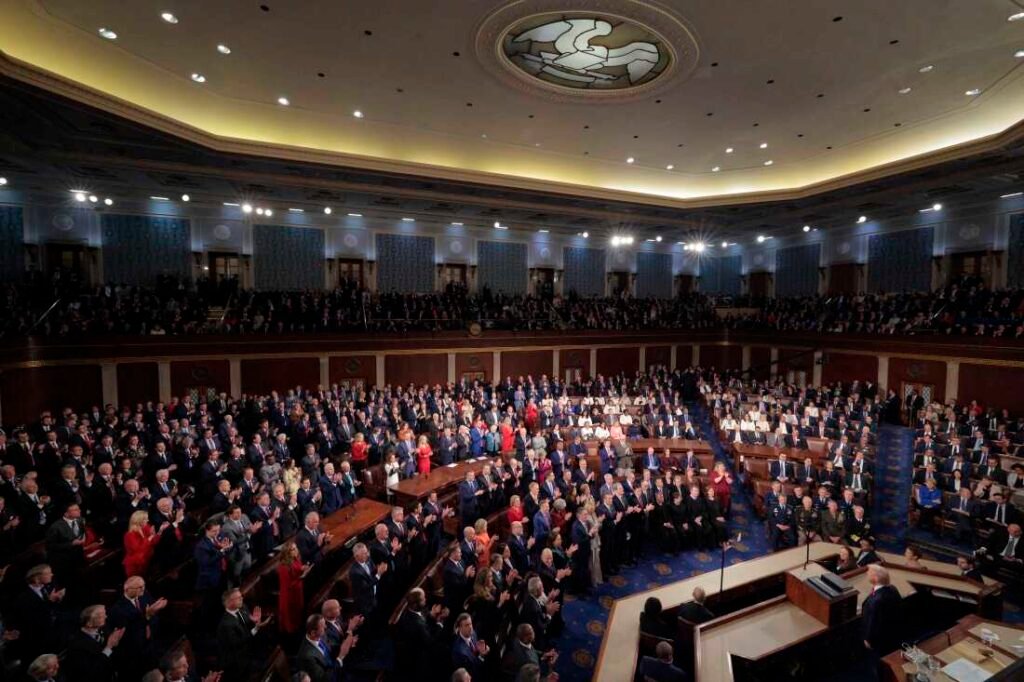
Every year, millions of Americans tune in to watch the President deliver a nationally televised speech before a joint session of Congress. But what exactly is the State of the Union address, and why does it matter?
The State of the Union is more than a political tradition—it’s a constitutional requirement that has evolved into one of the most significant events in American governance. From handwritten letters delivered by messengers to prime-time broadcasts watched by global audiences, this annual address has transformed alongside the nation itself.
Understanding the State of the Union means exploring its constitutional roots, tracing its historical evolution, and examining its modern role in shaping policy, public opinion, and political strategy. Whether you’re a political enthusiast, a student of American history, or simply curious about how government works, this comprehensive guide will walk you through everything you need to know about this cornerstone of American democracy.
The Constitutional Foundation of the State of the Union
The State of the Union address finds its authority in Article II, Section 3 of the U.S. Constitution, which states that the President “shall from time to time give to the Congress Information of the State of the Union, and recommend to their Consideration such Measures as he shall judge necessary and expedient.”
This constitutional mandate establishes two core purposes: informing Congress about the nation’s condition and proposing legislative priorities. The Founders intentionally kept the language broad, allowing flexibility in how presidents fulfill this obligation.
Originally, the Constitution didn’t specify the format, frequency, or delivery method. It simply required that the President keep Congress informed and share recommendations for legislation. This ambiguity has allowed the address to adapt across different eras, technologies, and political climates.
The phrase “from time to time” left room for interpretation. While the address has become an annual tradition, the Constitution doesn’t mandate yearly delivery. Early presidents sometimes fulfilled this duty multiple times per year or skipped years entirely when circumstances warranted.
The Primary Purpose: Reporting and Recommending
At its core, the State of the Union serves two essential functions that reflect the separation of powers and system of checks and balances built into American government.
Reporting on the Nation’s Condition
The President uses the address to provide Congress—and by extension, the American people—with a comprehensive assessment of the country’s status. This includes updates on economic performance, national security, social issues, and achievements from the previous year.
This reporting function ensures transparency and accountability. Congress needs accurate information about the executive branch’s activities and the nation’s overall health to fulfill its legislative responsibilities effectively. The address creates a formal opportunity for the President to communicate this information directly.
Proposing a Legislative Agenda
Beyond reporting, the President outlines policy priorities and proposes specific legislation for Congress to consider. This agenda-setting function allows the executive branch to influence the legislative process, even though the President cannot introduce bills directly.
The proposals typically reflect the President’s political philosophy and party platform. They serve as a blueprint for the administration’s goals for the coming year and provide a framework for measuring presidential success. Congress may embrace, modify, or reject these proposals based on its own priorities and political composition.
Historical Evolution: From Letters to Spectacles
The State of the Union has undergone dramatic transformations since George Washington delivered the first address on January 8, 1790, in New York City.
The Early Republic: In-Person Addresses
George Washington and John Adams both delivered their annual messages in person before Congress. These speeches were relatively brief and formal affairs attended primarily by members of Congress and government officials.
Washington’s first address lasted just ten minutes and focused on topics like national defense, relationships with Native American tribes, and the need for a uniform currency. The ceremonial aspect existed, but the addresses were primarily functional communications between branches of government.
Jefferson’s Written Tradition
Thomas Jefferson disrupted this practice in 1801 by sending his annual message to Congress in written form, claiming that in-person delivery resembled the British monarch’s Speech from the Throne—too royal for a republic.
Jefferson’s written tradition became standard practice for over a century. Presidents sent their messages to Congress, where clerks read them aloud. This approach emphasized substance over spectacle and reduced the theatrical elements Jefferson found objectionable.
The written format also allowed for more detailed and technical discussions. Messages could include extensive policy explanations, statistical data, and complex legislative proposals that would be difficult to communicate effectively in a speech.
Wilson’s Revival of the Speech
Woodrow Wilson broke with tradition in 1913 by delivering his annual message in person, becoming the first president since John Adams to do so. Wilson believed that direct communication with Congress would strengthen the connection between the executive and legislative branches.
Wilson’s decision reflected Progressive Era beliefs about active presidential leadership and direct democracy. He viewed the presidency as a “bully pulpit” for shaping public opinion and believed personal delivery would make his message more compelling and memorable.
The Modern Era: Television and Mass Media
The introduction of radio broadcasting transformed the address into a mass communication event. Calvin Coolidge’s 1923 address became the first broadcast on radio, allowing millions of Americans to hear their President’s message simultaneously.
Television took this transformation further. Harry Truman’s 1947 address was the first televised State of the Union, though the technology was still in its infancy. By the 1960s, television had become the dominant medium, turning the address into a carefully staged media event.
The televised format changed everything—from the length and style of the speech to its intended audience. Presidents now spoke directly to the American people rather than primarily addressing Congress. Visual elements, audience reactions, and carefully timed applause lines became integral parts of the presentation.
Timing and Terminology
The address wasn’t officially called the “State of the Union” until Franklin D. Roosevelt adopted that phrase in 1935. Previous presidents used various terms, including “Annual Message” or simply referred to their constitutional obligation.
The timing has also varied. Early addresses occurred in December, coinciding with when Congress convened. Modern addresses typically happen in late January or early February, after Congress has been in session for several weeks. This timing allows the President to set the agenda for the year while Congress is still forming its legislative priorities.
Modern Impact and Significance
The contemporary State of the Union has evolved into a multi-faceted political event with far-reaching implications beyond its constitutional mandate.
Shaping Public Opinion
The address provides presidents with an unparalleled platform to speak directly to millions of Americans. Networks typically broadcast the speech live, and cable news channels provide extensive pre- and post-speech analysis.
This mass audience allows presidents to frame national conversations, highlight specific issues, and build public support for their policy priorities. A well-delivered address can boost presidential approval ratings and generate momentum for legislative initiatives.
Conversely, a poorly received address can damage a president’s standing and embolden political opponents. The high-stakes nature of the event means that administrations spend weeks preparing, with extensive rehearsals and careful attention to every word and gesture.
Influencing Policy and Legislation
While Congress isn’t obligated to act on presidential proposals, the State of the Union significantly influences the legislative agenda. Issues highlighted in the address often receive increased attention from lawmakers, media, and advocacy groups.
Committee hearings frequently reference State of the Union proposals, and members of the President’s party typically introduce legislation aligned with the outlined priorities. Even opposition party members must respond to the agenda set by the President, either by offering alternatives or explaining their disagreements.
The address also serves as a measuring stick for presidential success. As the year progresses, journalists and political analysts evaluate how much of the proposed agenda has been accomplished, creating accountability for both the President and Congress.
Political Theater and Strategy
The modern State of the Union is carefully choreographed political theater. Every element—from who sits where to which guests are invited to the gallery—carries symbolic meaning.
Presidents invite specific guests whose stories illustrate policy priorities or humanize abstract issues. These guests, often introduced during the speech, provide emotional moments that resonate with viewers and generate media coverage.
The opposition party delivers a response immediately after the address, offering a contrasting vision and critiquing the President’s record and proposals. This response has become an important tradition in its own right, often serving as a platform for rising political stars.
Visual elements matter immensely. Camera shots capture reactions from members of Congress, the Supreme Court justices in attendance, and the President’s cabinet. Standing ovations, applause patterns, and even seating arrangements reflect political divisions and alliances.
International Dimension
Foreign governments and international media closely watch the State of the Union for signals about American foreign policy priorities. Mentions of specific countries, international issues, or defense spending can influence diplomatic relationships and global markets.
Allies look for reassurances about American commitments, while adversaries parse the speech for hints about potential policy shifts. The address can move markets, particularly when it addresses trade policy, economic sanctions, or international agreements.
Generative AI and the Future of Political Communication
Emerging technologies are beginning to reshape how political speeches are crafted, analyzed, and consumed—including the State of the Union address.
AI in Speechwriting and Preparation
Generative AI tools are increasingly being used in the speechwriting process, helping draft sections, suggest phrasing, and analyze how language might resonate with different audiences. These tools can review previous successful speeches, identify effective rhetorical devices, and generate options for speech writers to refine.
AI can also assist with fact-checking, ensuring that statistics and claims included in the address are accurate and properly sourced. Natural language processing algorithms can analyze drafts for readability, emotional tone, and potential misinterpretations.
However, the human element remains critical. Presidential speechwriters still craft the overall narrative, make final decisions about content, and ensure the speech reflects the President’s authentic voice and values.
Enhanced Political Analysis
Financial institutions, political consultants, and media organizations are deploying AI to analyze State of the Union addresses in real-time. These tools can assess sentiment, identify key themes, predict market reactions, and compare the speech to historical addresses.
AI-powered sentiment analysis tools can gauge public reaction by monitoring social media, news coverage, and online discussions immediately following the address. This instant feedback provides valuable insights into which messages resonated and which fell flat.
Text analysis algorithms can identify shifts in presidential priorities by comparing current addresses to previous ones, detecting subtle changes in emphasis or framing that might signal policy direction changes.
Market and Regulatory Implications
In the financial sector, AI tools are being used to quickly assess State of the Union addresses for potential market-moving information. Algorithms scan speeches for mentions of specific industries, regulatory changes, or economic policies that could affect stock prices, bond yields, or currency values.
Regulatory analysts use AI to identify potential policy shifts that might lead to new rules or enforcement priorities. This allows financial institutions to prepare for regulatory changes and adjust compliance strategies accordingly.
The speed of AI analysis provides competitive advantages. Firms that can quickly interpret and act on State of the Union announcements may benefit from brief windows of market opportunity before broader consensus forms about the speech’s implications.
Challenges and Concerns
The use of AI in political communication raises important questions about authenticity, manipulation, and the quality of democratic discourse. If speeches are increasingly AI-assisted, does that diminish their value as genuine expressions of presidential vision?
There are also concerns about AI-generated misinformation or deepfakes being used to distort State of the Union messages or create false narratives about what was said. Ensuring the integrity and authenticity of political communication becomes more challenging as generative AI becomes more sophisticated.
The Democratic Significance of the State of the Union
Despite its evolution and the theatrical elements that now surround it, the State of the Union remains a vital democratic institution that embodies core American principles.
The address provides transparency by requiring the President to publicly account for the administration’s actions and the nation’s condition. This accountability strengthens democratic governance by ensuring that executive power is exercised visibly and subject to public scrutiny.
It facilitates the separation of powers by creating a formal channel for communication between the executive and legislative branches. The President proposes, but Congress disposes—the address respects this constitutional division while allowing for executive influence on the legislative agenda.
The State of the Union also symbolizes democratic continuity. Regardless of political divisions, each year brings all branches of government together in a peaceful, ceremonial affirmation of constitutional governance. This ritual reinforces shared commitment to democratic institutions even during periods of intense partisan conflict.
For citizens, the address provides an accessible summary of government priorities and national challenges. It serves an educational function, helping Americans understand complex policy issues and the reasoning behind proposed solutions.
Stay Informed About Policy and Market Developments
The State of the Union address offers crucial insights into regulatory priorities, economic policies, and legislative agendas that can significantly impact financial markets and business strategy.
Understanding these signals early provides competitive advantages for financial professionals, policy analysts, and business leaders. As AI continues to transform how we analyze and respond to political communication, staying ahead of these developments becomes increasingly important.
Subscribe to our newsletter for in-depth analysis of State of the Union addresses, regulatory changes, and market implications. We combine expert political analysis with AI-powered insights to help you navigate the intersection of policy and markets.
Don’t let critical policy announcements catch you off guard—join our community of informed professionals who understand that political developments drive market opportunities.


