


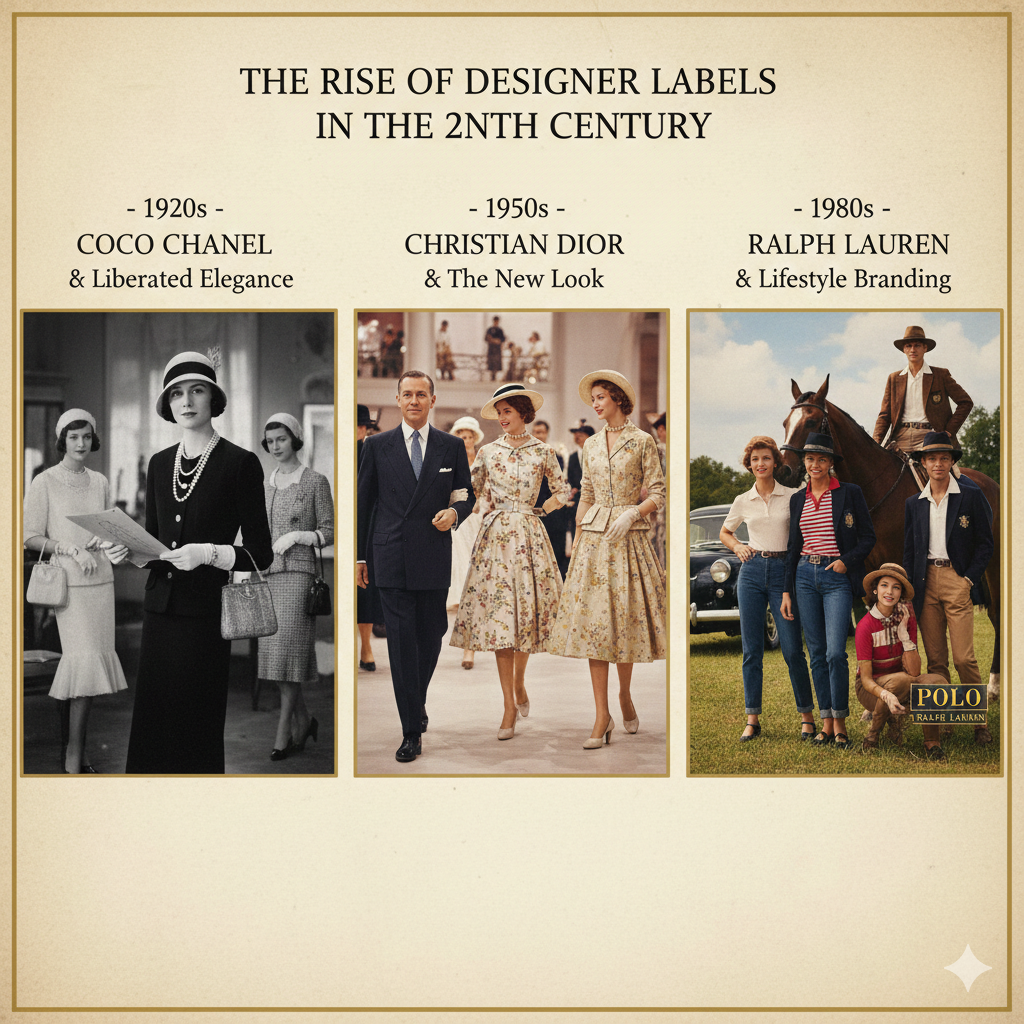
Fashion has always reflected society’s values, but the 20th century witnessed something unprecedented: the transformation of individual artisans into global empires. Designer labels evolved from discreet signatures sewn into haute couture gowns to powerful symbols of wealth, taste, and identity. By the century’s end, wearing a designer label wasn’t just about clothing—it was a declaration of who you were and who you aspired to be.
This shift didn’t happen overnight. It required a perfect storm of industrialization, mass media, celebrity culture, and strategic branding. Understanding this evolution reveals not only how fashion changed, but how our relationship with luxury, identity, and consumption was fundamentally reshaped.
Let’s explore how designer labels rose from the ateliers of Paris to dominate closets, runways, and cultural consciousness worldwide.
The Birth of the Designer Identity in Early 20th-Century Couture
Before the 20th century, fashion was intensely personal. Wealthy clients visited dressmakers who created bespoke garments tailored to individual measurements and preferences. These artisans were skilled, respected professionals, but they operated largely in anonymity. The garment mattered more than the maker.
Charles Frederick Worth changed this dynamic in the mid-1800s by establishing the first true fashion house in Paris. Worth didn’t just execute his clients’ visions—he dictated style. He presented seasonal collections, demanded that clients come to him, and, crucially, signed his work. This was revolutionary. For the first time, the designer’s name became synonymous with quality, exclusivity, and creative authority.
By the early 1900s, couturiers like Paul Poiret and Jeanne Lanvin built upon Worth’s foundation. Poiret liberated women from corsets, introducing flowing, exotic silhouettes inspired by Orientalism and the arts. He understood that fashion wasn’t merely functional—it was artistic expression. Poiret also pioneered modern marketing techniques, launching perfumes and hosting extravagant parties that generated publicity and mystique around his brand.
Coco Chanel emerged in the 1920s with a radically different approach. She championed simplicity, comfort, and elegance, creating designs that reflected the modern woman’s desire for independence. Her little black dress, jersey suits, and costume jewelry democratized chic while maintaining aspirational appeal. Chanel understood that luxury could be understated, and her name became shorthand for timeless sophistication.
These early designers established a critical precedent: their personal vision, aesthetic sensibility, and name carried value beyond the garments themselves. The designer identity was born.
From Private Ateliers to Global Brand Names
The interwar period saw fashion houses begin to think beyond made-to-order clothing. Economic pressures and changing social dynamics necessitated new business models. Designers started licensing their names for accessories, perfumes, and ready-to-wear lines that reached broader audiences.
Elsa Schiaparelli exemplified this entrepreneurial spirit. Her surrealist designs collaborated with artists like Salvador Dalí, creating pieces that blurred the line between fashion and art. Schiaparelli understood spectacle and branding, using shocking pink as her signature color and incorporating whimsical elements that generated publicity and desire.
After World War II, Christian Dior revolutionized fashion with his “New Look” in 1947. His nipped-waist, full-skirted silhouettes represented a return to femininity, luxury, and opulence after years of wartime austerity. But Dior’s impact extended beyond design. He built a comprehensive business empire that included licensing agreements, international boutiques, and diversified product lines. The House of Dior became a template for modern luxury brands, demonstrating that a designer’s name could successfully extend across multiple categories while maintaining prestige.
The logo began appearing more prominently during this era. What started as discreet labels inside garments gradually moved outside, becoming visible markers of status. Fashion houses recognized that their names carried cachet, and customers increasingly wanted that association displayed.
The Golden Age of Couture and Modern Luxury Perceptions
The 1950s represented the apex of haute couture’s cultural influence. Paris reigned supreme as the fashion capital, with designers like Dior, Balenciaga, Givenchy, and Yves Saint Laurent setting global trends. Couture gowns were masterpieces of craftsmanship, requiring hundreds of hours and exceptional skill to create.
This era cemented several perceptions about luxury that persist today. First, exclusivity became paramount. Haute couture served a tiny clientele of wealthy women who could afford custom creations. This scarcity created desire among those outside this privileged circle.
Second, celebrity endorsement became crucial. When Audrey Hepburn wore Givenchy in “Breakfast at Tiffany’s,” she immortalized both the little black dress and the designer who created it. Grace Kelly’s wedding dress by Helen Rose and her subsequent association with Hermès bags demonstrated how public figures could elevate designer brands into cultural icons.
Third, the mid-century established the notion that designer clothing conveyed taste, sophistication, and social standing. Wearing a couture gown wasn’t merely about looking beautiful—it signaled membership in an elite club, access to rarified experiences, and discerning aesthetic judgment.
Yet, couture’s very exclusivity contained the seeds of transformation. As the 1950s progressed, ready-to-wear began challenging haute couture’s dominance. The economics simply didn’t work for most fashion houses to survive on custom orders alone. Designers increasingly relied on licensing, accessories, and prêt-à-porter lines that brought their names to wider audiences at accessible price points.
This democratization of designer labels would accelerate dramatically in subsequent decades, fundamentally altering luxury’s meaning and accessibility.
How Industrialization and Mass Media Accelerated Designer Dominance
The 1960s and 1970s witnessed seismic shifts in fashion’s production, distribution, and consumption. Industrialization made mass production efficient and affordable. Advances in textile manufacturing, pattern-making, and garment construction allowed designers to produce ready-to-wear collections that maintained quality while reaching far more customers than couture ever could.
Simultaneously, mass media exploded. Fashion magazines proliferated, bringing designer aesthetics into millions of homes. Television broadcasts of fashion shows made runway trends immediately visible to global audiences. Advertising became increasingly sophisticated, with designers investing heavily in campaigns that built brand identity and desire.
This combination proved transformative. Designers could now operate at scale, producing collections that generated substantial revenue while maintaining the prestige associated with their names. The fashion show evolved from a private salon presentation to a major media event designed to generate publicity and drive sales.
Yves Saint Laurent epitomized this transition. He launched Rive Gauche in 1966, one of the first designer ready-to-wear boutiques, making his aesthetic accessible beyond couture clients. Saint Laurent understood that modern luxury required accessibility without sacrificing aspiration. His designs were innovative yet wearable, bridging haute couture’s artistry with ready-to-wear’s practicality.
The logo became increasingly prominent during this era. Brands like Gucci, Louis Vuitton, and Hermès featured their insignias prominently on products. This wasn’t accidental. As designer goods reached broader markets, visible branding served dual purposes: it authenticated genuine products in an era of growing counterfeits, and it allowed wearers to display their purchasing power and taste.
Critics began questioning whether conspicuous consumption was replacing genuine appreciation for design and craftsmanship. Yet the market spoke clearly: consumers desired designer labels not just for quality, but for what those labels communicated about themselves.
Cultural Milestones That Turned Fashion Houses into Status Symbols
Several key moments in the latter half of the 20th century crystallized designer labels as ultimate status symbols.
The Rise of American Sportswear
Designers like Calvin Klein, Ralph Lauren, and Donna Karan brought American sensibilities to luxury fashion. Their aesthetic emphasized ease, versatility, and understated elegance rather than European couture’s formality. Klein’s minimalist jeans and underwear made his name ubiquitous, while Lauren built an entire lifestyle brand around aspirational American imagery. These designers proved that luxury could be accessible, wearable, and thoroughly modern while commanding premium prices.
Hip-Hop’s Embrace of Luxury
By the 1980s and 1990s, hip-hop culture championed designer labels as symbols of success and aspiration. Artists wore and referenced brands like Gucci, Versace, and Louis Vuitton in lyrics and videos, introducing luxury fashion to new audiences and contexts. This cultural moment demonstrated that designer labels transcended traditional fashion circles, becoming integral to identity expression across diverse communities.
The Supermodel Era
The late 1980s and 1990s saw models like Naomi Campbell, Cindy Crawford, and Kate Moss become household names. Their association with particular designers and brands amplified fashion’s cultural prominence. Supermodels embodied the glamour and aspiration associated with designer labels, making high fashion more visible and desirable than ever before.
Logo Mania
The 1990s embraced conspicuous branding with unprecedented enthusiasm. Monogrammed bags, logo-covered apparel, and branded accessories dominated fashion. Critics derided this as vulgar excess, yet it represented fashion’s complete transformation into status communication. Wearing designer labels wasn’t subtle—it was the point.
The Luxury Conglomerate Model
Bernard Arnault’s construction of LVMH and François Pinault’s creation of Kering (originally PPR) consolidated multiple heritage brands under corporate umbrellas. This business model provided capital for expansion, marketing, and innovation while maintaining individual brand identities. Luxury became big business, with fashion houses operating as global enterprises generating billions in revenue.
These conglomerates invested heavily in flagship stores, celebrity endorsements, and marketing campaigns that positioned designer labels as essential lifestyle aspirations. The strategy worked spectacularly, with luxury goods becoming one of the most profitable sectors globally.
Subscribe for More Fashion History Deep Dives
The 20th century transformed fashion from a craft practiced by anonymous artisans into a global industry dominated by recognizable names and iconic logos. This evolution reflected broader social changes: industrialization’s efficiency, mass media’s reach, celebrity culture’s influence, and consumer capitalism’s triumph.
Designer labels became powerful because they offered something beyond clothing. They provided identity, aspiration, and belonging. Wearing a designer piece communicated taste, success, and cultural awareness. Whether through Chanel’s timeless elegance, Saint Laurent’s revolutionary chic, or Klein’s minimalist modernism, these labels allowed individuals to affiliate themselves with particular aesthetics and values.
Yet this transformation also raised questions that remain relevant today. When does appreciation for design become empty status-seeking? How do we balance fashion’s artistic merit with its commercial imperatives? As sustainability and ethics increasingly matter to consumers, how will designer labels adapt?
Understanding the 20th century’s fashion evolution provides context for these contemporary debates. The designer label’s rise wasn’t inevitable—it resulted from specific creative, technological, and cultural forces converging at particular historical moments.
Want to explore more fashion history? Subscribe to our newsletter for deep dives into the stories, personalities, and forces that shaped how we dress, what we desire, and how fashion reflects who we are and aspire to be.
Related Blog Post:


