


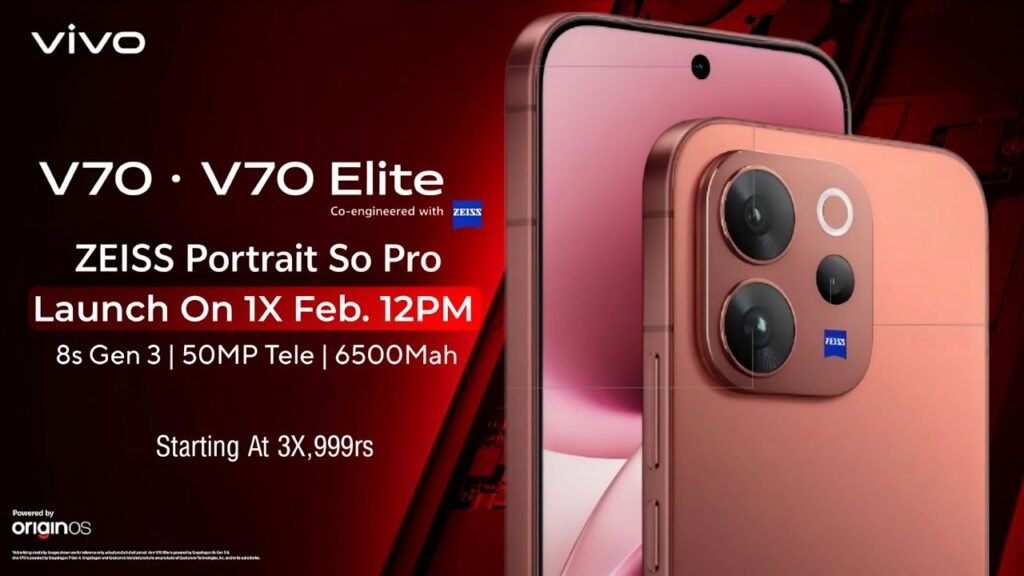
The mid-range smartphone market in India is a battlefield. Every month seems to bring a new contender vying for the title of “flagship killer” or “camera king.” Yet, amidst the noise of spec sheets and aggressive marketing, Vivo has carved out a very specific, very lucrative niche: the style-conscious photographer. With the launch of the Vivo V70 series in India, the company isn’t just iterating; they are attempting to redefine what a sub-flagship phone can do.
If you have been following the trajectory of the V-series, you know the drill. Slim profiles, eye-catching back panels, and cameras that promise to make you look like a model in every shot. But the V70 series claims to be more than just a pretty face. With the Zeiss partnership now trickling down deeper into the lineup and substantial upgrades under the hood, this launch has garnered significant attention.
For those considering an upgrade or simply curious about the latest tech to hit the Indian market, we are breaking down everything you need to know about the Vivo V70 and V70 Pro. From the gimbal-stabilized cameras to the pricing strategy that might just shake up the segment, here is the full rundown.
A Design Philosophy That Refuses to Be Boring
Smartphone design has largely plateaued. We see a lot of glass sandwiches and rectangular camera bumps. Vivo, however, refuses to settle for the mundane. The V70 series continues the company’s tradition of prioritizing aesthetics and ergonomics.
The Fluorite AG Glass Factor
The standout feature remains the color-changing Fluorite AG glass on the rear panel. When exposed to sunlight or UV light, the phone shifts hues—transforming from a subtle, professional blue to a deep, vibrant ocean teal, for example. It’s a party trick, sure, but it gives the device a distinct personality. Beyond the color shift, the AG (Anti-Glare) finish is practical. It resists fingerprints and smudges better than almost any glossy competitor, maintaining that premium look even after a full day of use.
Slimness Meets Ergonomics
Holding the V70 Pro feels different from holding a chunky gaming phone. Vivo has managed to keep the device incredibly slender, clocking in at just over 7.4mm in thickness. This is achieved through the 3D curved display on the front and the curved glass on the back, which meet at a thin metal frame. It sits comfortably in the palm, making one-handed usage surprisingly manageable for a phone with a large screen. However, users with butterfingers might find it a bit slippery—a case is highly recommended.
Display: A Visual Feast at 120Hz
The window to your digital world needs to be immaculate, and Vivo hasn’t cut corners here. The V70 series sports a 6.78-inch 1.5K AMOLED display. Moving away from standard 1080p panels, the 1.5K resolution offers a noticeable bump in sharpness without the battery drain of a full 4K screen.
Brightness and Outdoor Visibility
One of the biggest pain points in mid-range phones is outdoor legibility. The V70 addresses this with a peak brightness that hits 2800 nits. Whether you are framing a shot under the harsh New Delhi sun or reading emails on a beach in Goa, the text remains crisp and legible.
The Refresh Rate Debate
Naturally, the panel supports a 120Hz refresh rate. But it’s the implementation that matters. The Smart Switch technology dynamically adjusts the refresh rate between 60Hz, 90Hz, and 120Hz depending on the content. This fluidity makes scrolling through Instagram or navigating the UI feel instantaneous. Coupled with HDR10+ certification, streaming content from Netflix or Prime Video offers deep blacks and punchy contrast that creates an immersive viewing experience.
Camera Innovations: The Zeiss Difference
Let’s be honest: you buy a Vivo V-series phone for the cameras. This year, the headline feature is the expanded collaboration with Zeiss. Previously reserved for the ultra-premium X-series, Zeiss optics and portrait styles are front and center on the V70 Pro.
The Main Sensor and OIS
The primary shooter is a 50MP Sony IMX920 sensor (on the Pro variant). It is large, letting in ample light, but the real magic lies in the stability. Vivo’s Optical Image Stabilization (OIS) has been refined to what they call “Hybrid Image Stabilization.” It combines hardware OIS with electronic stabilization (EIS) to smooth out handheld video and improve low-light photography significantly.
The Portrait Master
This is where the V70 truly shines. The dedicated 50MP telephoto portrait lens offers a 2x optical zoom. Unlike digital cropping, this lens provides a natural focal length perfect for human subjects. When you toggle into Portrait Mode, you get access to Zeiss Style Portraits.
You can mimic the swirl of a classic Biotar lens, the cinematic flair of a Cine-flare, or the creamy bokeh of a Planar lens. These aren’t just cheap filters overlaid on the image; the software understands depth maps and applies the blur with surprising accuracy, separating distinct strands of hair from the background.
Aura Light: The Studio in Your Pocket
The “Aura Light”—that soft ring light on the back—has been upgraded. It is now larger and smarter. It can automatically detect the ambient color temperature (warm or cool) and adjust its own light output to match. If you are in a candlelit restaurant, the Aura Light emits a warm glow to keep the skin tones natural rather than washing you out with a harsh white LED flash.
Hardware and Performance
While the camera takes center stage, the engine room has received a necessary tune-up. Vivo has historically been criticized for underpowering the V-series, but the V70 seems to address this imbalance.
MediaTek and Snapdragon Integration
The V70 Pro is powered by the MediaTek Dimensity 8200 (or the 9000-series in some markets), a chipset that flirts with flagship performance. It handles heavy multitasking, 4K video editing, and high-fidelity gaming with ease. The standard V70 likely houses the Snapdragon 7 Gen 3, a highly efficient chip that balances power and battery life perfectly.
RAM and Storage
The base model starts at 8GB of RAM, with options going up to 12GB. Vivo also includes its “Extended RAM” 4.0 technology, which borrows space from the internal storage to act as virtual RAM. While purists might argue the efficacy of virtual RAM, in practice, apps stay open in the background longer, and switching between a heavy game and WhatsApp is stutter-free. Storage options range from 256GB to 512GB, using UFS 3.1 speeds for fast file transfers.
Gaming Performance
Is this a gaming phone? No. Hardcore gamers might miss physical triggers or aggressive cooling fans. However, for the casual gamer who plays BGMI or Call of Duty Mobile for an hour a day, the V70 holds up well. The vapor chamber cooling system has been expanded to dissipate heat more effectively, preventing the phone from becoming uncomfortably hot during extended sessions.
Battery Life and Charging
A slim phone usually signals a small battery, but Vivo has managed to squeeze a 5000mAh cell into the V70 chassis. This is a feat of engineering, likely achieved by using newer, higher-density battery materials.
For the average user, this translates to a comfortable day and a half of usage. Even with the always-on display active and heavy camera usage, the phone should limp to the charger at the end of the day with 15-20% left in the tank.
When you do need to plug in, the 80W FlashCharge technology is ready. You can go from 0% to 50% in roughly 18 minutes. A full charge takes under 45 minutes. Vivo also bundles the charger in the box—a rarity in 2024 that consumers will appreciate.
Software: Funtouch OS 14
The V70 series runs on Funtouch OS 14, based on Android 14. Vivo’s skin has matured over the years. It is less cartoonish and more functional than previous iterations.
Key features include:
- Kinetic Wallpaper: Wallpapers that move based on your step count.
- App Retainer: Keeps apps in the exact state you left them, even after a reboot.
- Privacy enhancements: Improved control over which apps can access your photos and videos.
However, the “bloatware” issue persists. Users will still find pre-installed apps (Hot Apps, Hot Games) that clutter the app drawer. While most can be uninstalled or disabled, it remains a slight blemish on an otherwise premium experience.
Pricing and Availability
Vivo has positioned the V70 series as a premium mid-range offering.
- Vivo V70: Starts at approximately ₹32,999 for the 8GB/128GB variant.
- Vivo V70 Pro: Starts at approximately ₹39,999 for the 8GB/256GB variant, going up to ₹45,999 for the top-tier model.
The phones are available through Flipkart, the Vivo India e-store, and offline retail partners. Launch offers often include bank cashbacks and exchange bonuses, which can bring the effective price down by ₹3,000 to ₹4,000.
Comparisons: Where Does It Stand?
Vs. The Competition
- OnePlus 12R: The OnePlus offers raw power with a Snapdragon 8 Gen 2 processor, making it a better choice for gamers. However, the V70 Pro destroys it in portrait photography and selfie quality.
- Pixel 7a/8a: Google offers cleaner software and excellent computational photography. But the Vivo V70 offers a more modern design, faster charging, and a much better display refresh rate.
- Samsung Galaxy A55: Samsung promises 4 years of OS updates, which is superior to Vivo’s typical 2 or 3 years. But the Galaxy A55 charges slowly and lacks the bundled charger.
Vs. Previous Generation
If you own the Vivo V29 or V30, the jump to V70 is incremental but noticeable in low-light photography and performance speed. If you are on a V25 or older, the V70 is a massive upgrade in every department.
The Final Verdict
The Vivo V70 series knows exactly what it is. It does not try to be the fastest phone in the world, nor does it have the longest zoom range. Instead, it focuses on the features that matter to a very specific demographic: style and social media.
The integration of Zeiss optics into this price point is a game-changer for portrait lovers. The phone looks beautiful, feels great in the hand, and charges rapidly. While the bloatware and lack of a stereo speaker on the base model (if applicable) are minor annoyances, the overall package is compelling.
For the Indian consumer who values design and wants a camera that makes them look their best with zero effort, the Vivo V70 Pro is currently the phone to beat. It balances the “premium feel” with mid-range pricing better than most of its rivals.
Ready for the Upgrade?
The smartphone landscape moves quickly, but the Vivo V70 series has set a high bar for 2024. Whether you are a content creator or just someone who appreciates good tech, this device deserves a look.
What do you think of the new Zeiss integration? Is the V70 Pro on your wishlist, or are you looking at the competition? Let us know in the comments below!
Don’t forget to subscribe to our newsletter for more in-depth reviews, tech tips, and the latest gadget news delivered straight to your inbox.
Read related blogs:
India’s AI Ambitions vs Reality: Can India Become a Global AI Leader Amid Summit Backlash?
AI Summit 2026 Controversy: Mismanagement, Security Chaos & the ‘Digital India’ Paradox
Namibia Country Enters the Space Era with New Satellite Ground Station


