

AI Summit 2026 Controversy: Mismanagement, Security Chaos & the ‘Digital India’ Paradox
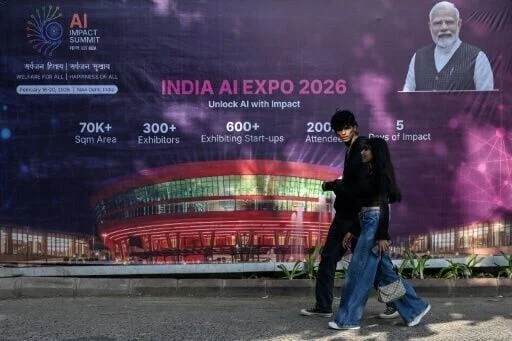

The promise was simple: a gathering of the brightest minds, a showcase of futuristic innovation, and a tangible step towards cementing India’s place as a global AI superpower. The AI Summit 2026 was billed as a pivotal moment for “Digital India,” a stage where the nation would flex its technological muscle.
Instead, what unfolded in Delhi was less of a summit and more of a circus.
Attendees arrived expecting cutting-edge discourse and seamless organization. What they found were long queues, stolen equipment, draconian security measures that locked out the very innovators the event was meant to celebrate, and a pervasive sense of chaos. The contrast between the event’s high-tech theme and its low-tech, manual mismanagement was not just ironic; it was a glaring spotlight on the gap between the government’s rhetoric and its on-ground reality.
This wasn’t just a logistical failure. It was a public relations disaster that played out on an international stage, drawing criticism from global news agencies and leaving local entrepreneurs disillusioned.
The “AI Summit Circus” Begins
The skepticism started early. For many observers, the summit felt less like a genuine attempt to foster technological advancement and more like another headline-grabbing spectacle orchestrated for political mileage. The term “circus” began circulating even before the doors opened, a nod to previous large-scale events that prioritized optics over substance.
But even the cynics were unprepared for the scale of the mismanagement. As thousands descended on the venue, the facade of a world-class technology conference crumbled almost immediately. The event, intended to be a jewel in the crown of India’s tech ambitions, quickly became a case study in how not to organize a global summit.
The primary objective seemed to shift from showcasing AI to showcasing authority. The heavy-handed presence of the state machinery, ostensibly there for security, ended up suffocating the very spirit of open exchange and innovation that such summits rely on.
Chaos at the Gates: Theft and mismanagement
The first signs of trouble were not subtle. Despite high-level security arrangements, reports began to surface of theft within the venue itself. Exhibitors, who had paid significant sums to secure booths and showcase their innovations, found themselves victims of larceny. Devices were reportedly stolen from counters—a shocking lapse in an environment supposed to be secure enough for heads of state.
But theft was just the tip of the iceberg. The real frustration for the majority of attendees was the sheer inability to access the event they had traveled to attend.
The Great Lockout
As crowds swelled, the entry management system collapsed. Gates were closed arbitrarily, leaving valid pass-holders stranded outside in the heat. Reports flooded social media of long queues that moved at a glacial pace. Basic amenities like food and water were scarce or entirely absent for those stuck in the logistical deadlock.
The anger was palpable. This wasn’t just a crowd of curious onlookers; these were delegates, startup founders, and international guests. They were treated not as valued participants in a technological revolution, but as a nuisance to be managed and corralled. The “Digital India” experience was nowhere to be found; instead, attendees were subjected to archaic, manual checks that would feel out of place at a local fair, let alone an AI summit.
The Macron Factor: Diplomacy Disguised as Tech?
Adding to the confusion was the presence of French President Emmanuel Macron. While his attendance was touted as a major endorsement of India’s AI potential, critics argued that his visit had little to do with artificial intelligence and everything to do with defense deals.
The summit, some suggested, was merely a backdrop—a convenient stage setting for high-level diplomatic maneuvering that had nothing to do with the tech sector. This perception fueled the narrative that the AI community was being used as props in a larger geopolitical theater. The Prime Minister’s involvement was seen by many not as a facilitator of technology, but as a disruptor whose security protocols paralyzed the event.
While mainstream media outlets largely painted a rosy picture of diplomatic handshakes and visionary speeches, the reality on the ground was starkly different. The disparity between the televised visuals and the attendee experience was jarring, leading many to question the integrity of the coverage.
Voices from the Ground: A Chorus of Disappointment
The true story of the AI Summit 2026 wasn’t told in press releases, but in the angry tweets and testimonials of those who were there. The feedback was overwhelmingly negative, painting a picture of disrespect and incompetence.
The CEO’s Nightmare
Dhananjay Yadav, a CEO who had invested time and resources to exhibit at the summit, shared a harrowing account. He described how his AI wearables—the core of his presentation—were stolen. Worse still, he was reportedly forced to leave his own booth. His experience wasn’t unique; it was symptomatic of an event where the organizers seemed to view exhibitors as impediments rather than partners.
Founders Left on the Floor
Kritika Kapoor took to social media to express her utter disappointment, mentioning that the arrangements were so poor she ended up lying on the floor. Maithri Varg, despite having a speaking slot, found himself unable to access his own booth. These were not random attendees; these were the content creators, the speakers, the people who were supposed to be the lifeblood of the summit.
The “Pad Yatra” Comparison
Arun Padmanabhan offered a biting critique of the entry process. He compared the manual security checks to a “pad yatra” (a long journey on foot), highlighting the absurdity of such primitive processes at an event celebrating digital intelligence. Where was the facial recognition? Where were the automated turnstiles? The irony of standing in sweltering lines to talk about the speed of AI was lost on no one.
Sidelined Builders
Putit Jain pointed out a critical failure: the summit sidelined its own builders. Exhibitors, delegates, and startup founders—the “builders” of India’s tech future—were left outside without water or clarity, while VIPs were ushered through. This hierarchy of access bred resentment. It sent a clear message that the event was for the politicians, not the technologists.
The Financial and Emotional Cost
The mismanagement had real-world costs. Attendees described the venue as being “like jail,” with no food, water, or freedom of movement. For many, the decision to attend resulted in wasted money and lost time.
One firsthand account described being forced to leave the hall entirely to accommodate the Prime Minister’s arrival. This disruption wasn’t just inconvenient; it was expensive. Startups operate on thin margins and tight schedules. To have a day wasted because the venue had to be cleared for a photo op is a significant blow.
The sentiment “I would rather attend conferences abroad” began to echo among the crowd. This is perhaps the most damaging outcome for “Digital India.” If the country’s brightest minds feel they cannot showcase their work domestically without being treated with disrespect, the brain drain that India has fought so hard to reverse will only accelerate.
The “Digital India” Paradox
The chaos at the AI Summit 2026 exposes a deeper paradox at the heart of India’s tech ambitions. There is a massive disconnect between the government’s lofty targets and its on-ground execution.
Manual Checks in a Digital Age
The image of security personnel manually checking passes at an AI summit is a potent symbol of this disconnect. In a world where airports use facial recognition and stadiums use biometric scanning, the reliance on manual labor for security at a tech conference suggests a lack of preparedness and a failure to adopt the very technologies being promoted.
Disruption vs. Facilitation
The anecdote about a club president disinviting a former PM to ensure public access serves as a sharp contrast to the Modi administration’s approach. In that instance, the priority was the comfort and accessibility of the public. At the AI Summit, the priority appeared to be the security bubble of the Prime Minister, even if it meant bringing the entire event to a standstill.
True technological leadership requires facilitating innovation, not disrupting it. When VVIP movement paralyzes a summit, it signals that the hierarchy of power is more important than the flow of ideas.
Consumer vs. Creator
A stinging critique emerging from the summit is that India remains a “consumer country” for AI. We are eager to adopt ChatGPT and foreign models, but are we building the infrastructure to create our own? The summit was an opportunity to highlight indigenous innovation, but by locking out local founders, the organizers reinforced the perception that India is merely a market for foreign tech, not a producer of it.
The “Artificial Event”
Critics have labeled the summit an “artificial event”—a spectacle designed to distract from real economic and social problems. By focusing on the glitz of AI, the government can project an image of modernity and progress, even while basic infrastructure and management capabilities lag behind.
The Numbers Don’t Add Up
The skepticism extends to the economic targets set by the government. The goal for India’s IT sector is a turnover of $700 billion over 21 years. Contrast this with Nvidia, a single company whose projected annual turnover is hitting $1 trillion. The kicker? Nearly 60% of Nvidia’s workforce is reportedly Indian.
This data point is damning. It suggests that Indian talent is fueling the global AI revolution, but doing so for foreign entities because the domestic ecosystem—symbolized by this chaotic summit—cannot support or value them. We are exporting our intelligence and importing the finished product, celebrating the “consumer” side of the equation while stifling the “creator” side.
A National Embarrassment?
Ultimately, the AI Summit 2026 serves as a cautionary tale. It highlighted a governance style that prioritizes “packaging” and “presentation” over “product.” The glossy brochures and high-profile guest list could not hide the rot in the organization.
Agencies like Reuters picking up on the “long queues and confusion” transformed a local logistical failure into a matter of international embarrassment. It undercut the narrative of India as a rising superpower capable of organizing world-class events.
The sarcastic songs and memes that followed the event were not just internet humor; they were an expression of collective frustration. They represented the voice of a tech community that felt used and discarded.
What Needs to Change?
If India is to truly become a global hub for Artificial Intelligence, the approach to these events—and the sector as a whole—must change.
- Prioritize the Builders: Future summits must center on the innovators, not the politicians. Security protocols should facilitate access, not block it.
- Walk the Talk: Use the technology we claim to master. An AI summit should showcase seamless, automated, biometric entry systems.
- Respect the Ecosystem: Startups and exhibitors are the stakeholders, not the audience. Their time and resources must be respected.
- Substance Over Spectacle: The focus must shift from signing vague MoUs and photo-ops to tangible workshops, unchecked collaboration, and genuine policy debates.
The AI Summit 2026 was a missed opportunity. But it can also be a lesson. The talent is here. The ambition is here. The question is whether the administration can get out of the way long enough to let it flourish.