
How Fashion Emerged in Human Civilization and Became a Global Industry
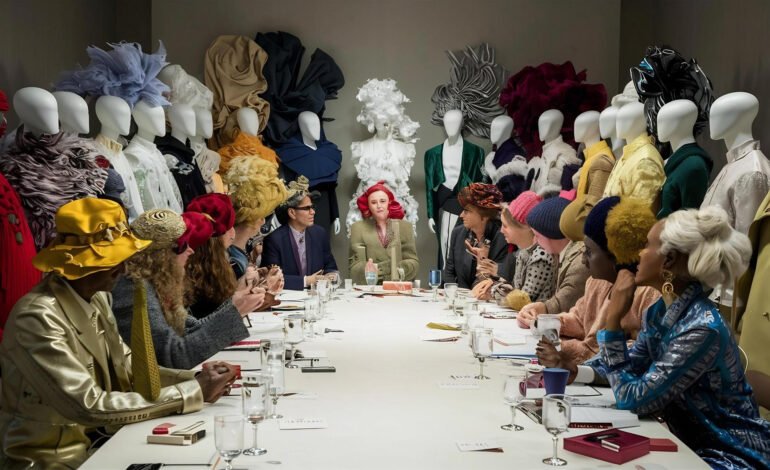

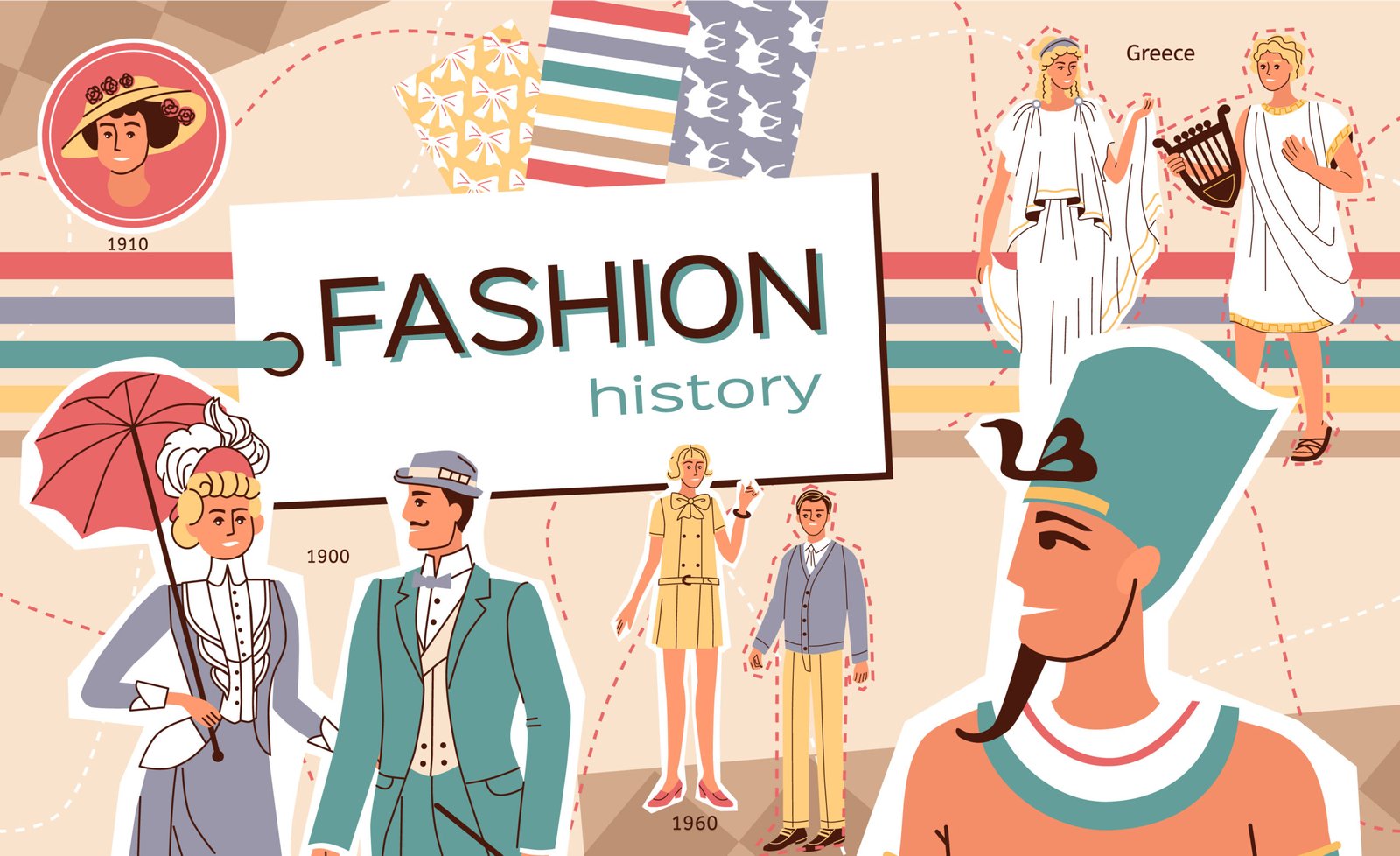
Fashion is more than just what we wear—it’s a reflection of culture, identity, and innovation. From the earliest animal hides draped for warmth to the latest sustainable collections gracing international runways, the journey of fashion reveals humanity’s evolving relationship with self-expression and commerce.
What began as a basic necessity for survival has transformed into a trillion-dollar global industry that influences economies, shapes social movements, and drives technological advancement. Understanding this evolution helps us appreciate not just the clothes on our backs, but the complex forces that determine what we consider stylish, desirable, and worth wearing.
This exploration traces fashion’s remarkable transformation from prehistoric practicality to its current status as one of the world’s most influential industries. Along the way, we’ll examine the pivotal moments that shifted clothing from purely functional items to powerful status symbols, and from artisanal craftsmanship to mass-market phenomenon.
From Survival to Status: The Birth of Fashion
The earliest garments served one primary purpose: protection. Archaeological evidence suggests humans began wearing clothing between 100,000 and 500,000 years ago, fashioning animal skins and plant materials into basic coverings against harsh climates. These primitive garments prioritized function over form, designed purely for thermal regulation and physical protection.
However, clothing’s role expanded as human societies grew more complex. By the time ancient civilizations emerged in Mesopotamia, Egypt, and China, garments had evolved into markers of social hierarchy. The wealthy adorned themselves in fine linens, silks, and intricate jewelry, while commoners wore simpler, coarser materials. Purple dye, extracted laboriously from sea snails, became so expensive that only royalty could afford purple-hued fabrics—giving rise to the phrase “born to the purple.”
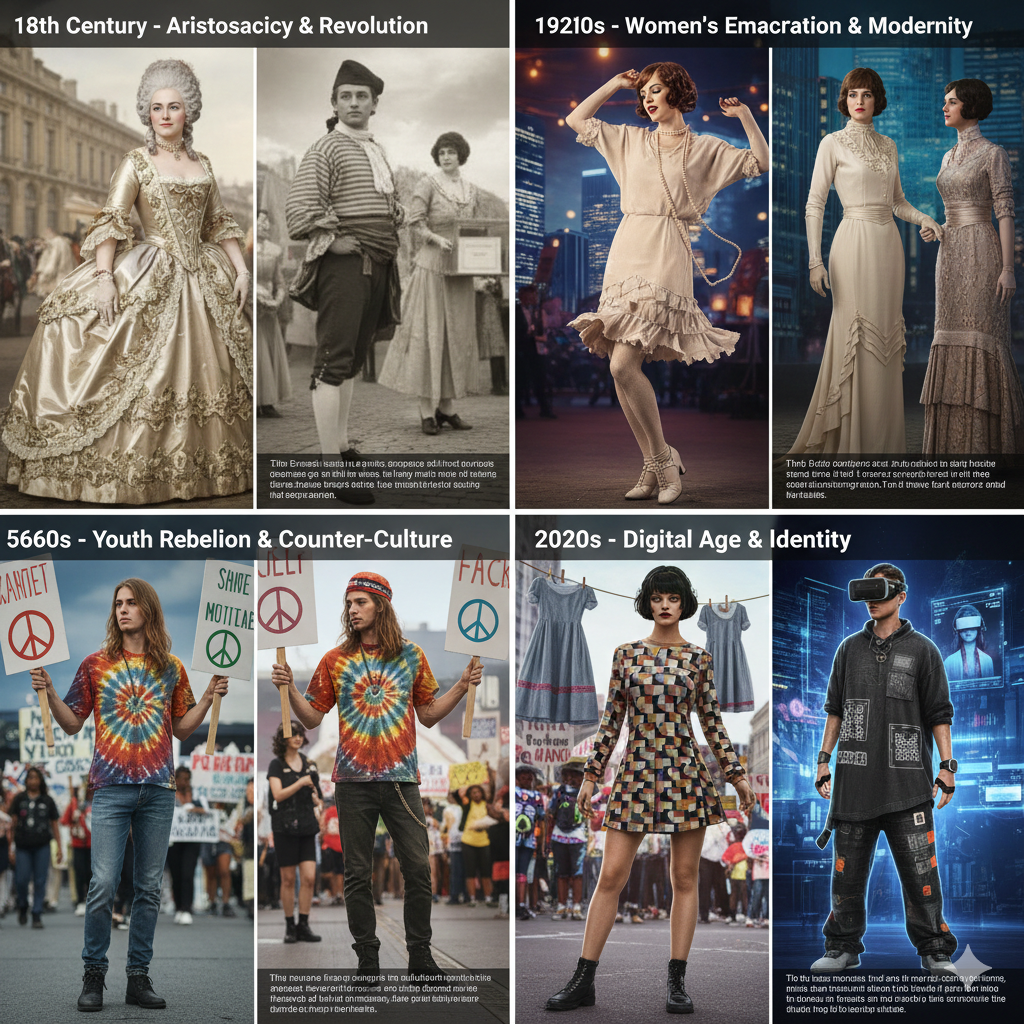
This transformation from utility to status representation marked fashion’s first major evolution. Clothing became a visual language, communicating wealth, occupation, religious affiliation, and social standing at a glance. In medieval Europe, sumptuary laws actually regulated who could wear specific fabrics, colors, and styles, legally enforcing fashion as a class distinction tool.
The concept of changing styles—what we might recognize as fashion trends—also emerged during this period. Courts and nobility began adopting new silhouettes and decorative elements, with these styles trickling down through social classes over time. Fashion had become not just about what you wore, but when you wore it, establishing the foundation for the trend cycles that would later define the industry.
The Industrial Revolution: Fashion Meets Machinery
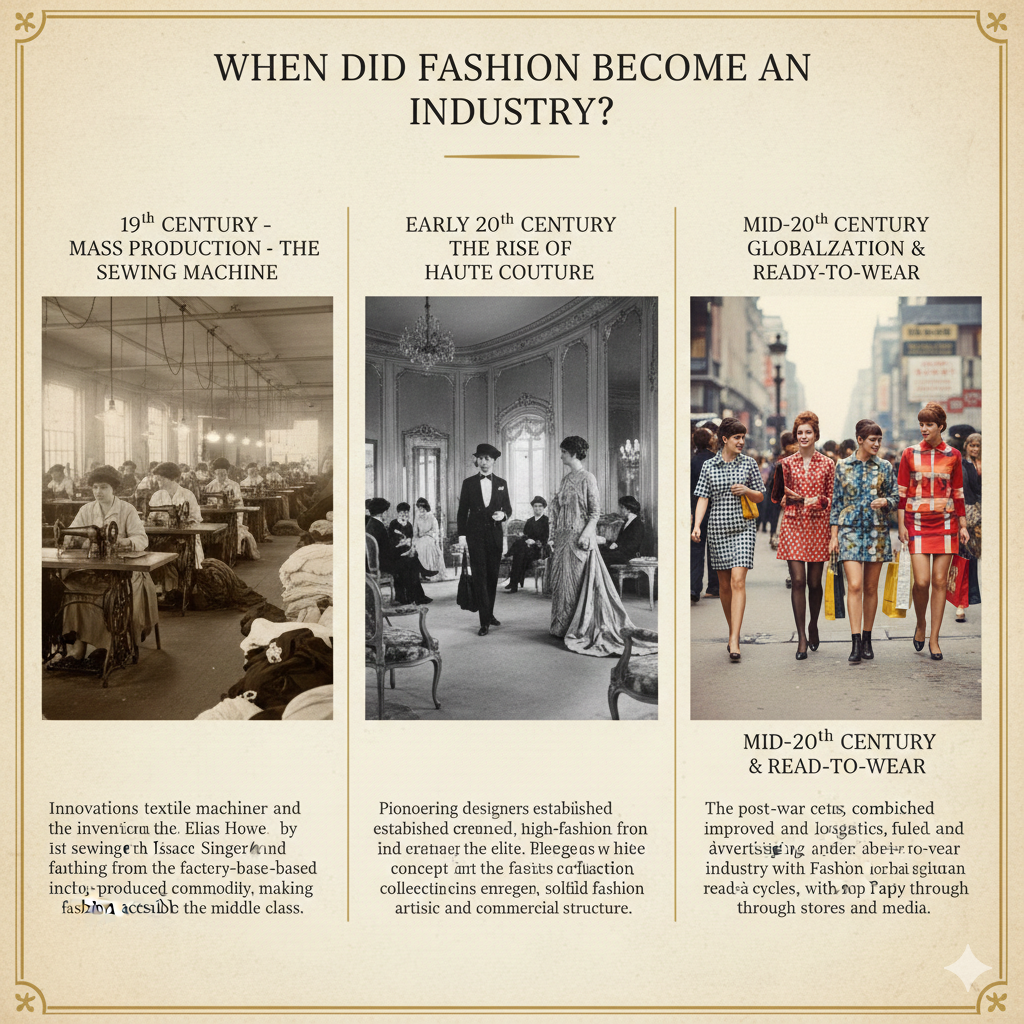
The late 18th and early 19th centuries brought seismic changes to how clothing was produced. For millennia, every garment had been painstakingly handcrafted by skilled artisans—tailors, seamstresses, and weavers who spent years mastering their trades. The Industrial Revolution shattered this model.
The invention of the spinning jenny in 1764, followed by the power loom and sewing machine, mechanized textile production. What once took weeks could now be accomplished in days or hours. Cotton mills in England and New England churned out fabric at unprecedented scales, dramatically reducing costs and increasing availability.
This mechanization democratized fashion in ways previously unimaginable. Middle-class families could now afford multiple outfits and periodic wardrobe updates. Ready-to-wear clothing emerged as a new category, offering standardized sizes and styles that eliminated the need for custom tailoring for everyday wear.
The sewing machine, patented by Elias Howe in 1846 and popularized by Isaac Singer, proved particularly transformative. Garments that required hours of hand-stitching could now be assembled in minutes. This efficiency enabled the rise of garment factories and the beginning of clothing as a manufactured commodity rather than an artisanal product.
However, this transition wasn’t without cost. The factory system introduced harsh working conditions, particularly for women and children who comprised the majority of garment workers. The seeds of labor issues that would plague the fashion industry for centuries were planted during this mechanization period.
Haute Couture and the Rise of Fashion Houses
While mass production transformed everyday clothing, a parallel development was elevating fashion to an art form. Charles Frederick Worth, an English designer working in Paris, revolutionized the fashion industry in the 1860s by becoming the first “designer” in the modern sense—someone who created original garments and presented them on live models for clients to purchase.
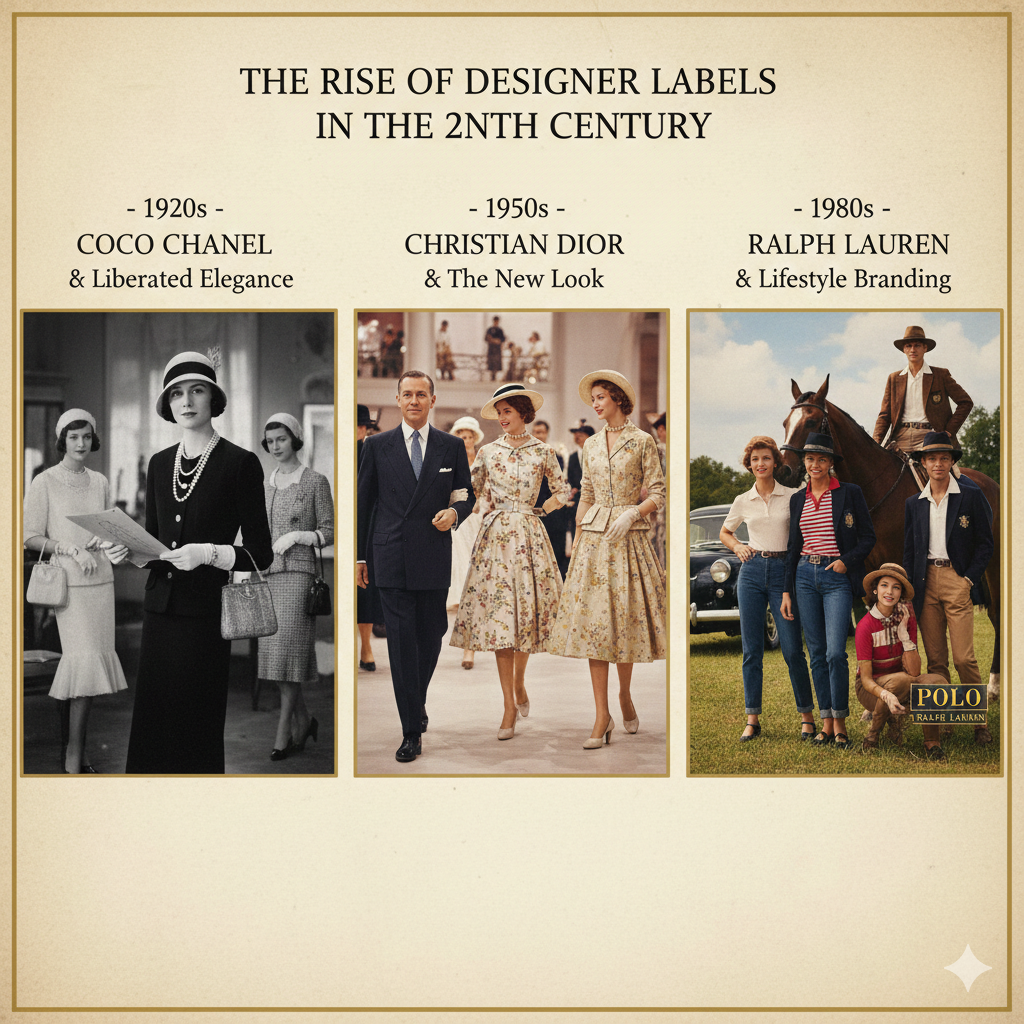
Worth established the model for haute couture: exclusive, made-to-measure clothing crafted from expensive, high-quality fabrics with meticulous attention to detail. His success inspired others, and Paris quickly became the undisputed capital of high fashion, home to legendary houses like Chanel, Dior, and Givenchy.
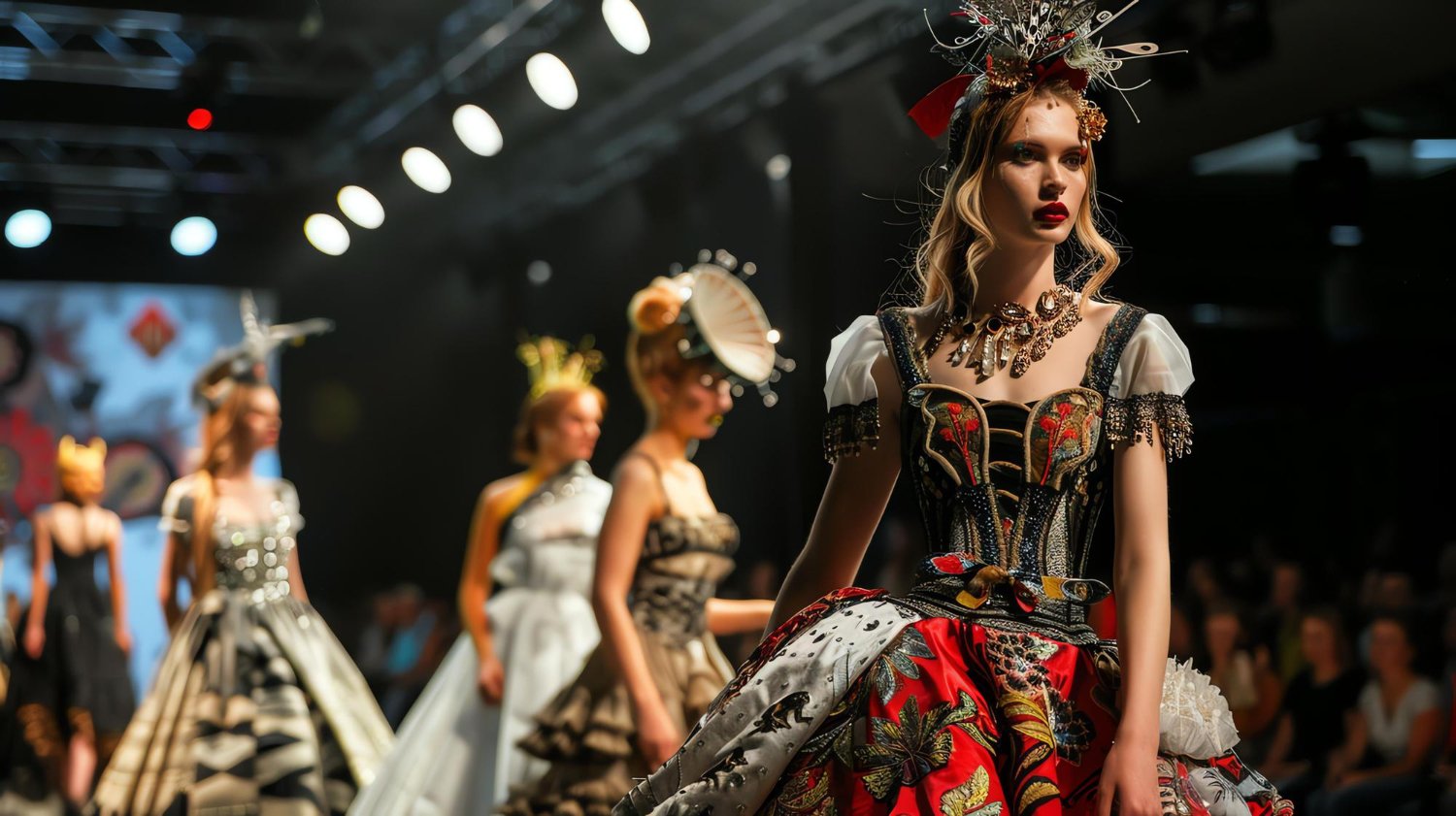
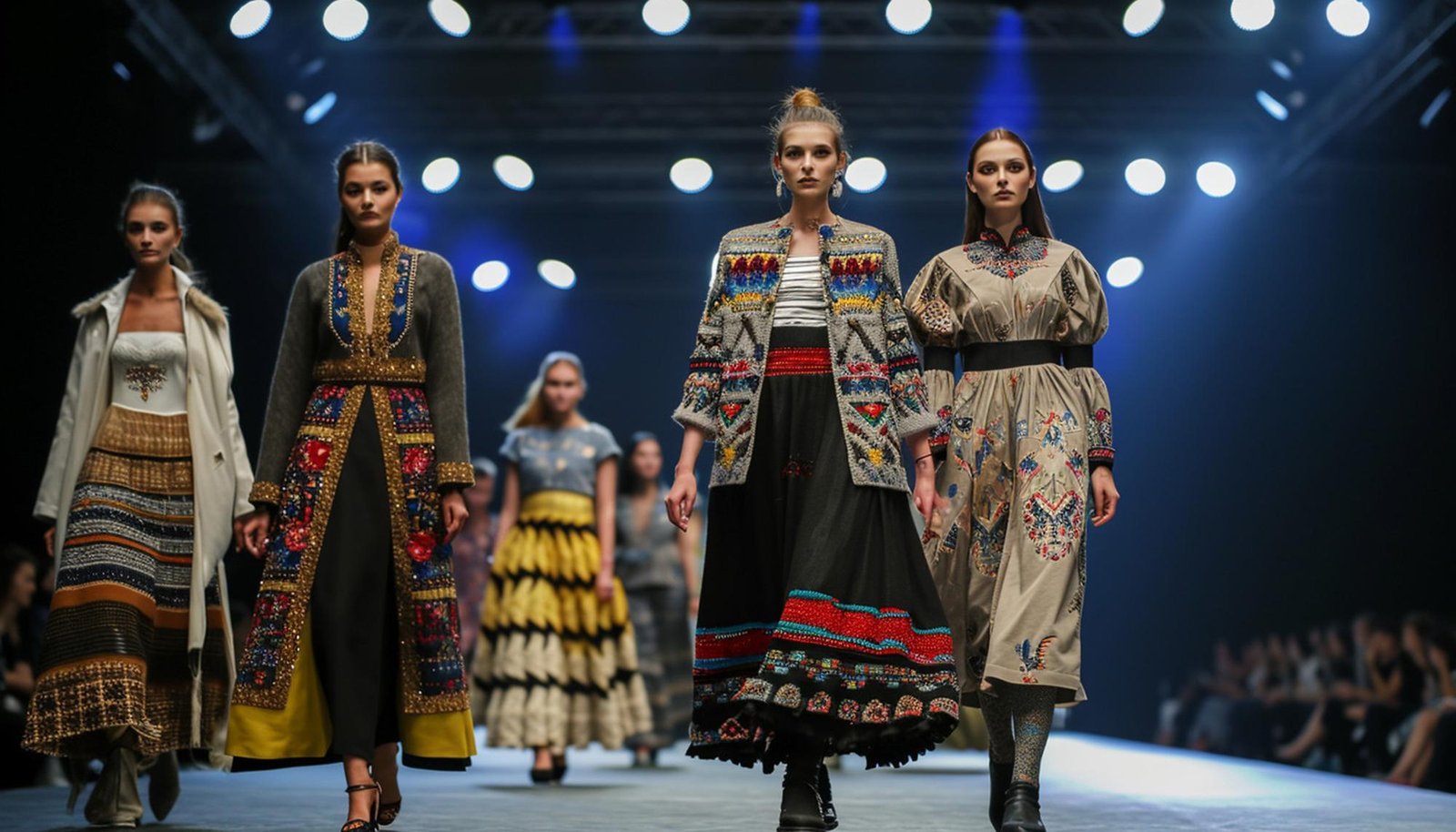
These fashion houses introduced the concept of seasonal collections, presenting new designs twice yearly that would set trends for the coming months. Fashion shows became theatrical events where designers showcased their creative visions. The relationship between designer and client became collaborative, with fittings serving as consultations where wealthy patrons could customize designs to their preferences.
The early 20th century saw fashion houses expand their influence through ready-to-wear lines, perfumes, and accessories. Coco Chanel revolutionized women’s fashion by introducing comfortable, practical designs that freed women from restrictive corsets. Christian Dior’s “New Look” in 1947 reintroduced feminine silhouettes after the austere wartime years, demonstrating fashion’s power to capture and shape cultural moments.
Fashion magazines like Vogue and Harper’s Bazaar, founded in the late 1800s, amplified designers’ reach, translating runway innovations into aspirational content for broader audiences. Photography elevated fashion imagery into an art form itself, with photographers like Richard Avedon and Irving Penn creating iconic images that defined eras.
Fast Fashion: The Mass Production Revolution
The late 20th century witnessed another seismic shift as fashion accelerated its production cycles and globalized its supply chains. The term “fast fashion” emerged to describe retailers who could identify runway trends, manufacture similar styles, and get them into stores within weeks rather than months.
Brands like Zara, H&M, and Forever 21 pioneered this model, offering trendy clothing at remarkably low prices by manufacturing in countries with lower labor costs. The traditional fashion calendar of two seasons expanded to a constant stream of new arrivals, sometimes introducing new inventory weekly.
This democratization of trend access meant that style was no longer the exclusive domain of the wealthy. A college student could now wear an outfit inspired by the latest runway looks for a fraction of the cost. Consumer behavior shifted accordingly—clothing became increasingly disposable, with many garments worn only a handful of times before being discarded.
The business model proved extraordinarily profitable. Fast fashion companies mastered global supply chains, sophisticated inventory management, and data-driven trend forecasting. They could respond to emerging trends with unprecedented speed, making fashion more dynamic and accessible than ever before.
However, this efficiency came at significant cost. The environmental impact of textile production, dyeing, and disposal created one of the world’s most polluting industries. Labor conditions in manufacturing countries often fell far below acceptable standards, with workers enduring long hours, unsafe conditions, and poverty wages. The 2013 Rana Plaza factory collapse in Bangladesh, which killed over 1,100 garment workers, brought these issues into stark relief.
Sustainable Fashion: Industry in Transition
Growing awareness of fashion’s environmental and social costs has sparked a counter-movement emphasizing sustainability, ethics, and transparency. Consumers, particularly younger generations, increasingly demand accountability from brands regarding their manufacturing practices and environmental impact.
This shift has manifested in several ways. Slow fashion brands emphasize quality over quantity, producing durable garments designed to last years rather than seasons. These companies often manufacture locally, pay fair wages, and use environmentally friendly materials like organic cotton, recycled polyester, and innovative fabrics made from unexpected sources like mushroom leather or pineapple fibers.
Circular fashion models are gaining traction, focusing on extending garment lifecycles through rental services, resale platforms, and repair programs. Companies like Patagonia actively encourage customers to repair rather than replace items, even offering repair services and guides. ThredUp, Depop, and similar platforms have normalized secondhand shopping, particularly among younger consumers who view vintage and pre-owned clothing as both economical and environmentally responsible.
Technology is enabling greater transparency through blockchain tracking that allows consumers to trace a garment’s journey from raw materials to finished product. Some brands now include detailed information about where and how items were made, the environmental impact of production, and the wages paid to workers.
Major fashion houses are responding to these pressures. Luxury brands like Stella McCartney have built their reputations on sustainable practices, while fast fashion giants are introducing “conscious collections” using sustainable materials, though critics argue these represent only incremental changes to fundamentally unsustainable business models.
The rental and subscription model is redefining ownership itself. Services like Rent the Runway allow consumers to access designer clothing temporarily, satisfying the desire for variety and newness without requiring permanent ownership of every garment.
The Future of Fashion
Several trends point toward fashion’s next evolution. Digital fashion is emerging as a legitimate category, with designers creating garments that exist only virtually—for social media photos, video games, or metaverse environments. While this might seem frivolous, digital-only clothing eliminates production waste entirely while still allowing for creative expression and identity signaling.
Artificial intelligence and machine learning are transforming design processes, supply chain management, and personalization. Some companies use AI to predict trends, optimize inventory, or even generate design concepts. Virtual fitting technology promises to reduce returns in online shopping, addressing a significant source of waste and carbon emissions.
3D printing and on-demand manufacturing could revolutionize production, allowing for customized garments produced locally with minimal waste. Rather than mass-producing thousands of identical items, brands might manufacture each piece only after it’s ordered, in exactly the right size and specifications.
Biotechnology offers intriguing possibilities, from lab-grown leather to self-cleaning or self-repairing fabrics. Scientists are developing materials that could fundamentally change what clothing is capable of, from garments that adjust to temperature changes to fabrics that monitor health metrics.
The regulatory environment is also evolving. Some jurisdictions are considering or implementing extended producer responsibility laws that require fashion brands to manage the end-of-life disposal of their products. France has banned the destruction of unsold inventory, forcing brands to donate or recycle rather than discard excess stock.
Choose Fashion That Reflects Your Values
Fashion’s journey from prehistoric necessity to global industry reveals humanity’s capacity for both innovation and exploitation. The same systems that democratized style and fueled economic growth have also contributed to environmental degradation and labor injustices. Understanding this complex history empowers us to make more conscious choices about what we buy and wear.
The future of fashion will be shaped not just by designers and corporations, but by consumers who demand better. Every purchase is a vote for the kind of industry you want to support. Research brands before buying. Ask questions about manufacturing practices. Prioritize quality over quantity. Consider secondhand, rental, or swap options before buying new.
Supporting sustainable and ethical fashion brands sends a clear market signal that consumers value transparency, environmental responsibility, and fair labor practices. While individual actions alone won’t transform the industry, collective choices create the pressure necessary for systemic change.
Fashion will always evolve—that’s inherent to its nature. The question is whether that evolution will continue prioritizing profit above all else, or whether it will embrace sustainability, ethics, and genuine innovation that benefits both people and planet. The choice, increasingly, is ours to make.
Related Blog post: