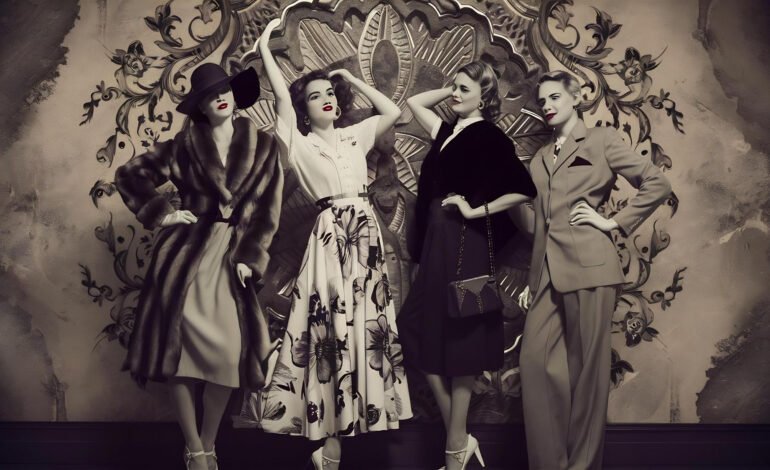
Fashion During World Wars: Utility Meets Style
War changes everything. Borders shift, governments fall, and entire generations are reshaped by the weight of conflict. But among the rubble and rationing, something unexpected happened: fashion transformed in ways

War changes everything. Borders shift, governments fall, and entire generations are reshaped by the weight of conflict. But among the rubble and rationing, something unexpected happened: fashion transformed in ways that continue to influence what we wear today.
The world wars of the 20th century didn’t just alter political maps—they revolutionized the garment industry, redefined gender norms in clothing, and gave birth to design innovations that still populate our closets. From the trench coat to women’s trousers, from “Make Do and Mend” campaigns to the streamlined silhouettes that replaced Edwardian excess, wartime necessity became the mother of sartorial invention.
This isn’t a story of fashion frivolity during serious times. Instead, it’s an examination of how creativity flourished under constraint, how practicality merged with beauty, and how the urgent demands of global conflict permanently altered our relationship with clothing. The styles born from these turbulent decades prove that even in humanity’s darkest hours, people find ways to express identity, maintain dignity, and innovate for survival.
The Fabric of War: Rationing Reshapes an Industry
Before the wars, fashion was a luxury reserved for those with means. The Edwardian era celebrated abundance—layers of petticoats, elaborate embroidery, and yards upon yards of fabric that signaled wealth and leisure. Then came 1914, and everything changed.
World War I introduced fabric rationing as governments diverted textile production toward military uniforms, parachutes, and medical supplies. Silk became scarce as parachute demand soared. Wool was requisitioned for soldiers’ uniforms and blankets. Even cotton faced shortages as demand for bandages and field dressings skyrocketed.
Fashion houses faced a dilemma: adapt or close. Many chose adaptation. Hemlines rose to conserve fabric. Skirts narrowed. Embellishments disappeared. The result wasn’t just economical—it was liberating. Women discovered that simpler silhouettes allowed greater freedom of movement, particularly important as they entered the workforce in unprecedented numbers.
By World War II, rationing became even more systematic. Britain introduced clothing coupons in 1941, limiting each adult to approximately one new outfit per year. The United States followed with similar restrictions in 1942. France, under occupation, saw its haute couture industry nearly collapse as materials vanished and designers fled or were forced to serve Nazi interests.
Yet scarcity sparked ingenuity. Designers learned to do more with less. The concept of the capsule wardrobe—a small collection of versatile, interchangeable pieces—emerged from wartime necessity. This philosophy influences sustainable fashion movements today, proving that constraint can drive both creativity and consciousness.
Utility Clothing: Function Becomes Fashion
The British government’s Utility Clothing Scheme, launched in 1941, stands as one of the most significant wartime fashion interventions. Facing severe material shortages, the Board of Trade established strict regulations for garment production: limited fabric yardage, restricted color palettes, minimal buttons, no unnecessary pleats or pockets.
Rather than producing drab, identical uniforms, the government enlisted top designers to create attractive, practical clothing within these constraints. The Incorporated Society of London Fashion Designers, including names like Hardy Amies and Norman Hartnell, rose to the challenge. Their designs proved that restrictions didn’t mean sacrificing style.
Utility garments featured clean lines, functional details, and quality construction. The iconic CC41 label (Civilian Clothing 1941) became a mark of quality rather than deprivation. These pieces were democratic—available to all social classes at controlled prices. A factory worker and a society lady might wear similar styles, a radical shift from pre-war class distinctions.
The utility aesthetic influenced post-war fashion profoundly. Christian Dior’s 1947 “New Look,” with its lavish use of fabric, represented both a rebellion against wartime austerity and an acknowledgment of how effectively simplified silhouettes had worked. Even as abundance returned, many of utility fashion’s principles—versatility, quality over quantity, functional elegance—persisted.
From Edwardian Excess to Military Precision
The transition from Edwardian fashion to wartime styles represents one of the most dramatic shifts in clothing history. The Edwardian silhouette emphasized an S-shaped curve achieved through corsetry, with elaborate day dresses requiring assistance to don and remove. Women’s fashion prioritized ornament over mobility.
Military aesthetics changed everything. Structured shoulders, borrowed from military jackets, gave women’s fashion a new authority. Tailored suits replaced flowing gowns. Epaulettes, brass buttons, and military-inspired detailing appeared on civilian clothing. Even color palettes shifted toward khakis, navy blues, and olive greens that echoed military uniforms.
This wasn’t mere imitation—it was transformation. Women working in factories, serving as nurses, driving ambulances, and filling traditionally male roles needed clothing that facilitated action. The shirtwaist dress, with its practical button-front and defined waist, became a wartime staple. Separates—blouses paired with skirts or trousers—allowed for mix-and-match versatility impossible with elaborate one-piece gowns.
Men’s fashion simplified too. Three-piece suits gave way to two-piece designs that conserved fabric. Trouser cuffs disappeared. Double-breasted jackets, which used more material, became rare. The slim, streamlined suit that dominates menswear today traces its lineage directly to these wartime innovations.
Case Study: The Trench Coat’s Journey from Battlefield to Runway
Few garments embody the fusion of military necessity and enduring style like the trench coat. Originally designed by Thomas Burberry and Aquascutum for British officers during World War I, this waterproof coat featured practical elements born from battlefield conditions: epaulettes for securing equipment, D-rings for attaching grenades, storm flaps to channel rain away from the body, and deep pockets for maps and supplies.
After the war, returning soldiers continued wearing their trench coats, introducing military styling into civilian life. Hollywood embraced the garment, with stars like Humphrey Bogart in “Casablanca” cementing its status as simultaneously practical and romantic.
Today, the trench coat remains a fashion staple. Burberry’s heritage check-lined versions retail for thousands of dollars. Fast fashion brands produce affordable interpretations. High fashion designers deconstruct and reimagine the form each season. A century after its battlefield debut, the trench coat demonstrates how wartime innovation can achieve timeless appeal.
Breaking Barriers: Women and Trousers
Perhaps no wartime fashion development carried more social significance than women’s widespread adoption of trousers. While some women had worn pants for specific activities like cycling or horseback riding, they remained controversial and uncommon before the wars.
Labor shortages during World War I pushed women into factory work, agriculture, and other physical jobs where skirts proved impractical and dangerous around machinery. Trousers became not just acceptable but necessary. Rosie the Riveter’s iconic outfit—coveralls or slacks paired with a work shirt—symbolized this transformation.
Initially presented as temporary wartime measures, trousers for women proved too practical to abandon. Despite post-war pressure for women to return to traditional roles and feminine dress, many retained their newfound sartorial freedom. Designers like Coco Chanel and Elsa Schiaparelli championed women’s trousers in the 1920s and 1930s, building on the foundation laid during wartime.
By World War II, women’s trousers had become commonplace for casual and work wear, though professional and formal settings still demanded skirts. The battles fought in factories and fields during wartime gradually translated into broader acceptance of women’s right to dress for comfort, practicality, and personal preference rather than purely for decorative purposes.
Make Do and Mend: Creativity Under Constraint
“Make Do and Mend” wasn’t just a slogan—it was a cultural movement that transformed attitudes toward clothing consumption. British and American governments published pamphlets teaching citizens to extend garment life through repairs, alterations, and creative reuse.
Women learned to unpick old garments and recut them into new styles. Parachute silk became wedding dresses. Military blankets transformed into coats. Flour sacks were bleached and sewn into children’s clothing. Knitting patterns showed how to unravel worn sweaters and reuse the yarn. Even stockings, made scarce by nylon rationing, were carefully mended or faked with leg makeup and drawn-on seams.
This culture of repair and reinvention stands in stark contrast to modern fast fashion’s disposability. Yet contemporary sustainable fashion movements deliberately echo Make Do and Mend principles. Upcycling, visible mending, and clothing swaps all trace their philosophical roots to wartime resourcefulness.
The creativity sparked by scarcity also influenced haute couture. Post-war designers like Christian Lacroix and Vivienne Westwood drew inspiration from wartime patchwork and creative reuse. The Japanese boro technique of visible mending, which shares similarities with wartime repair practices, has influenced contemporary fashion from Junya Watanabe to Levi’s premium collections.
Enduring Influence: From Trenches to Today’s Trends
Walk through any modern fashion district and you’ll see wartime innovations everywhere. Military jackets, cargo pants, bomber jackets, and peacoats all descend directly from combat gear. The athleisure trend’s emphasis on functional, comfortable clothing echoes wartime prioritization of practicality. Even luxury fashion houses like Balmain and Givenchy regularly feature military-inspired collections with structured shoulders, brass buttons, and utility pockets.
Streetwear, arguably today’s most influential fashion movement, owes a debt to wartime style. Bomber jackets, originally designed for pilots, became hip-hop staples in the 1980s and remain streetwear essentials. Camouflage patterns, developed for military concealment, appear on everything from Supreme hoodies to Valentino gowns.
The minimalist movement in contemporary fashion also connects to wartime utility aesthetics. Brands like COS, Everlane, and The Row champion simple silhouettes, quality construction, and versatile pieces that can be mixed and matched—principles that defined utility clothing eight decades ago.
Perhaps most significantly, wartime fashion challenged the notion that practicality and beauty were mutually exclusive. Designers proved that functional clothing could be attractive, that simplicity could be elegant, and that restrictions could inspire rather than limit creativity. These lessons resonate powerfully today as fashion grapples with sustainability challenges and consumers increasingly demand clothing that’s both beautiful and responsible.
The Lasting Legacy of Crisis Fashion
The fashion innovations born from global conflict weren’t merely temporary adaptations—they fundamentally reshaped how we think about clothing. The wars democratized fashion, making style accessible across social classes. They challenged gender norms in dress, opening doors for women’s sartorial freedom. They proved that constraints could drive creativity and that necessity could yield lasting beauty.
As we face contemporary crises—climate change, resource scarcity, social inequality—the lessons of wartime fashion feel remarkably relevant. The ingenuity of Make Do and Mend offers a model for sustainable consumption. The success of utility clothing demonstrates that regulations can coexist with creativity. The enduring appeal of military-inspired pieces shows that functional design can achieve timeless style.
Fashion during the world wars wasn’t about frivolity in dark times. It was about adaptation, resilience, and the human drive to maintain dignity and express identity even under the most challenging circumstances. The garments born from those turbulent decades continue to shape our closets, influence designers, and remind us that creativity flourishes not despite constraints, but often because of them.
Want to explore more fascinating intersections of history and style? Subscribe to our newsletter for in-depth historical fashion analyses, vintage style guides, and stories of how the past continues to influence what we wear today.