




Silver Price Volatility in 2026: What’s Driving the Sharp Swings in the Precious Metals Market?
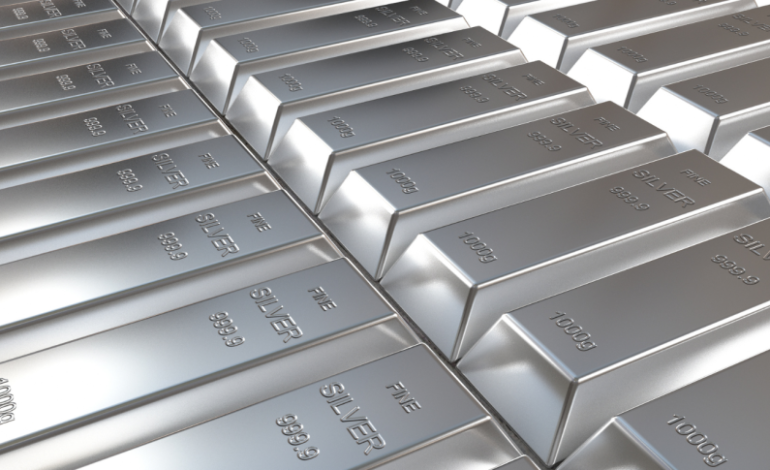

Silver has long held a reputation as the “devil’s metal”—a nickname earned not through malice, but through its notorious market behavior. While gold tends to move with the slow, deliberate weight of a central bank asset, silver often moves with erratic, explosive energy. In 2026, this reputation isn’t just holding true; it is being amplified.
Investors watching the charts this year have seen a market defined by whipsaw price action. One week, industrial demand narratives push the metal toward new highs; the next, macroeconomic headwinds send it tumbling back to support levels. For the seasoned precious metals investor, this is business as usual. But for those new to the space, the volatility of 2026 presents a confusing, often treacherous landscape.
Understanding what is driving these sharp swings requires looking beyond the spot price. It involves dissecting a complex web of global economics, shifting industrial technologies, and geopolitical friction points that are all converging at once. This analysis explores the specific catalysts behind silver’s 2026 performance and what investors should watch for as the year progresses.
The 2026 Market Landscape: An Executive Summary
The prevailing theme for silver in 2026 is a battle between structural supply deficits and monetary policy uncertainty. On one side, physical demand is stripping supply from the market at a record pace. On the other, the paper market—driven by futures contracts and derivatives—remains highly sensitive to the broader economic environment.
We are seeing a decoupling event. The “paper price” (what you see on the charts) is fluctuating wildly based on daily economic data releases, while the premiums on physical bullion remain stubbornly high due to scarcity. This divergence creates volatility because the market is trying to find a true price discovery mechanism in real-time. The tug-of-war between those who need silver for manufacturing and those trading it as a financial hedge is creating the sharpest swings we have seen in a decade.
Macroeconomic Drivers: The Inflation and Interest Rate Dynamic
To understand silver’s erratic behavior, one must first look at the currency it is priced in: the US Dollar. The macroeconomic environment of 2026 has been characterized by “sticky” inflation and a central bank caught between a rock and a hard place.
The Interest Rate Pivot (or Lack Thereof)
Throughout 2026, market participants have been speculating on the Federal Reserve’s next move. Silver, like gold, is a non-yielding asset. It pays no dividends and offers no interest. When interest rates are high, holding silver carries an opportunity cost—money sits in the metal rather than earning a yield in bonds or savings accounts.
Every time economic data suggests rates might stay higher for longer to combat lingering inflation, institutional algorithms dump silver futures, causing sharp price drops. Conversely, when data hints at economic weakness—suggesting a rate cut is imminent—silver rallies aggressively. This binary reaction to economic reports is the primary engine of the short-term volatility we are witnessing.
The Inflation Hedge Narrative
While high rates hurt silver, inflation helps it. In 2026, global purchasing power continues to erode. Investors utilizing silver as a hedge against currency debasement provide a “floor” for the price. Even during steep sell-offs, strong buying support emerges at lower levels from those looking to protect their wealth outside of the traditional banking system. This clash—high rates pushing prices down, inflation fears pushing prices up—results in the violent sideways trading range frustrating so many traders.
The Industrial Supercycle: A Floor Under the Price?
While macroeconomics drives the day-to-day noise, the fundamental story for silver in 2026 is industrial. Silver is unique among precious metals because it is also a critical industrial commodity. It possesses the highest electrical conductivity of any element, making it irreplaceable in modern electronics.
The Green Energy transition
The defining feature of 2026 demand is the acceleration of the green energy transition.
- Photovoltaics (Solar): Solar panel technology has evolved. The industry has shifted significantly toward TOPCon and HJT (heterojunction) cells, which require considerably more silver paste per unit than older PERC technologies. This technological shift has caught miners off guard, creating a demand shock that supply cannot immediately meet.
- Electric Vehicles (EVs): As EV adoption continues to scale globally, the automotive sector’s hunger for silver grows. From battery management systems to the intricate electronics in modern dashboards, an EV consumes nearly twice as much silver as an internal combustion engine vehicle.
The Electronics Sector
Beyond energy, the rollout of 5G infrastructure and the explosion of AI-related hardware in 2026 have compounded demand. Servers, switches, and 5G towers all rely on silver contacts. This industrial demand is inelastic; a smartphone manufacturer cannot simply stop buying silver because the price goes up a few dollars. They must pay the market rate to continue production, which adds upward pressure on prices during supply crunches.
Geopolitical Friction and Supply Chain Fragility
If demand is the engine, supply is the fuel—and in 2026, the fuel line is sputtering. Geopolitical instability in key mining jurisdictions creates uncertainty that feeds volatility.
Latin American Output
Mexico and Peru, traditionally the powerhouses of global silver production, have faced significant headwinds this year. Labor strikes, regulatory changes regarding open-pit mining, and local community protests have disrupted output. Because silver is often a byproduct of mining other metals (like lead, zinc, and copper), a strike at a copper mine in Peru inadvertently slashes the global silver supply.
The East-West Divide
Trade tensions have also altered how silver moves around the world. We are seeing a bifurcation in the market where Eastern nations, particularly China and India, are importing physical silver in massive quantities to support their manufacturing bases. This hoarding behavior removes available inventory from the Western exchanges (like the COMEX and LBMA), making the remaining supply more susceptible to price squeezes. When inventory levels on these exchanges drop to critical lows, even small buy orders can cause disproportionately large price spikes.
Sentiment Analysis: Retail vs. Institutions
A fascinating dynamic in 2026 is the split behavior between different classes of investors.
The Retail “Stacker”
Retail investors—individuals buying coins and bars—tend to be contrarian. When the price of silver drops sharply, retail buying typically surges. In 2026, we have seen this intensify. Faith in fiat currency is waning among a segment of the population, leading to aggressive accumulation of physical metal whenever spot prices dip. This acts as a shock absorber, preventing prices from freefalling during corrections.
The Institutional Trader
Institutions, hedge funds, and CTAs (Commodity Trading Advisors) operate differently. They generally trade based on momentum and trend-following algorithms. If silver breaks a technical support line, their systems trigger automatic sell orders, accelerating the drop. If it breaks a resistance level, they pile in, accelerating the rally.
In 2026, the volatility is largely exacerbated by these institutional flows. Because the market size of silver is relatively small compared to gold or the S&P 500, a moderate amount of institutional capital entering or exiting the sector can cause massive percentage moves in a single day.
Expert Predictions: Where Do We Go From Here?
Forecasting the price of silver is notoriously difficult, but analysts for the remainder of 2026 generally fall into two camps.
The Bull Case
The bullish outlook focuses on the “physical squeeze.” Proponents argue that the structural deficit—where consumption exceeds mining and recycling supply—is unsustainable. They predict that eventually, the industrial users will panic and bid prices higher to secure inventory, breaking the link with the paper market. Price targets in this scenario often look toward testing or breaking the historic $50/oz highs.
The Bear Case
The bearish outlook focuses on a potential recession. If the global economy enters a severe contraction in late 2026, industrial demand could plummet. Even if the monetary demand (silver as money) remains, the loss of industrial orders would leave a surplus in the market. Bears predict a wash-out event where silver drops alongside equities before finding a bottom.
Most consensus forecasts for the remainder of the year suggest continued volatility. The price is expected to grind higher, but not in a straight line. Investors should prepare for sharp corrections followed by equally sharp recoveries.
Strategies for Managing Risk in a Volatile Market
Given the roller-coaster nature of the 2026 silver market, how should investors navigate the waters?
1. Avoid High Leverage
Leverage kills in a volatile market. Trading silver futures or options with high leverage in 2026 is akin to gambling. A 5% swing in a single day—common for silver—can wipe out a leveraged position instantly. Sticking to unleveraged positions or physical holdings reduces the risk of ruin.
2. Dollar Cost Averaging (DCA)
Trying to time the exact bottom of a volatile market is nearly impossible. Dollar-cost averaging involves buying a fixed dollar amount of silver at regular intervals, regardless of the price. This smooths out the entry price over time, ensuring you buy more ounces when the price is low and fewer when it is high.
3. Diversification Within the Sector
Don’t put all capital into a single mining stock. While a junior miner might offer 10x potential, it also carries the risk of zero. Balancing a portfolio with physical bullion (no counterparty risk), major mining ETFs (diversified producer risk), and royalty companies (lower operational risk) can smooth out the equity curve.
Silver in 2026 is not for the faint of heart. It is a market defined by a violent clash between macroeconomic pressure and undeniable physical scarcity. The volatility we are witnessing is the market’s attempt to reconcile these opposing forces.
For the industrialist, this volatility is a supply chain nightmare. For the trader, it is a paradise of opportunity. For the long-term investor, it is a test of conviction. The fundamentals suggest that silver is undervalued relative to its critical role in the modern world, but the path to price discovery will likely remain turbulent.
If the swings in the precious metals market have you concerned about your portfolio’s stability, or if you are looking to capitalize on the volatility but don’t know where to start, you do not have to navigate this alone.
The volatility of 2026 presents both risks and generational opportunities. Don’t let uncertainty leave you on the sidelines. Contact our team of financial specialists today for a personalized consultation on how to integrate precious metals into a balanced, resilient portfolio.