
Political Accountability Abroad: Why Peter Mandelson Is Being Asked to Testify in the U.S.
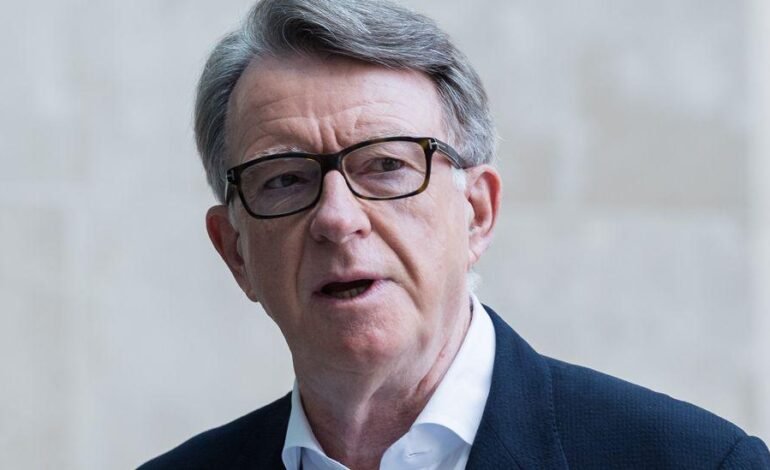

The Atlantic Ocean has long served as a buffer between American legal proceedings and British political figures. While the “Special Relationship” between the UK and the US is often touted in diplomatic circles, it rarely extends to the granular details of subpoenas and Senate inquiries. Yet, recent developments involving Lord Peter Mandelson challenge this separation.
Reports that the former Labour cabinet minister and European Trade Commissioner has been asked to provide testimony in a United States inquiry have sent ripples through Westminster and Washington alike. For casual observers, the connection might seem tenuous. Why would a retired British politician be relevant to an American investigation?
The answer lies in the increasingly global nature of political consultancy, the complex web of international finance, and the extensive reach of the US judicial system. Mandelson’s career, characterized by high-level networking and strategic advisory roles, often places him at the intersection of business and geopolitics. This situation is not merely about one man’s schedule; it raises profound questions about jurisdiction, the accountability of global political elites, and how far one nation’s legal arm can reach into another’s aristocracy.
This article explores the specific circumstances surrounding the request for Mandelson’s testimony, the legal mechanisms that allow US entities to question non-citizens, and the broader implications for UK-US relations.
The Request: A Transatlantic Summons
Peter Mandelson is no stranger to controversy or the spotlight. A chief architect of “New Labour” and a close confidant of Tony Blair, he has spent decades navigating the corridors of power. However, the current interest from the US stems less from his time in Whitehall and more from his post-political career in global advisory.
The specific inquiry—often linked to investigations into Jeffrey Epstein’s financial dealings or broader probes into international business practices—seeks to understand the networks that facilitate cross-border influence. While Mandelson has not been accused of wrongdoing, investigators believe his proximity to key figures and his role in global strategic consultancy could provide crucial context.
American investigators are particularly interested in the intersection of public influence and private gain. When former statesmen transition into advisory roles, they carry with them a rolodex of contacts that are invaluable to corporations and, occasionally, individuals with checkered pasts. The US inquiry aims to map these associations to determine if financial regulations or foreign lobbying laws were circumvented.
For Mandelson, the request is a double-edged sword. Compliance demonstrates transparency but risks dragging him into a partisan or sensationalized American legal spectacle. Refusal, however, could lead to reputational damage and speculation about what is being withheld.
The Long Arm of American Law
A common misconception is that US law stops at the US border. In reality, the American judicial system has one of the most extensive extraterritorial reaches in the world. But how can a US body compel a British peer to talk?
The Legal Framework
There are several mechanisms through which US investigators can seek testimony from foreign nationals:
- Voluntary Cooperation: This is the most common route. Investigators request an interview, and the subject agrees to clear the air or assist as a witness. This avoids legal confrontation but allows investigators to gather facts.
- Letters Rogatory: This is a formal request from a court in one country to a court in another, asking for judicial assistance. If a US court deems Mandelson’s testimony essential, they can petition a UK court to compel him to appear. The UK court then decides if the request adheres to British law.
- Subpoenas on US Soil: If a foreign national travels to the United States, they are subject to US jurisdiction. A subpoena can be served the moment they step off a plane. For a global traveler like Mandelson, this poses a significant logistical hurdle.
The Alien Tort Statute and FCPA
Two specific pieces of legislation often drive these international inquiries. The Alien Tort Statute allows non-US citizens to file civil suits in US courts for violations of international law. More frequently, the Foreign Corrupt Practices Act (FCPA) allows the Department of Justice to prosecute individuals and entities involved in bribery or corruption abroad, provided there is a nexus to the United States (such as using US banks or email servers).
While Mandelson is not the target of an FCPA prosecution, the broad investigative powers granted under these acts allow US authorities to cast a wide net for witnesses who can corroborate or clarify financial flows.
Mandelson: The Man in the Middle
To understand why Mandelson is of interest, one must look at his career trajectory. He was the “Prince of Darkness” during the Blair years—a master of media strategy and political maneuvering. After leaving domestic politics, he served as the European Commissioner for Trade, a role that gave him unparalleled access to global markets and leaders.
Global Advisory Associates
Upon leaving the EU Commission, Mandelson co-founded Global Counsel, a strategic advisory firm. This move is typical for high-ranking ex-officials. They monetize their understanding of regulatory environments and their personal connections. Mandelson’s client list and associates have occasionally raised eyebrows.
His connection to Jeffrey Epstein has been the most scrutinized. Mandelson has admitted to associating with the disgraced financier, describing it as a matter of regret. The US inquiry investigating Epstein’s estate and the banks that serviced him is aggressively seeking information from anyone who was in Epstein’s orbit. The goal is to understand how Epstein maintained his status and financial access despite his criminal record.
Mandelson’s testimony is sought not necessarily because he participated in Epstein’s crimes, but because he may have witnessed the financial and social machinery that enabled them. Did Epstein use his connections to political figures to legitimize his standing with banks like JPMorgan? This is the question investigators want answered.
Russian Oligarchs and Deripaska
Another area of interest for US authorities regarding global elites is their interaction with Russian oligarchs. Mandelson has previously faced scrutiny for his interactions with Oleg Deripaska, an industrialist close to the Kremlin. While these interactions occurred years ago, the current geopolitical climate has renewed American interest in how Russian money permeated Western political circles.
Implications for UK-US Relations
The summons of a senior UK political figure by a US investigative body is not a routine diplomatic event. It touches on sensitive nerves regarding sovereignty and the special relationship.
The Diplomatic Tightrope
The UK government typically adopts a stance of non-interference in private legal matters. However, Mandelson is a member of the House of Lords and a Privy Counsellor. Aggressive legal action by US authorities against a member of the British establishment could be viewed as a breach of diplomatic protocol.
If the US were to issue a subpoena, it would force the UK Foreign Office to balance its cooperation with a key ally against the protection of its own political class. Historically, the UK has resisted US extraterritorial overreach, particularly in cases involving extradition (as seen in the Anne Sacoolas case, though the roles were reversed).
Political Accountability vs. Privacy
This situation highlights a growing tension between the public’s right to know and an individual’s right to privacy. In the UK, the threshold for dragging a politician into a legal inquiry is high. The US system is more litigious and aggressive.
For the Labour Party, currently in opposition but eyeing a return to power, Mandelson remains an influential figure. A protracted US legal drama involving one of their grandees is a distraction they do not need. It provides ammunition for critics who argue that the global elite operates by a different set of rules, shielding each other from scrutiny until foreign courts force their hand.
Expert Insights on Global Reach
Legal scholars and political analysts view the Mandelson case as a bellwether for how the US intends to police global finance and influence in the post-globalization era.
Dr. Elena Costas, a specialist in international law, notes, “The United States is increasingly using its judicial system to impose transparency on global networks. They view the US financial system as the backbone of the global economy, and therefore believe they have the right to police the actors who utilize it, regardless of nationality.”
Conversely, critics argue this is judicial imperialism. “It sets a precarious precedent,” says political historian James Thorne. “If the US can summon a British Lord to testify about his social circle, where does it stop? It erodes the distinction between a criminal suspect and a witness, and it weaponizes the legal process for what can often look like political theater.”
What is clear is that the era of the untouchable statesman is fading. Digital footprints, flight logs, and banking records have made it impossible to maintain the level of discretion that defined 20th-century diplomacy. Mandelson finds himself caught in this transition, where past associations are analyzed through the lens of modern accountability standards.
The Stakes for Transparency
The outcome of this request will set a tone for future interactions between US investigators and foreign officials. If Mandelson testifies, it reinforces the idea that no one is exempt from the reach of American inquiries into financial misconduct or influence peddling. If he successfully resists, it may embolden others to hide behind borders and diplomatic titles.
Ultimately, the demand for Mandelson’s testimony is about more than just one man. It is a stress test for the mechanisms of international justice. It asks whether the global networks of power that operate across borders can be held accountable by the laws of a single nation.
For Mandelson, the strategy is likely one of containment—cooperating enough to avoid a subpoena while revealing as little as possible to protect his clients and reputation. For the US, the goal is to peel back another layer of the opaque world of global influence.
Where Do We Go From Here?
As the inquiry unfolds, the political and legal maneuvering will likely intensify. We may see a battle of jurisdictions, or a quiet settlement where testimony is given behind closed doors. Regardless of the method, the message is clear: the wall between American justice and the rest of the world is thinner than ever.
Understanding these complex international legal battles is crucial for grasping how modern power operates. It is no longer just about votes and legislation; it is about subpoenas, settlements, and the global flow of information.
To stay ahead of these developments and understand the shifting landscape of global political accountability, you need reliable, in-depth analysis.
Sign up for our newsletter today to receive deep-dive updates on global political accountability and ensure you never miss a critical update in the world of international affairs.