


Is the U.S. Reaffirming Its Commitment to NATO? Diplomacy, Strategy & Global Order
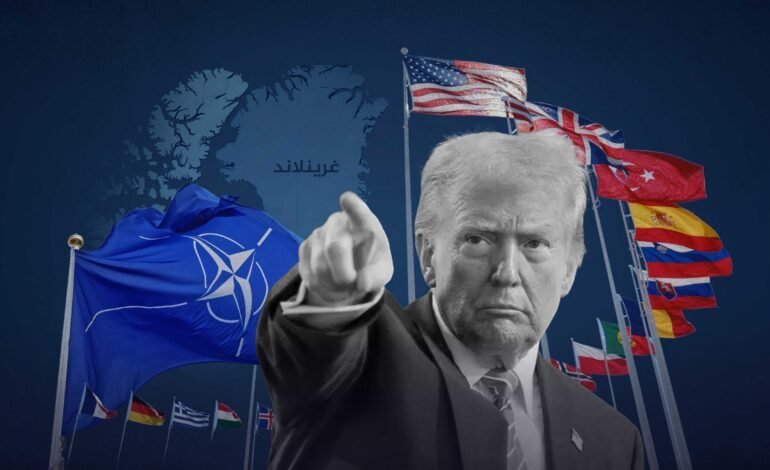

The North Atlantic Treaty Organization (NATO) has stood as the bedrock of Western security for over seven decades. Born from the ashes of World War II, this alliance was designed not merely as a military pact, but as a political instrument to bind the fates of North America and Europe. For generations, the United States served as the unquestioned guarantor of this order, underwriting European security with a nuclear umbrella and a permanent continental presence.
However, the past decade has seen this certainty shaken. Political rhetoric from Washington has oscillated between ironclad assurances and transactional skepticism. Questions that would have been unthinkable during the Cold War—about the value of the alliance, burden-sharing, and Article 5—have moved from the fringes to the mainstream of American political discourse.
As global power dynamics shift and war returns to the European continent, the question of American commitment is no longer academic. It is the central variable in the calculus of global stability. Is the United States truly reaffirming its vows to the transatlantic bond, or are we witnessing a slow, structural divergence? To answer this, we must look past the headlines and examine the tangible shifts in diplomacy, military strategy, and legislative action.
The Shifting Geopolitical Landscape
To understand the current trajectory of U.S.-NATO relations, one must first appreciate the seismic shifts in the geopolitical environment. The era of unipolar American dominance is fading, replaced by a complex, multipolar reality. The invasion of Ukraine in 2022 served as a violent wake-up call, shattering the illusion that major power conflict in Europe was a relic of the 20th century.
For years, American policymakers pivoted toward the Indo-Pacific, viewing China as the primary long-term strategic competitor. This “Pivot to Asia,” initiated during the Obama administration and continued through subsequent presidencies, naturally led to anxieties in European capitals. Was Europe becoming a secondary theater in American grand strategy?
The war in Ukraine reversed this narrative, at least temporarily. It demonstrated that security in the Euro-Atlantic and Indo-Pacific theaters are not mutually exclusive but deeply interconnected. The response from Washington was swift and substantial, signaling that the U.S. still views European stability as vital to its own national interest. This wasn’t just about altruism; it was a strategic recognition that a fractured Europe would leave the U.S. isolated in its competition with other global powers.
Furthermore, the accession of Finland and Sweden into the alliance has fundamentally altered the strategic map. The expansion of NATO’s northern flank is a direct consequence of renewed threat perceptions. The U.S. played a critical diplomatic role in facilitating this expansion, smoothing over Turkish objections and ratifying the accession protocols with bipartisan speed. This diplomatic heavy lifting indicates a Washington that is not checking out, but digging in.
Evidence of Reaffirmed Commitment
Rhetoric is cheap in international relations; budgets and force posture tell the real story. If we look at the tangible actions taken by the U.S. government in recent years, the trend line points toward a deepening, rather than a loosening, of ties.
Legislative and Financial Fortification
One of the most significant indicators of renewed commitment comes from the U.S. Congress. While political polarization often paralyzes domestic policy, support for NATO has remained surprisingly resilient on a bipartisan level. The passage of the National Defense Authorization Act (NDAA) for Fiscal Year 2024 included provisions explicitly preventing any president from withdrawing the United States from NATO without Senate approval or an Act of Congress. This legal guardrail is unprecedented. It signals that the legislative branch views the alliance as a permanent fixture of American foreign policy, insulated from the whims of the executive branch.
Financially, the U.S. continues to bear the lion’s share of alliance costs, but the dynamic is changing. Washington has successfully pressured European allies to increase their own defense spending, with a record number of member states now meeting the 2% GDP target. Far from signaling a U.S. withdrawal, this successful pressure campaign strengthens the alliance’s political sustainability in Washington. It allows proponents of NATO to argue that the burden is being shared, making continued U.S. investment easier to justify to the American taxpayer.
Enhanced Military Posture
On the ground, the U.S. footprint in Europe has grown. The establishment of a permanent garrison in Poland marks a historic shift. For decades, the U.S. avoided permanent bases in former Warsaw Pact nations to avoid antagonizing Moscow. That restraint is gone.
The U.S. has also increased rotational deployments to the Baltic states and Romania, ensuring a “heel-to-toe” presence that guarantees American troops are always on the front lines of NATO’s eastern flank. This is strategic deterrence in its purest form. By placing American personnel in harm’s way, Washington is signaling to adversaries that any incursion into NATO territory immediately involves the United States, removing any doubt about whether Article 5 would be invoked.
Challenges to Diplomacy: The Internal and External Divide
Despite these concrete steps, the reaffirmation of the U.S. commitment is not without its complications. The path forward is fraught with challenges that are both internal to American politics and external to the alliance structure.
The Domestic Political Divide
The most potent threat to U.S. leadership in NATO comes from within. A segment of the American political spectrum has embraced a doctrine of “America First” that views multilateral alliances with skepticism. This worldview argues that NATO is an outdated drain on American resources, subsidizing European welfare states while America’s own infrastructure crumbles.
This internal debate creates a “reliability gap.” Even if the current administration is fully committed, European allies must hedge against the possibility of a future administration that is hostile to the alliance. This uncertainty erodes the psychological component of deterrence. If an adversary believes that the U.S. political will is fractured, they may be tempted to test the alliance’s resolve, calculating that Washington might hesitate in a crisis.
External Pressures and Global Flashpoints
Externally, the U.S. faces the “two-theater” dilemma. As tensions rise in the Taiwan Strait and the South China Sea, the Pentagon is forced to make difficult choices about resource allocation. Can the United States effectively deter aggression in Europe while simultaneously deterring aggression in Asia?
Critics argue that the U.S. is overextended. They suggest that a renewed focus on NATO distracts from the more pressing long-term challenge of China. Proponents, however, argue that these theaters are linked. A failure to uphold the rules-based order in Europe would embolden revisionist powers in Asia. The challenge for U.S. diplomacy is to convince the American public and its allies that it can—and must—do both.
Strategic Implications: Stability Through Strength
A strengthened NATO, backed by an unequivocal U.S. commitment, has profound implications for global stability. The primary function of the alliance is not to fight wars, but to prevent them. The “credibility of commitments” is a core concept in international relations theory. When the U.S. reaffirms its ties to NATO, it raises the cost of aggression for any potential adversary.
This stability extends beyond military deterrence. A cohesive NATO bloc represents the world’s largest economic aggregate. When the U.S. and Europe align on sanctions, export controls, and technology standards, they possess the leverage to shape the global economic environment. We have seen this in the coordinated response to the war in Ukraine, where the transatlantic economy was weaponized to isolate the aggressor.
Furthermore, a revitalized NATO acts as a stabilizer for European democracy. The alliance’s requirements for membership—including civilian control of the military and respect for the rule of law—act as a powerful incentive for reform in aspiring member states. Continued U.S. engagement ensures that this gravitational pull remains strong, anchoring the continent in democratic values.
Future Outlook: The Transatlantic Bond in a Multipolar World
Looking ahead, the sustainability of the transatlantic bond will depend on how the alliance evolves. The “old deal”—where the U.S. provides security and Europe focuses on economic integration—is dead. The “new deal” requires a more balanced partnership.
We are likely to see the emergence of a “European pillar” within NATO. This involves European nations taking primary responsibility for conventional defense on the continent, allowing the U.S. to focus on high-end strategic enablers (nuclear deterrence, intelligence, space assets) and the Indo-Pacific theater.
If this transition is managed well, U.S. commitment to NATO can remain robust without becoming a strategic liability. The alliance will transform from a U.S. protectorate into a genuine partnership of equals. However, if European defense spending stagnates, or if U.S. political isolationism grows, the alliance could face a crisis of relevance.
The future will likely not be defined by a dramatic exit or a return to Cold War stasis, but by a constant negotiation. The U.S. is signaling that it wants to lead, but it no longer wants to lead alone. The reaffirmation of commitment is real, but it is conditional on Europe stepping up to meet the moment.
Conclusion
The evidence suggests that the United States is indeed reaffirming its commitment to NATO, but the nature of that commitment is changing. It is becoming more demanding, more strategic, and more legally codified. Through legislative locks, increased force posture, and diplomatic expansion, Washington is signaling that the transatlantic bridge remains the spine of the global order.
Yet, this reaffirmation occurs against a backdrop of internal political volatility and external strategic overstretch. The durability of this commitment will be tested in the coming years, not just by adversaries abroad, but by voters at home.
Understanding these geopolitical shifts is essential for navigating the modern world. If you want to stay ahead of the curve on international relations, strategy, and the future of global diplomacy, make sure you don’t miss our next update.
Subscribe to our newsletter today for weekly expert commentary and deep-dive analysis into the forces shaping our world.