

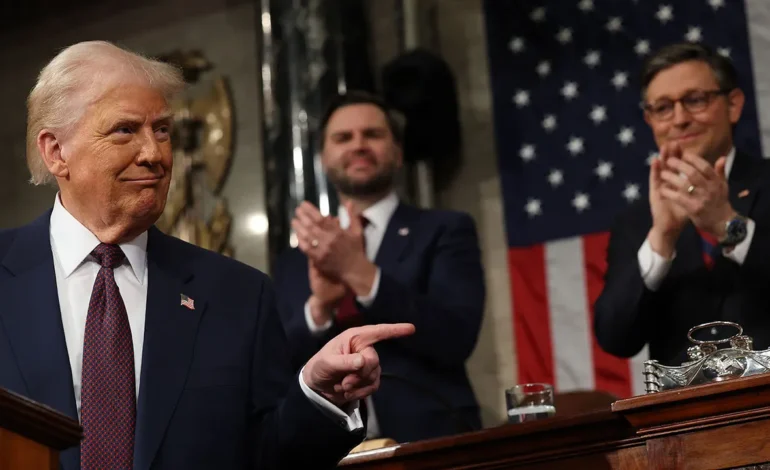
State of the Union 2026: Major Takeaways and Political Reactions
The 2026 State of the Union address arrived at a pivotal moment for the nation. With inflation concerns easing but still present, shifting geopolitical alliances testing American leadership, and a

The 2026 State of the Union address arrived at a pivotal moment for the nation. With inflation concerns easing but still present, shifting geopolitical alliances testing American leadership, and a deeply polarized electorate watching closely, the President’s speech carried weight that extended far beyond the chamber walls. This address wasn’t just a yearly tradition—it was a referendum on policy direction heading into what promises to be a contentious midterm election cycle.
As lawmakers, journalists, and millions of Americans tuned in, the President outlined an ambitious legislative agenda while defending the administration’s track record. From economic revitalization to foreign policy recalibration, the speech touched on nearly every facet of governance. But perhaps most telling were the reactions that followed: impassioned rebuttals from opposition leaders, mixed reviews from political independents, and a media landscape struggling to find consensus on what it all means.
This analysis breaks down the most significant themes from the 2026 State of the Union, examines the political responses from all sides, and explores what these policy proposals could mean for the country’s future.
Executive Summary: Setting the Stage
The national mood heading into the 2026 State of the Union was cautiously optimistic yet deeply fragmented. Economic indicators showed modest growth, but Americans remained divided on whether the country was heading in the right direction. Polling data suggested that voters’ top concerns centered on inflation, healthcare costs, and national security—themes the administration knew it needed to address head-on.
The President opened with a tone that balanced confidence with acknowledgment of ongoing challenges. Rather than painting an overly rosy picture, the speech recognized persistent issues while framing them as surmountable with the right policies and political will. This measured approach appeared designed to appeal to moderate voters who have grown weary of partisan extremes.
Key themes emerged early: economic resilience, American competitiveness on the global stage, and a commitment to bipartisan solutions. The President repeatedly invoked unity and cooperation, though whether these calls would translate into actual legislative progress remained uncertain.
Economic Policy Analysis: Fiscal Proposals and Workforce Development
The economic section of the address revealed the administration’s most concrete policy proposals. The President announced a new infrastructure investment plan focused on modernizing transportation networks and expanding broadband access to rural communities. Unlike previous infrastructure bills that became mired in partisan gridlock, this proposal included specific funding mechanisms and timelines aimed at securing bipartisan support.
On inflation management, the administration defended its previous policies while introducing new strategies. These included targeted tax credits for middle-class families, supply chain diversification initiatives, and regulatory adjustments designed to lower housing costs. Critics were quick to question whether these measures would provide meaningful relief or simply add to government spending.
Workforce development took center stage as well. The President proposed expanding apprenticeship programs, increasing funding for community colleges, and creating tax incentives for companies that invest in employee training. These initiatives acknowledged a fundamental economic reality: automation and technological advancement require a workforce capable of adapting to rapidly changing job markets.
The administration also announced plans to address wage stagnation through a combination of minimum wage adjustments and earned income tax credit expansions. While these proposals energized progressive supporters, they drew immediate skepticism from fiscal conservatives concerned about business impacts and budget deficits.
The foreign policy portion of the address reflected the complex geopolitical landscape facing the nation. The President reaffirmed commitments to traditional alliances while acknowledging that global power dynamics have shifted significantly. Specific attention was paid to strengthening partnerships in the Indo-Pacific region, a clear signal of the administration’s continued focus on counterbalancing emerging threats.
On international security, the President outlined a strategy balancing diplomatic engagement with military readiness. New defense spending proposals included modernizing cybersecurity infrastructure and investing in next-generation defense technologies. The administration framed these investments as necessary for maintaining American leadership without resorting to excessive militarization.
Climate diplomacy received notable attention as well. The President announced renewed efforts to coordinate international climate action, including rejoining specific environmental agreements and proposing new frameworks for global cooperation. This stance pleased environmental advocates while drawing criticism from those who view such commitments as economically disadvantageous.
The speech also addressed humanitarian concerns, with the President calling for increased refugee assistance and foreign aid programs. These proposals reflected values-based foreign policy priorities but faced immediate pushback from lawmakers arguing that domestic needs should take precedence.
Legislative Agenda for 2026: Priorities for Congress
The President presented Congress with an ambitious list of legislative priorities, though political observers noted that passing any major legislation would require navigating a closely divided legislature. Healthcare reform topped the agenda, with specific proposals aimed at lowering prescription drug costs and expanding coverage options. The administration avoided proposing sweeping overhauls, instead focusing on incremental changes designed to attract moderate support.
Infrastructure investment represented another major priority. Beyond the broad proposals mentioned earlier, the President detailed specific projects in transportation, energy, and communications infrastructure. The speech emphasized job creation potential and long-term economic benefits, attempting to frame infrastructure spending as investment rather than expenditure.
Education policy received significant attention as well. Proposals included increasing federal funding for K-12 schools, expanding early childhood education programs, and addressing student debt through targeted forgiveness programs. These initiatives reflected the administration’s view that education represents the foundation for economic opportunity.
Immigration reform made a brief but notable appearance. The President called for comprehensive legislation addressing border security, pathway to citizenship for certain undocumented immigrants, and modernized visa systems. Given the politically charged nature of immigration, these proposals were met with predictable partisan divisions.
Political Reactions: Across the Aisle and Beyond
Opposition party leaders wasted no time delivering their rebuttals. The official response criticized the President’s economic proposals as insufficiently ambitious to address fundamental structural problems. Alternative policy prescriptions emphasized tax reform, regulatory rollbacks, and market-based solutions to economic challenges.
Progressive Democrats offered a different critique, arguing that the President’s proposals didn’t go far enough in addressing wealth inequality and climate change. These lawmakers called for more aggressive taxation of the wealthy, expanded social programs, and faster transition away from fossil fuels.
Independent and moderate lawmakers provided more nuanced reactions. Many expressed appreciation for the bipartisan rhetoric while remaining skeptical about whether cooperation could actually materialize. These legislators emphasized their willingness to work across party lines but insisted on meaningful compromise rather than symbolic gestures.
Political analysts noted that reactions largely fell along predictable partisan lines, suggesting that the address did little to fundamentally shift the political landscape. However, some observers identified potential areas for bipartisan progress, particularly around infrastructure and workforce development.
Social and Domestic Issues: Education, Climate, and Technology
The domestic policy section revealed the administration’s evolving positions on several contentious social issues. On climate change, the President proposed a balanced approach combining renewable energy investment with support for transitioning fossil fuel workers. This strategy attempted to bridge the gap between environmental urgency and economic pragmatism.
Education policy extended beyond funding increases to address curriculum standards, teacher compensation, and school choice debates. The President avoided taking definitive stances on the most divisive education issues, instead calling for local control with federal support—a position designed to appeal to diverse constituencies.
Technology regulation emerged as a growing priority. The President called for updated privacy protections, antitrust enforcement in the tech sector, and investments in emerging technologies like artificial intelligence. These proposals reflected growing bipartisan concerns about big tech’s influence while acknowledging America’s need to remain competitive in technological innovation.
Criminal justice reform received brief mention, with the President reaffirming support for policing reforms and rehabilitation programs. However, the relatively limited attention paid to these issues suggested they weren’t among the administration’s top priorities for the coming year.
Media Coverage and Public Sentiment: Interpreting the Address
Media coverage of the State of the Union revealed the fractured nature of American political discourse. Conservative outlets praised the President’s acknowledgment of economic challenges while criticizing proposed solutions as government overreach. Progressive publications lauded certain policy directions while lamenting insufficient boldness on climate and inequality.
Mainstream news organizations focused on fact-checking specific claims and analyzing political implications for upcoming elections. Several major outlets published real-time analysis highlighting both accurate statements and potentially misleading characterizations of policy achievements.
Social media reactions demonstrated the same polarization, with partisan supporters praising the speech and critics dismissing it as empty rhetoric. Trending hashtags reflected both enthusiasm and skepticism, though viral moments were relatively few compared to previous State of the Union addresses.
Public polling conducted immediately after the speech showed modest approval ratings with significant partisan gaps. Independent voters expressed appreciation for bipartisan appeals but remained unconvinced about whether meaningful policy progress would follow.
Looking Ahead: Impact on 2026 Midterms and Beyond
The long-term impact of the 2026 State of the Union will depend largely on whether the administration can translate rhetoric into legislative reality. Political strategists from both parties began positioning immediately after the speech, framing it as either a roadmap for progress or a collection of empty promises.
For the upcoming midterm elections, the address provided both parties with ammunition. The administration’s supporters will tout the policy vision outlined, while critics will point to gaps between promises and results. Swing district candidates face the challenge of appealing to voters increasingly skeptical of political institutions and grand pronouncements.
The speech’s emphasis on bipartisanship will be tested in coming months as Congress tackles contentious legislation. Early indications suggest limited appetite for compromise on the most divisive issues, though some areas—particularly infrastructure and workforce development—may offer opportunities for cross-party cooperation.
Ultimately, the 2026 State of the Union will be judged not by the words spoken but by the policies enacted. Voters will remember results rather than rhetoric when they head to the polls.
Join the Conversation
The State of the Union sparked debates that will continue shaping American politics for months to come. What were your biggest takeaways from the address? Which policy proposals do you believe have the best chance of becoming reality?
Share your perspective in the comments below, and subscribe to receive ongoing analysis of political developments as they unfold. Understanding these complex issues requires ongoing engagement—let’s continue this important conversation together.
Related Blog Post:
State of the Union 2026: Key Highlights, Analysis, and Political Impact
What Is the State of the Union? History, Purpose, and Modern Impact