


Fashion in Ancient Rome and Greece: Drapes, Status & Identity

Long before fashion became synonymous with runways and designer labels, the civilizations of ancient Greece and Rome understood clothing as a powerful social language. Every fold of fabric, every shade of dye, and every accessory choice communicated something vital about who you were and where you belonged.
The draped garments of classical antiquity weren’t just practical responses to the Mediterranean climate. They were sophisticated systems of visual communication that could reveal your citizenship status, political authority, wealth, gender, and occupation at a glance. A Roman senator’s broad purple stripe instantly distinguished him from a common citizen. A Greek woman’s peplos, fastened with ornate fibulae, spoke volumes about her family’s prosperity.
What makes classical fashion particularly fascinating is how these ancient cultures elevated simple rectangles of cloth into complex expressions of identity. Without zippers, buttons, or elaborate tailoring, they created garments that were both elegantly simple and richly meaningful. The art lay not in cutting fabric, but in how it was draped, dyed, and adorned.
This exploration takes you through the wardrobes of ancient Greece and Rome, examining how fashion functioned as a social code that everyone could read. From the symbolic weight of the Roman toga to the understated elegance of the Greek chiton, we’ll uncover how these classical civilizations dressed themselves—and what their choices reveal about the worlds they inhabited.
The Roman Toga: Citizenship Wrapped in Wool
No garment in Roman fashion carried more symbolic weight than the toga. This semicircular woolen cloth, typically measuring about 18 feet in length, was far more than outerwear. It was the defining mark of Roman citizenship, so fundamental to Roman identity that Virgil referred to Romans as “the toga-clad people.”
Only freeborn male citizens had the right to wear the toga. Foreigners, slaves, and those exiled from Rome were explicitly forbidden from donning this garment. The mere act of wearing a toga proclaimed your place within the Roman social and political hierarchy.
But not all togas were created equal. The toga virilis, plain and off-white, marked adult male citizens. The toga praetexta, distinguished by its purple border, was reserved for magistrates and freeborn boys who had not yet come of age. Most prestigious was the toga picta, embroidered with gold and worn by victorious generals during triumphal processions.
Senators displayed their rank through the toga with the latus clavus, a broad purple stripe that ran vertically down the garment. Equestrians (the wealthy business class) wore a narrower stripe called the angustus clavus. These visual markers made Rome’s social stratification immediately recognizable.
The toga’s complex draping required skill and often assistance. It had to be arranged in specific folds over the left shoulder, draped across the back, then brought under the right arm and back over the left shoulder. The resulting garment was heavy, restrictive, and impractical for physical labor—which was precisely the point. Wearing a toga announced that you belonged to a class freed from manual work.
By the later Empire, the toga’s cumbersome nature led many Romans to abandon it for daily wear, reserving it only for official occasions. Yet its symbolic power remained so strong that appearing in the Forum without one could be seen as disrespectful to Roman tradition.
Greek Chiton and Peplos: Elegance Through Simplicity
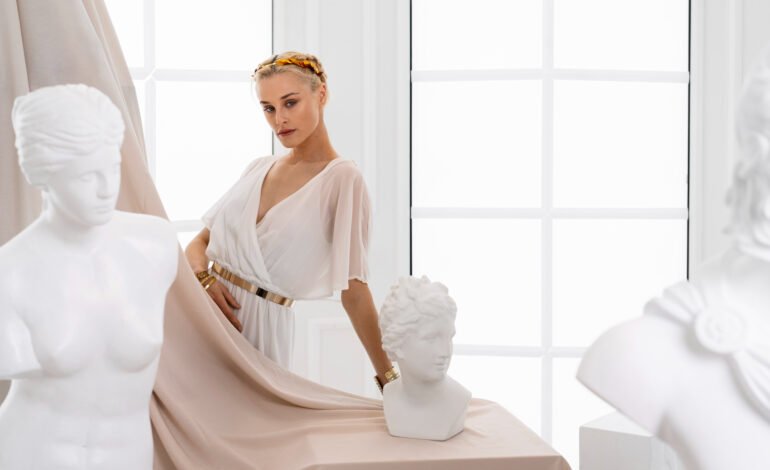
Greek fashion embraced a different aesthetic philosophy. Where Roman dress emphasized formal structure and political symbolism, Greek garments celebrated the natural drape of fabric and the beauty of the human form beneath.
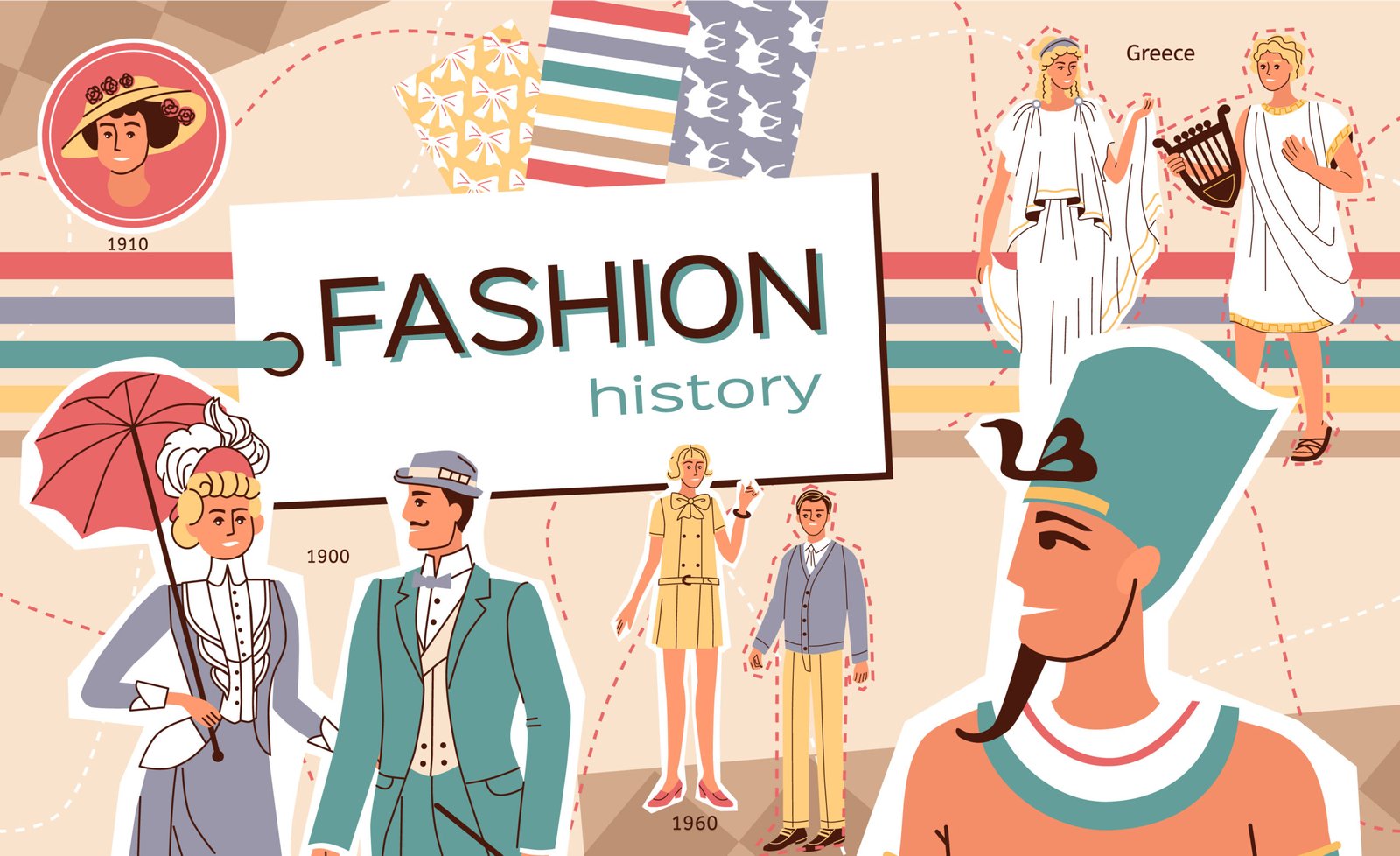
The chiton became the foundation of Greek dress for both men and women. This garment consisted of a large rectangle of fabric, typically linen, sewn or pinned along the shoulders and belted at the waist. The Doric chiton, worn primarily by women in the earlier periods, was woolen and heavier. The Ionic chiton, which gained popularity later, used lighter linen and featured sleeves created by fastening the fabric at intervals along the arms.
Women also wore the peplos, a simpler garment that predated the chiton. The peplos was a single rectangle of heavy wool, folded over at the top to create an overfold called an apoptygma. It was fastened at the shoulders with pins or brooches called fibulae, leaving the sides open. This created a distinctive silhouette that emphasized vertical lines and graceful movement.
Greek garments allowed for considerable variation in draping. The number of folds, the length of the overfold, and the positioning of the belt all offered opportunities for individual expression within culturally accepted norms. Sculptures and vase paintings reveal how Greeks used these variations to create visual interest and showcase the quality of their fabrics.
Men typically wore shorter chitons that reached mid-thigh, allowing freedom of movement for athletics and military training. Longer chitons signified higher status or formal occasions. The himation, a large rectangular cloak, could be worn over the chiton or directly on the body. Philosophers were often depicted wearing the himation alone, perhaps as a statement of ascetic simplicity.
Unlike the Roman toga with its rigid protocols, Greek garments offered flexibility while maintaining aesthetic harmony. The focus was on proportion, drape, and the way fabric moved with the body—principles that would later influence neoclassical fashion and continue to inspire designers today.
Color and Materiality: The Language of Luxury
In both Greek and Roman societies, the color and material of your clothing revealed your economic status as clearly as any modern luxury logo.
Tyrian purple stood at the apex of color symbolism. Extracted from murex sea snails found along the Phoenician coast, this dye required thousands of mollusks to produce even small amounts of pigment. The process was labor-intensive and the resulting color remarkably stable, resistant to fading even in bright Mediterranean sunlight. Tyrian purple became synonymous with imperial power in Rome. The color was eventually restricted by sumptuary laws, with only the emperor permitted to wear garments entirely dyed in the deepest shades.
Other expensive dyes included saffron yellow, requiring vast quantities of crocus flowers, and certain reds derived from kermes insects or madder root. These colors appeared on the garments of the wealthy and powerful, creating a visual hierarchy wherever people gathered.
Fabric quality mattered equally. Fine linen from Egypt represented the height of luxury for Greeks and Romans alike. The best Egyptian linen achieved a weave so fine it appeared almost translucent, prized for its lightness and comfort in warm weather. The Greek island of Kos became famous for its silk-like fabric, possibly an early form of wild silk or extremely fine linen that mimicked silk’s characteristics.
Wool varied dramatically in quality. Coarse, undyed wool clothed workers and the poor. Finely woven wool from specific regions, particularly the Tarentum area in southern Italy or from Miletus in Asia Minor, commanded premium prices. The wealthy might wear wool so soft and tightly woven it could rival linen in texture.
The working classes wore undyed fabric or garments colored with inexpensive, locally-available dyes that faded quickly. Brown, grey, and dull yellow predominated in the clothing of farmers, laborers, and slaves. The contrast between their wear-worn garments and the vibrant, well-maintained clothing of the elite made economic distinctions impossible to miss.
Romans and Greeks both used their textile choices to display not just wealth but also cultural knowledge and refined taste. Knowing which colors suited which occasions, understanding the provenance of fine fabrics, and maintaining garments in pristine condition all signaled education and social sophistication.
Gender and Identity: Reading Social Roles Through Dress
Ancient Greek and Roman fashion created sharp visual distinctions between genders, life stages, and social classes. Clothing didn’t just reflect these categories—it actively constructed and reinforced them.
Gender differentiation began in childhood. Roman boys wore the toga praetexta until coming of age ceremonies around 14-16 years, when they adopted the plain toga virilis. This public change of dress marked their transition to adult male citizenship. Girls wore simple tunics until marriage, when they adopted the stola—a long dress that identified them as married women. The stola, often worn with a palla (a rectangular shawl), became the female equivalent of the male toga in terms of status signaling.
Greek women’s clothing emphasized modesty and their role within the household. The peplos and chiton covered the body more fully than men’s garments, and respectable women wore veils when appearing in public. The amount of fabric, the quality of weave, and the richness of color all communicated a woman’s family status, but the basic silhouette remained relatively consistent across classes.
Working-class distinction appeared clearly in garment length and practicality. Laborers, both male and female, wore shorter tunics that allowed freedom of movement. These garments were made from coarser fabrics and lacked the elaborate draping of elite dress. Slaves often wore the simplest tunics, sometimes in undyed fabric, and went without the cloaks that free citizens used.
In Rome, former slaves who had been granted freedom faced clothing restrictions. While they gained permission to wear the toga, certain color combinations and ornamentations remained off-limits, preventing them from visually claiming status equal to the freeborn.
Prostitutes in Rome were required by law to wear togas, a regulation that simultaneously denied them the respectable stola of married women and associated the toga—normally a symbol of male citizenship—with social disgrace when worn by women. This legal use of clothing as a marker of moral status reveals how deeply fashion intersected with social control.
Greek hetairai (educated courtesans) dressed more lavishly than respectable women, wearing brighter colors, more elaborate jewelry, and occasionally adopting styles that revealed more of the body. Their fashion choices both reflected and reinforced their position outside conventional gender roles.
Athletic contexts created a notable exception to usual gender presentations. Male athletes competed nude in Greek games, their bodies oiled and their nudity celebrated as an ideal of masculine beauty. Women were largely excluded from these events, both as participants and spectators, with clothing rules that kept them confined to domestic spaces while men displayed themselves publicly.
Footwear and Accessories: Completing the Classical Look
While draped garments formed the foundation of classical dress, footwear and accessories provided crucial finishing touches that further refined social messages.
Roman footwear varied significantly by status and occasion. The calcei, enclosed shoes in various colors, were the proper accompaniment to the toga. Senators wore red or purple calcei, while other citizens wore black or brown. The caligae, heavy-soled military sandals with studded bottoms, became so associated with soldiers that Emperor Caligula earned his nickname (meaning “little boot”) from wearing them as a child in military camps.
Greek footwear tended toward sandals of varying complexity. Simple leather sandals, called krepides, sufficed for daily wear. More elaborate versions featured decorative straps and were often dyed in bright colors. Actors in Greek theater wore specific footwear: the kothornos, a thick-soled boot that added height and grandeur to tragic performers.
The truly wealthy might go shoeless indoors, their bare feet indicating they had slaves to manage dirty work. Going barefoot outdoors, however, marked poverty or philosophical asceticism.
Jewelry and ornaments carried both aesthetic and symbolic weight. Greek women wore elaborate fibulae (brooches) to fasten their peplos, often crafted in gold or silver with intricate designs. These functional items became opportunities to display craftsmanship and wealth.
Romans favored rings as status markers. The gold ring, originally limited to senators and their families, eventually spread to the equestrian class. The number and quality of rings a man wore indicated his social position. Signet rings, engraved with family insignia, served practical purposes for sealing documents while displaying aristocratic lineage.
Hair styling and grooming functioned as an extension of fashion. Roman women created increasingly complex hairstyles during the Imperial period, with arrangements of curls, braids, and false hairpieces that required hours of work by skilled slaves. These elaborate coiffures appeared on portrait busts and coins, with empresses setting trends that wealthy women throughout the empire imitated.
Greek women typically wore their hair long and arranged in various styles of buns, braids, and knots, often secured with ribbons or metal bands. Married women covered their hair with veils in public, while unmarried women might leave it more visible.
Men’s hair and beard styles shifted with cultural norms. Clean-shaven faces became standard in Rome after Scipio Africanus popularized the look, though emperors like Hadrian later brought beards back into fashion. Greeks initially favored beards as marks of maturity and wisdom, with smooth-faced youth giving way to bearded adulthood.
These accessories and grooming practices completed the visual vocabulary of classical fashion, adding layers of meaning to the fundamental language established by draped garments.
Legacy of Classical Fashion: From Ancient Drapes to Modern Runways
The influence of Greek and Roman fashion extends far beyond the ancient world, resurging repeatedly throughout Western fashion history and continuing to shape contemporary design.
Neoclassicism brought classical dress roaring back during the late 18th and early 19th centuries. Inspired by archaeological discoveries at Pompeii and Herculaneum, fashionable women adopted high-waisted “empire” dresses that mimicked the flowing lines of Greek chitons. These garments rejected the structured corsets and panniers of previous decades, instead embracing the classical ideal of fabric draped over the natural form.
Regency-era fashion designers drew directly from ancient sources, creating dresses in white or pale fabrics that echoed ancient marble statuary. Women wore their hair in styles inspired by Greek and Roman sculpture, and accessories like cameos featuring classical profiles became enormously popular.
Modern haute couture continues to reference classical draping techniques. Designers like Madame Grès built entire careers on creating gowns that captured the spirit of ancient Greek dress through meticulous pleating and draping. Her work in the mid-20th century demonstrated how classical techniques could create thoroughly modern, sophisticated garments.
Contemporary designers regularly return to classical antiquity for inspiration. Versace famously incorporated Greek key patterns and Medusa imagery into collections that blended ancient symbolism with modern glamour. The house’s bias-cut dresses and draped evening gowns often reference the flowing lines of ancient garments.
Beyond high fashion, classical influence appears in everyday clothing. The “toga party” has become a college tradition (however inaccurate the actual garments). Wedding dresses often feature empire waists and flowing fabrics that evoke classical aesthetics. Even modern athletic wear sometimes references ancient Greek ideals of the heroic body.
Academic regalia preserves an institutional link to classical dress. The flowing robes worn at university ceremonies descend from medieval academic dress, which itself drew inspiration from Roman togas and tunics. The traditions of draped garments signifying learning and status thus persist in transformed but recognizable form.
The enduring appeal of classical fashion stems partly from its apparent simplicity—the beauty of uncut fabric, skillfully draped. But it also reflects our continued fascination with the civilizations that wore these clothes. When we reference Greek or Roman dress, we invoke not just aesthetic choices but entire cultural values: democracy, philosophy, rhetoric, empire.
Wrapping Up: What Ancient Fashion Reveals
The draped garments of ancient Greece and Rome prove that fashion has always been about far more than covering the body. These civilizations created sophisticated visual languages that communicated citizenship, rank, gender, wealth, and values through seemingly simple pieces of cloth.
The Roman toga, despite its practical limitations, endured for centuries because it represented ideals central to Roman identity. Greek garments balanced aesthetic refinement with functional elegance, creating silhouettes that celebrated the human form while maintaining cultural propriety. Both cultures understood that controlling dress meant controlling social boundaries and reinforcing hierarchies.
These ancient fashion systems remind us that clothing has always served as a form of communication. The ability to “read” someone’s social position through their dress—once essential for navigating Greek and Roman society—persists in modern contexts, even if the specific codes have changed.
For anyone interested in how fashion functions as culture, looking to classical antiquity offers invaluable lessons. The past reveals that our contemporary fashion debates about status symbols, appropriate dress, and identity expression aren’t new concerns. Ancient Greeks and Romans grappled with remarkably similar questions, leaving behind a legacy that continues to drape itself across our modern understanding of what clothes mean.
Ready to explore more fascinating intersections of fashion and history? Sign up for our historical fashion newsletter and receive monthly deep dives into how people dressed themselves across different eras and cultures. From Byzantine silk to Victorian crinolines, we’ll uncover the stories woven into the fabric of the past.