

Global Power Shifts: How Today’s Geopolitics Are Reshaping International Relations
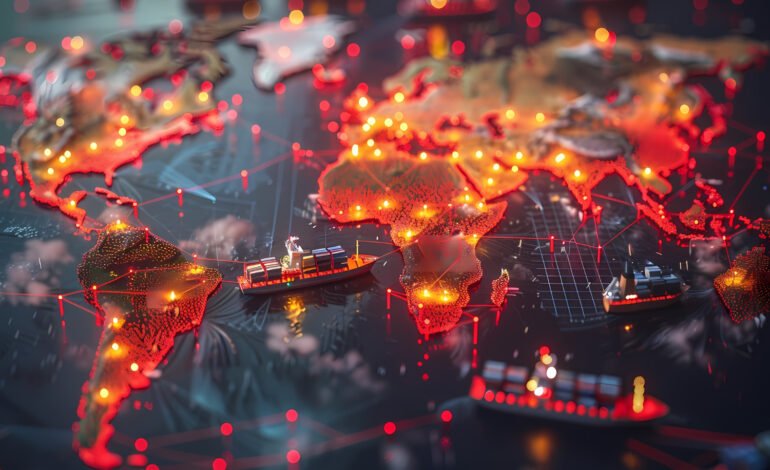

For decades, the international order seemed relatively static. The post-Cold War era was defined by unipolarity, with the United States acting as the undisputed hegemon, and Western institutions like NATO, the IMF, and the World Bank setting the rules of the road. But history rarely stands still. The tectonic plates of global power are moving once again, and the tremors are being felt from Washington to Beijing, from Brussels to New Delhi.
We are no longer living in a unipolar world. The transition toward multipolarity—a system where power is distributed among several major states—is not a future prediction; it is our current reality. This shift is characterized by the resurgence of great power competition, the assertive rise of the Global South, and the weaponization of everything from semiconductors to supply chains.
Understanding these shifts isn’t just an academic exercise. For businesses, governments, and individuals, navigating this new landscape requires recognizing that the old assumptions about international relations no longer hold water. The rules are being rewritten in real-time, driven by economic realignment, technological sovereignty, and a scramble for the resources that will power the future.
The Rise of the Rest: Challenging Western Hegemony
The most visible aspect of this geopolitical transformation is the economic ascent of emerging markets. For the better part of the 20th century, the G7 nations dominated the global economy. Today, the economic center of gravity is shifting eastward and southward.
China’s meteoric rise is the headline story, but it is far from the only one. India is poised to become the world’s third-largest economy, while nations like Brazil, Indonesia, and Saudi Arabia are leveraging their economic weight to pursue autonomous foreign policies. This group, often loosely referred to as the “Global South,” is no longer content to be rule-takers in an international system designed by the West.
The BRICS Expansion
A clear manifestation of this trend is the revitalization and expansion of BRICS (Brazil, Russia, India, China, and South Africa). Once dismissed by some Western analysts as a mere Goldman Sachs acronym, the bloc has evolved into a geopolitical counterweight to the G7. With the recent inclusion of new members like Egypt, Ethiopia, Iran, and the UAE, BRICS+ now represents a significant portion of the global population and energy resources.
This expansion signals a desire for alternative mechanisms of global governance. These nations are seeking to reduce their reliance on the U.S. dollar, create parallel development banks, and advocate for a reform of the United Nations Security Council to better reflect contemporary power realities.
The Fragmentation of Global Trade
The economic rise of these powers has led to a fragmentation of global trade. The era of hyper-globalization, defined by efficiency and just-in-time supply chains, is giving way to an era of “friend-shoring” and protectionism. Nations are prioritizing resilience and security over pure economic efficiency.
We see this in the proliferation of distinct economic blocs. The West is tightening its integration through initiatives like the U.S.-EU Trade and Technology Council, while China promotes the Belt and Road Initiative (BRI) to deepen economic ties with the developing world. This decoupling—or “de-risking”—means that multinational corporations must now navigate a minefield of sanctions, export controls, and competing regulatory standards.
Technological Sovereignty: The New Arms Race
If the 20th century was defined by the race for nuclear supremacy, the 21st century is defined by the race for technological supremacy. Technology is no longer just a driver of economic growth; it is the central pillar of national security.
States are aggressively pursuing “technological sovereignty”—the ability to control critical technologies without reliance on foreign adversaries. This shift has turned the tech sector into a primary battleground for geopolitical rivalry.
The Semiconductor War
Nowhere is this more evident than in the semiconductor industry. Microchips are the oil of the digital age, powering everything from smartphones to advanced missile systems. The realization that the world relies heavily on Taiwan for advanced chip manufacturing has set off alarm bells in capitals around the world.
The United States has responded with the CHIPS and Science Act, aiming to reshore manufacturing and deny China access to cutting-edge chip technology. Conversely, China is pouring billions into its domestic semiconductor industry to break free from Western chokepoints. This “chip war” is reshaping alliances, as the U.S. pressures allies like Japan and the Netherlands to align their export controls with Washington’s strategic goals.
AI and National Security
Artificial Intelligence (AI) acts as a force multiplier for this technological competition. The nation that leads in AI will likely hold a decisive advantage in intelligence gathering, cyber warfare, and autonomous weaponry.
Governments are scrambling to regulate AI while simultaneously rushing to develop it. This dual pressure is creating a complex regulatory patchwork. The EU is pushing ahead with the AI Act, prioritizing safety and rights, while other nations may prioritize speed of development to gain a strategic edge.
The implications for international relations are profound. We are likely to see a digital iron curtain descend, where the internet and digital ecosystems bifurcate into a Western-led sphere and a Chinese-led sphere, each with its own standards, hardware, and governing philosophies.
Shifting Alliances and Regional Realignment
As the poles of power multiply, the rigid alliance structures of the Cold War are dissolving. In their place, we are seeing fluid, transactional partnerships. Middle powers are adopting “multi-aligned” strategies, engaging with multiple great powers simultaneously to maximize their national interests.
The Indo-Pacific Chessboard
The Indo-Pacific has emerged as the epicenter of this geopolitical maneuvering. The United States has strengthened its network of alliances through the Quad (U.S., India, Japan, Australia) and AUKUS (Australia, U.K., U.S.) to counterbalance China’s influence.
However, countries in the region are wary of being forced to choose sides. ASEAN nations, for example, maintain deep security ties with the U.S. but rely heavily on China for trade. Their diplomacy is a delicate balancing act, aiming to maintain regional stability without alienating either giant.
The Middle East’s New Autonomy
The Middle East provides another stark example of shifting alliances. Traditional U.S. partners like Saudi Arabia and the UAE are diversifying their relationships. They are deepening energy and investment ties with China and maintaining open lines of communication with Russia, even as they retain security partnerships with Washington.
This newfound autonomy was evident in the recent Chinese-brokered détente between Saudi Arabia and Iran. It signaled that the U.S. is no longer the sole indispensable broker in the region and that regional powers are willing to look elsewhere for diplomatic solutions.
NATO’s revitalization
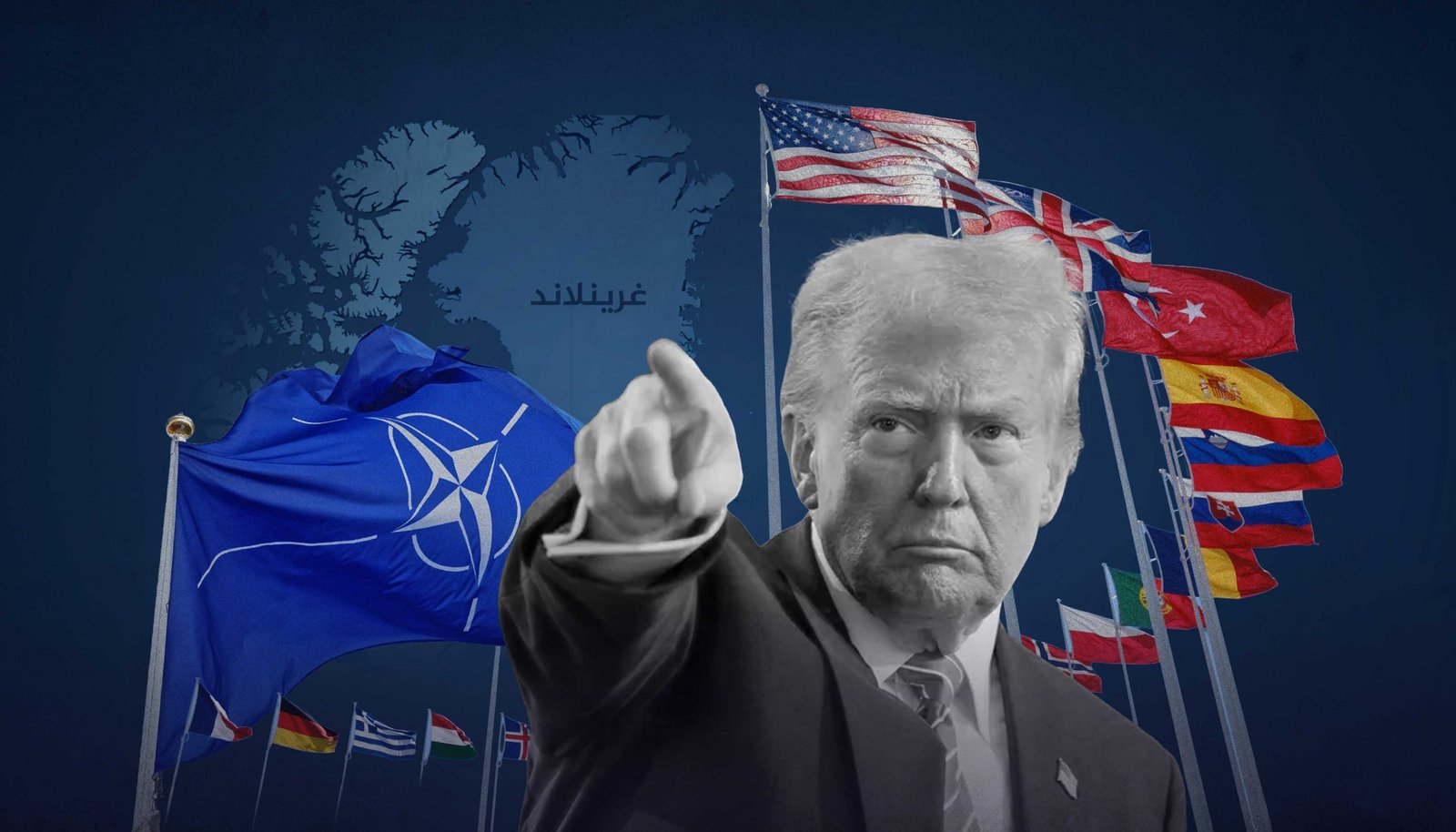
Ironically, while alliances elsewhere are becoming more fluid, Russia’s invasion of Ukraine has reinvigorated the transatlantic alliance. NATO has found a renewed sense of purpose, expanding its membership to include Finland and Sweden. Europe is taking hard power more seriously than it has in decades, increasing defense spending and working to reduce energy dependence on Russia.
Yet, even within this unity, fissures remain regarding how to approach China. While the U.S. views China primarily as a systemic rival, many European nations, led by Germany and France, still view Beijing as a necessary economic partner, complicating a unified Western strategy.
The Geopolitics of the Green Transition
Perhaps the most significant long-term driver of geopolitical change is the global energy transition. The shift from fossil fuels to renewable energy is not just an environmental imperative; it is rewriting the map of global power.
The Scramble for Critical Minerals
Just as the internal combustion engine made the Middle East a geopolitical pivot point in the 20th century, the electric vehicle (EV) and battery revolution are elevating the importance of nations rich in critical minerals like lithium, cobalt, nickel, and rare earth elements.
Countries like the Democratic Republic of Congo, Chile, Indonesia, and Australia are finding themselves at the center of a new “great game.” Major powers are rushing to secure supply chains for these minerals. Currently, China dominates the processing and refining of these materials, giving it significant leverage. The West is frantically trying to build alternative supply chains to reduce this vulnerability, leading to new partnerships with resource-rich nations in Africa and Latin America.
Energy Security vs. Climate Diplomacy
The transition is also creating friction between the Global North and the Global South. Developing nations argue that they should not be denied the opportunity to use fossil fuels for development, especially when the developed world is responsible for the vast majority of historical emissions.
This tension complicates international climate negotiations. The West is pushing for rapid decarbonization, while the Global South demands financial support and technology transfers to manage the transition. The “loss and damage” fund agreed upon at COP27 was a diplomatic victory for developing nations, but the implementation remains a source of contention.
Furthermore, the weaponization of energy—seen most clearly in Europe’s painful decoupling from Russian gas—has taught nations that energy security cannot be separated from national security. This will drive a push for energy independence, accelerating the deployment of renewables not just for the climate, but for sovereignty.
Navigating the New Disorder
The era of predictable international relations is over. We are entering a period of volatility and restructuring. The convergence of multipolarity, technological rivalry, and the energy transition is creating a complex web of challenges that no single nation can solve alone.
For the international community, the danger is that competition spirals into conflict. The lack of robust communication channels between rival powers increases the risk of miscalculation. However, this new landscape also offers opportunities. A multipolar world forces major powers to compete for influence by offering better terms for trade, development, and security to the rest of the world.
The future of international relations will not be defined by a single hegemon, but by the ability of nations to navigate a fluid, fragmented, and fiercely competitive global system. Adaptability, rather than ideology, will likely be the currency of success in this new world order.
Stay Ahead of the Curve
The world is changing faster than the headlines can keep up. To truly understand the forces shaping our future, you need analysis that goes deeper than the 24-hour news cycle.
Subscribe to our newsletter today for expert geopolitical insights, deep-dive analysis, and forward-looking reports delivered straight to your inbox. Don’t just watch the world change—understand why.