
The Industrial Revolution and the Rise of Mass Fashion
Before the hum of factory machines and the clickety-clack of power looms, clothing was a personal affair. Garments were carefully sewn by hand, often custom-fitted to the wearer’s body. A

Before the hum of factory machines and the clickety-clack of power looms, clothing was a personal affair. Garments were carefully sewn by hand, often custom-fitted to the wearer’s body. A single coat could take weeks to complete, and most people owned only a few outfits in their lifetime. Fashion was reserved for the wealthy, and the average person wore practical, durable clothing out of necessity rather than choice.
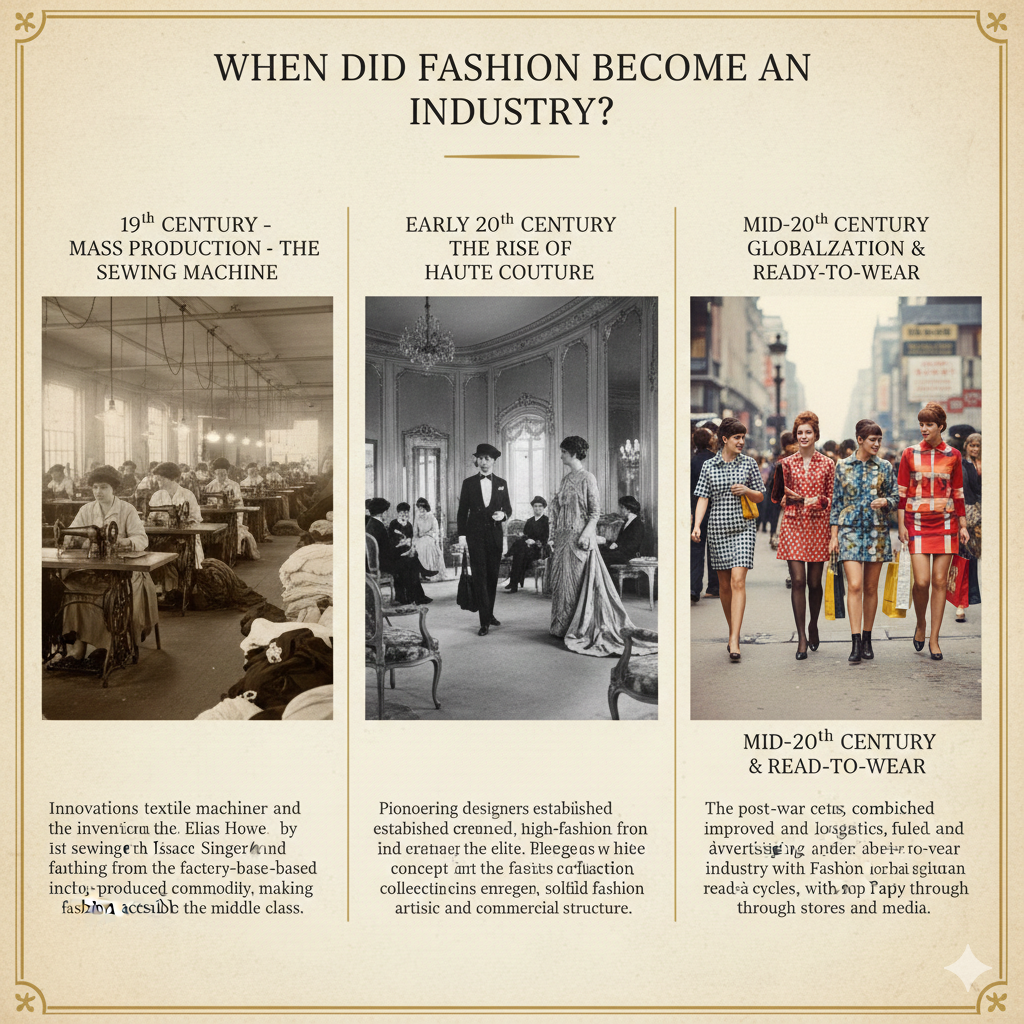
Then came the Industrial Revolution—a period of rapid technological advancement that transformed not just how we made clothing, but how we thought about it. Suddenly, garments could be produced quickly, cheaply, and in large quantities. The sewing machine replaced the needle and thread. Factories replaced tailors’ workshops. And for the first time in history, fashion became accessible to the masses.
This shift didn’t just change what people wore. It reshaped consumer behavior, social hierarchies, and the very concept of personal style. Understanding this transformation helps us make sense of the fashion landscape we navigate today—where trends come and go in weeks, and closets overflow with affordable options.
Before the Machines: Bespoke Tailoring and Handmade Garments
For centuries, clothing production was a slow, labor-intensive process. Tailors and seamstresses worked by hand, cutting fabric with shears and stitching every seam with needle and thread. Wealthy clients could afford bespoke garments—custom-made pieces tailored precisely to their measurements and preferences. These garments were status symbols, showcasing not only wealth but also access to skilled craftsmanship.
The average person, however, had a different experience. Most families made their own clothes at home, or purchased them from local dressmakers and tailors. Fabric was expensive, so garments were repaired, altered, and passed down through generations. Clothing was an investment, designed to last years rather than seasons.
This system meant that fashion moved slowly. Trends existed among the elite, but they took years to trickle down to the broader population. The gap between what the wealthy wore and what everyone else could afford was vast and unmistakable.
Technological Breakthroughs: The Spinning Jenny and Power Loom
The textile industry was among the first to feel the impact of industrialization. Two inventions in particular changed everything: the Spinning Jenny and the power loom.
Invented by James Hargreaves in 1764, the Spinning Jenny allowed a single worker to spin multiple threads at once. What once required eight workers could now be done by one, dramatically increasing productivity. This innovation made thread and yarn cheaper and more abundant, laying the groundwork for mass textile production.
The power loom, developed by Edmund Cartwright in 1785, automated the weaving process. Powered first by water and later by steam, these machines could weave fabric faster than any human hand. By the early 1800s, textile mills were operating at unprecedented scales, churning out vast quantities of cloth at a fraction of the previous cost.
These technologies didn’t just make fabric more affordable—they fundamentally altered the economics of clothing production. With cheaper materials and faster production methods, the stage was set for a revolution in how garments themselves were made.
From Hand-Sewn to Machine-Made: The Birth of Ready-to-Wear
The next breakthrough came with the invention of the sewing machine. Elias Howe patented the first practical model in 1846, and Isaac Singer improved upon it shortly after, making it more affordable and user-friendly. For the first time, garments could be assembled quickly and consistently.
This innovation gave rise to ready-to-wear clothing—garments made in standardized sizes and sold off the rack. Instead of waiting weeks for a tailor to craft a custom coat, consumers could walk into a shop and purchase one immediately. The concept was revolutionary.
Ready-to-wear fashion gained momentum during the American Civil War, when the Union Army needed uniforms in massive quantities. Manufacturers began producing clothing in standardized sizes, a practice that carried over into civilian life after the war ended. By the late 19th century, ready-to-wear garments were widely available, particularly for men.
Women’s fashion took a bit longer to industrialize, largely because of the complexity of garments like corsets and elaborate dresses. But by the early 20th century, even women’s clothing was being mass-produced. The days of bespoke tailoring as the norm were coming to an end.
The Rise of the Department Store and the Democratization of Style
As mass production ramped up, a new kind of retail space emerged: the department store. These grand establishments, such as Le Bon Marché in Paris (opened in 1852) and Macy’s in New York (founded in 1858), offered a wide variety of ready-to-wear clothing under one roof. Shopping became an experience—a leisure activity rather than a purely functional errand.
Department stores democratized fashion in ways that had never been possible before. A middle-class shopper could browse the same styles that wealthy customers admired, even if the quality and fabrics differed. Fashion magazines and catalogs spread the latest trends, and suddenly, people across different social classes were wearing similar silhouettes and styles.
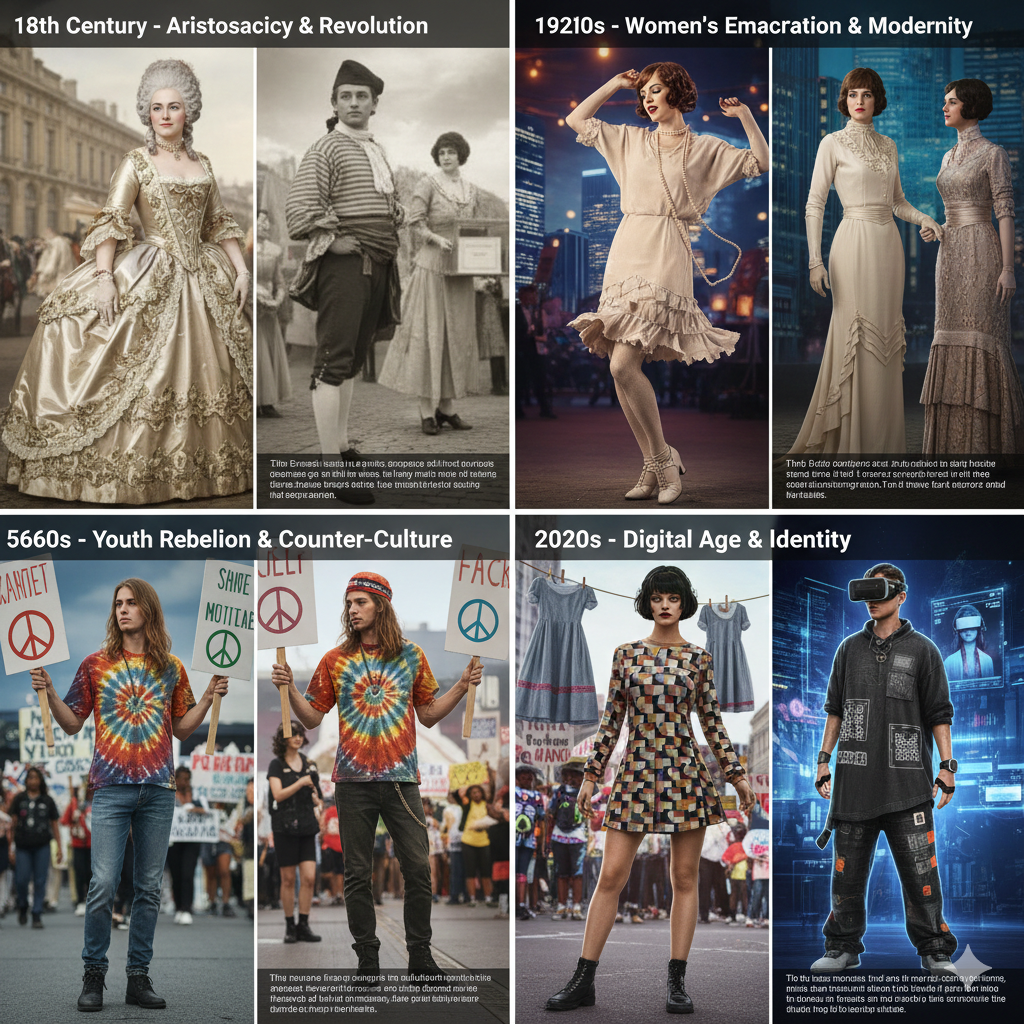
This accessibility shifted the cultural meaning of clothing. Fashion was no longer just a marker of wealth—it became a form of self-expression available to a much broader audience. People could experiment with their appearance, adopt new trends, and update their wardrobes more frequently.
The psychological impact was significant. Clothing became tied to identity in new ways. What you wore could signal your aspirations, your taste, and your awareness of contemporary trends. Fashion had entered the mainstream.
From Utility to Trends: A Shift in Consumer Behavior
Before industrialization, people bought clothing primarily for function. Garments needed to be durable, weather-appropriate, and practical. Fashion was secondary—a luxury reserved for those who could afford it.
Mass production flipped this dynamic. With clothing becoming cheaper and more accessible, consumers began to prioritize style over longevity. Trends started to matter. Hemlines, collar shapes, and color palettes changed with increasing frequency, and people wanted to keep up.
This shift gave birth to a new kind of consumer culture. Shopping became a regular activity rather than an occasional necessity. Wardrobes expanded. Clothing that was still functional might be discarded simply because it was out of style.
Advertising played a crucial role in this transformation. Fashion houses, department stores, and manufacturers used print media to promote the latest trends and create demand. Seasonal collections encouraged consumers to refresh their wardrobes regularly. The concept of “newness” became valuable in and of itself.
This marked the beginning of a mindset that still dominates fashion today: the idea that clothing is not just something you need, but something you continually desire.
Lasting Impacts: The Roots of Modern Fast Fashion
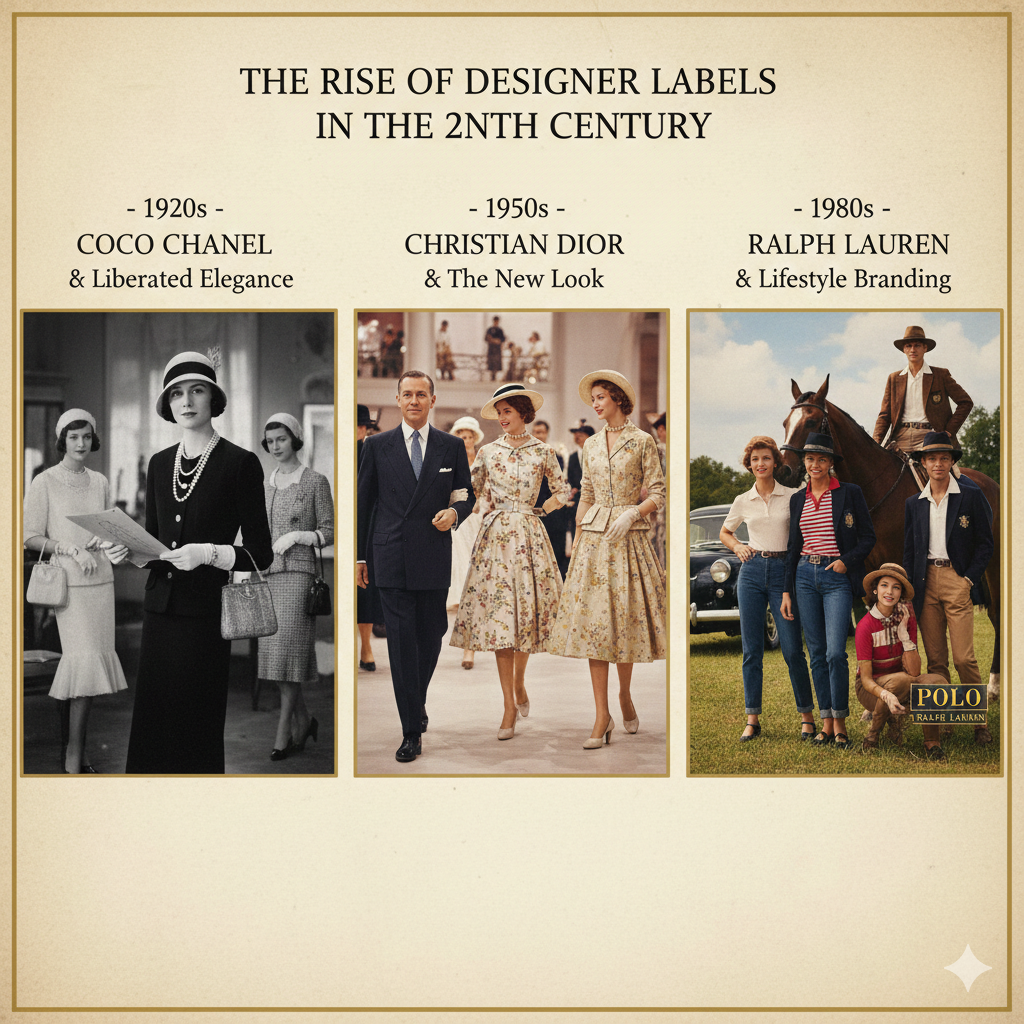
The changes set in motion by the Industrial Revolution laid the foundation for the fashion industry as we know it. Mass production, standardized sizing, trend-driven consumption, and accessible retail—all of these elements trace back to the 19th century.
But the story doesn’t end there. The principles established during the Industrial Revolution evolved throughout the 20th century, eventually giving rise to fast fashion. Brands like Zara, H&M, and Forever 21 took the logic of mass production to its extreme, creating clothing that’s not just affordable, but disposable. Trends now change not seasonally, but weekly. Garments are designed to be worn a handful of times before being replaced.
This hyper-accelerated model has significant consequences. Environmental damage from textile waste and pollution is staggering. Labor practices in garment factories often prioritize speed and cost over worker safety. And consumers are caught in a cycle of constant consumption, accumulating clothing faster than they can wear it.
Understanding the historical roots of this system helps us see it more clearly. The Industrial Revolution democratized fashion, but it also set us on a path toward overconsumption. Recognizing this trajectory is the first step toward building a more sustainable and equitable fashion future.
Reimagining Fashion’s Future
The Industrial Revolution changed fashion forever, making it faster, cheaper, and more accessible than ever before. But as we grapple with the environmental and social costs of mass production, it’s worth asking: what’s next?
Some designers and brands are looking backward for inspiration—reviving craftsmanship, prioritizing quality over quantity, and encouraging consumers to buy less but choose better. Others are embracing new technologies, from 3D printing to biodegradable fabrics, to create a more sustainable industry.
Whatever the future holds, one thing is certain: fashion will continue to evolve. And understanding where it came from helps us make more informed choices about where it’s going.
Want to explore more about the history of fashion and its impact on modern culture? Subscribe to our newsletter for weekly insights, deep dives, and stories that connect the past to the present.